One of Italy’s most celebrated stretches of coastline, the five cliff-top villages of Cinque Terre, faces a severe long-term threat from rising seas and increasingly powerful storm waves, according to a study published this month by an international research team. By 2150, the researchers found, sea levels along the Ligurian coast could rise between 0.60 and 1.17 metres, exposing the area to waves as high as 13 metres during major storm events.
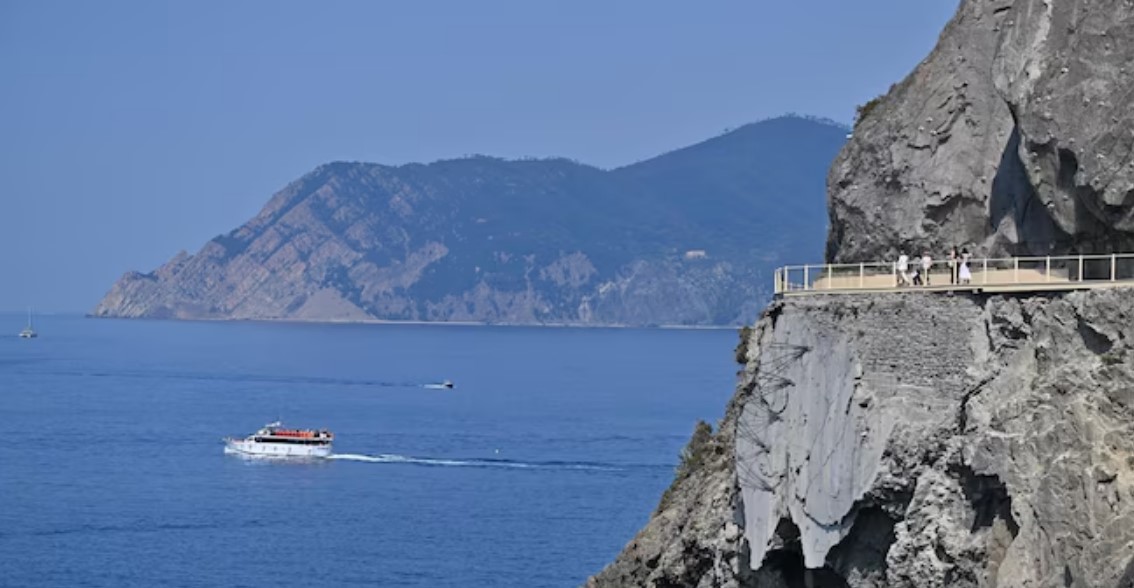
The study focused on the two most exposed villages, Monterosso and Vernazza, and used IPCC climate projections to model flooding scenarios across a range of emissions pathways. Even in the more optimistic scenarios, the researchers found significant risk to port areas, beaches, docks and the transport infrastructure that connects the villages to each other and to the mainland.
Cinque Terre is a UNESCO World Heritage site. Its terraced hillsides, painted houses and the trails connecting the villages draw millions of tourists each year, making it one of the most visited destinations in Italy. The tourism economy depends directly on the infrastructure and coastline that the study identifies as most vulnerable. The docks where ferries land and the coastal paths that walkers use in summer are among the first things the researchers expect to be regularly flooded as sea levels rise.
The agricultural dimension is also significant. The region’s terraced vineyards, which produce a local white wine grown on steep slopes above the sea, have been maintained by hand for centuries. Increasing rainfall intensity, another predicted consequence of climate change for the area, raises the risk of soil erosion on those slopes and landslide activity on the many trails that cross them. The terracing systems require constant maintenance and are not designed to handle significantly heavier rainfall events.
Climate scientists have been tracking the vulnerability of Mediterranean coastal communities for more than a decade, and the Cinque Terre study adds detailed local modelling to a wider picture of accelerating risk. The northern Mediterranean coast, from Spain through southern France and on through Italy, faces some of the steepest sea-level rise projections in Europe because of the interaction between global warming and local geological factors that affect how much the land itself is subsiding.
Italy’s government has invested in coastal protection in other areas, particularly Venice, where a system of mobile flood barriers has been in operation since 2020. Whether similar infrastructure is feasible for the Cinque Terre, where the geology and the heritage designation impose strict limits on large-scale construction, is an open question the study’s authors said needed urgent attention from local and national planners.
Euronews reported that the researchers called on regional and national governments to begin adaptation planning immediately rather than waiting for clearer evidence of damage. The study authors noted that 2150 is within two or three generations, a time horizon that makes the threat manageable if planning begins now but catastrophic if it is deferred.

Follow iNews Zoombangla On Google
Open the Google follow page and tap the checkmark option to receive more updates from iNews Zoombangla in your Google news feed.