Introducing artificial intelligence to young children is not easy. Most books either make it too technical or too superficial. This book takes a different path by focusing on curiosity, simplicity, and guided exploration, making it highly suitable for children aged 6 to 10.
From the introduction, the tone is friendly and engaging. The book speaks directly to children, calling AI a “smart helper” and connecting it to tools they already use like Siri, Alexa, and YouTube. This approach removes fear and builds immediate familiarity.
One of the strongest aspects of the book is how it explains complex ideas using simple analogies. For example, AI is described as something that learns from patterns, similar to how children learn through repetition. This makes abstract concepts easy to understand without oversimplifying them.
The structure of the book is well designed and progressive. Early sections introduce what AI is and where it exists in daily life, while later parts explore how AI helps in school, creativity, and even basic coding. This gradual learning curve keeps children engaged while building confidence step by step.
Here is book’s Amazon link: Kids AI and Parents Guide: Fun Activities, Prompts and Safe Learning for Ages 6–10
A major highlight is the activity-driven learning approach. The book is filled with prompts, mini-missions, and creative exercises. Children are encouraged to ask AI for story ideas, fun facts, and projects, then turn those ideas into drawings, comics, or plays. This transforms learning into an active and enjoyable experience rather than passive reading.
The section on prompts is particularly valuable. It teaches children how to communicate with AI using clear, kind, and curious language. Real examples such as asking for stories, jokes, or simple tasks make this section practical and easy to apply. This early introduction to prompt thinking is a strong advantage for future learning.
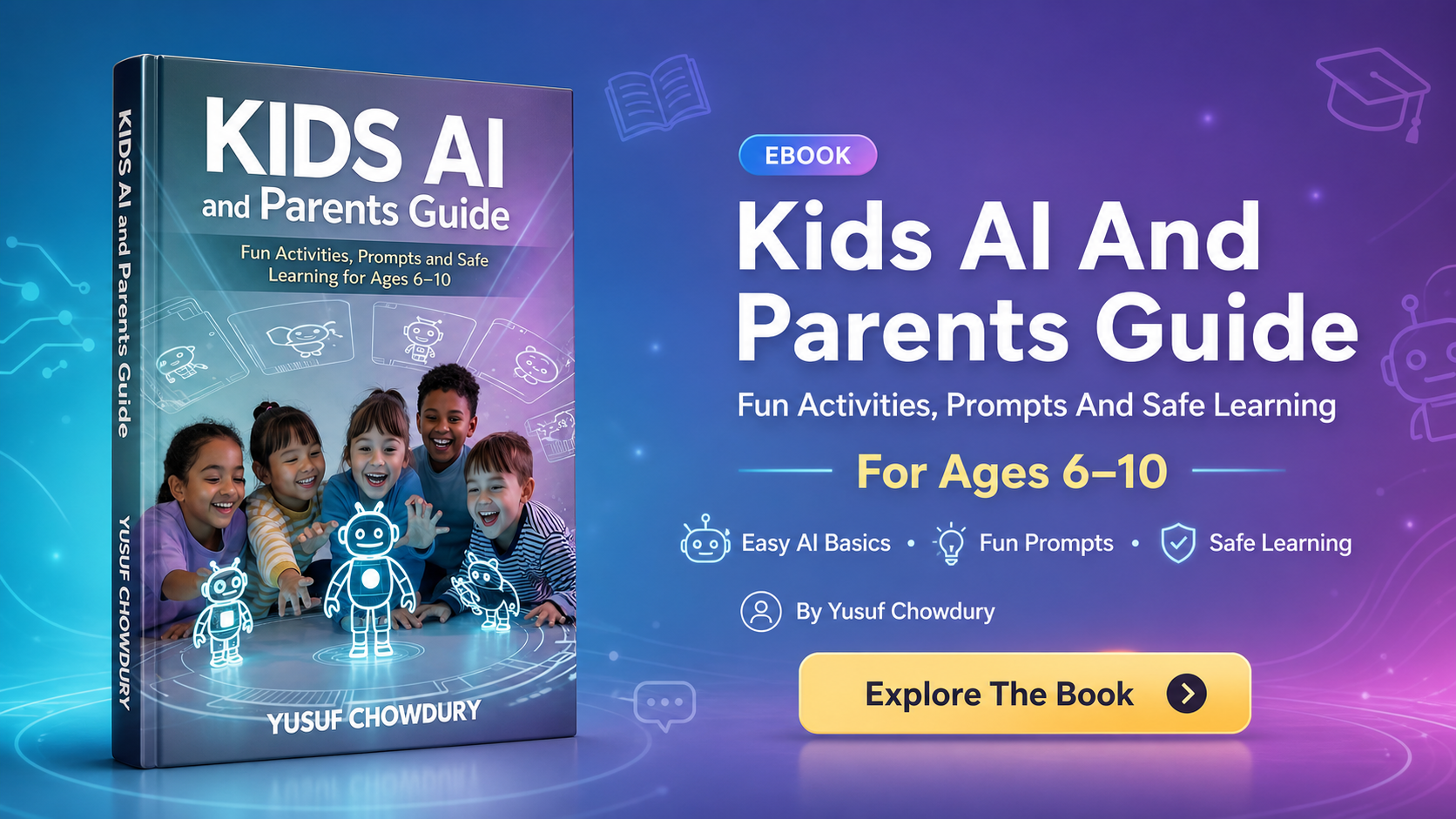
Another standout feature is the consistent inclusion of parent guidance. Throughout the book, short “Parent Note” sections provide simple but effective advice on how to introduce AI safely, encourage curiosity, and balance screen time. For example, parents are guided to explore AI together with their child using everyday tools and to focus on curiosity rather than fear.
Read more: AI SHIFT: Why You Are Falling Behind and How to Catch Up
The book also does an excellent job of shifting children from a passive user mindset to a creator mindset. Instead of just using AI for answers, children are encouraged to create stories, games, and projects. This helps build confidence, creativity, and problem-solving skills at an early age.
Additionally, the inclusion of fun challenges like AI quizzes, prompt battles, and family activities makes the experience more interactive and social. It turns AI learning into a shared journey between parents and children rather than an isolated activity.
However, the book intentionally avoids deep technical explanations. For its target audience, this is a strength. The goal is not to create experts but to build early understanding, curiosity, and comfort with technology.
Overall, this book succeeds in making AI simple, safe, and engaging for young learners. It combines education with creativity and provides a balanced approach that includes both children and parents.
For parents looking to introduce AI in a structured yet fun way, this book offers a strong foundation. It is not just about learning technology but about building confidence, curiosity, and a healthy relationship with the digital world from an early age.

Follow iNews Zoombangla On Google
Open the Google follow page and tap the checkmark option to receive more updates from iNews Zoombangla in your Google news feed.