Latvian Prime Minister Evika Siliņa announced on Thursday that she will resign, bringing down the country’s governing coalition just months before parliamentary elections scheduled for October and deepening political uncertainty in the Baltic state.
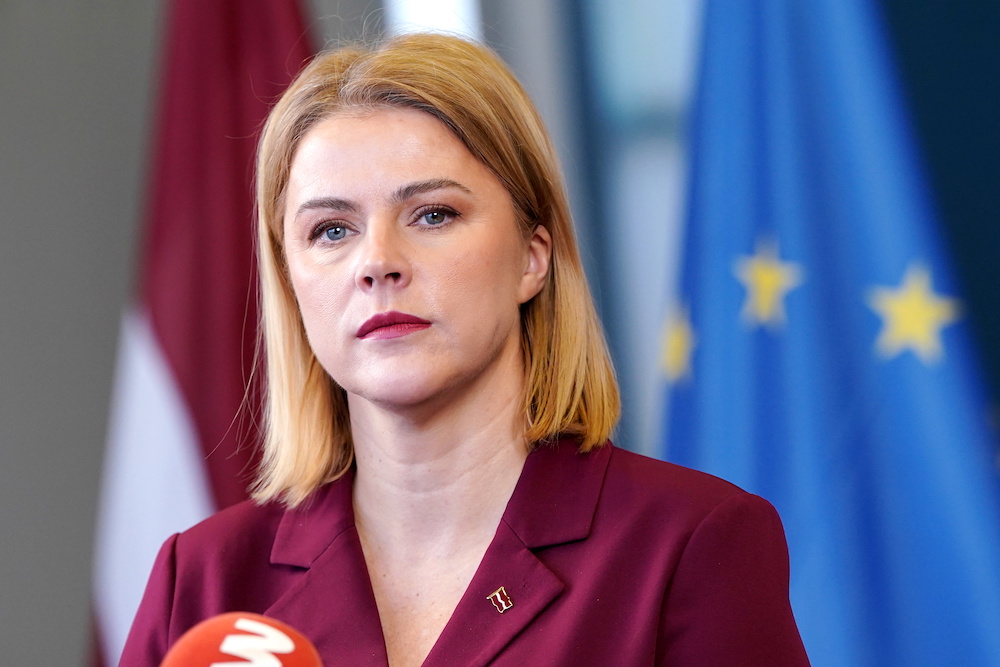
In a statement posted on X and echoed in a televised address, Siliņa said she had taken what she described as a “difficult but honest decision” to step down from office after mounting tensions within the coalition government.
“My priorities have always been Latvia’s security and people,” she said, adding that “political envy and narrow party interests” had overtaken responsibility inside the governing alliance.
Her resignation effectively ends the three-party coalition led by her centre-right Unity Party, which had been under growing strain for several months.
The latest rupture followed controversy surrounding the departure of Defence Minister Andris Sprūds, a member of the left-leaning Progressives Party. Sprūds resigned after Siliņa publicly called for him to leave office in the aftermath of incidents involving Ukrainian drones that crossed into Latvian airspace after being diverted from Russia.
The Progressives Party later withdrew its support for the government, leaving Siliņa without a parliamentary majority and making the coalition unsustainable.
The political crisis unfolded against a broader backdrop of security concerns in the region. Latvia, which borders Russia and Belarus, has remained highly attentive to developments linked to the war in Ukraine and regional airspace security.
On Sunday, Ukrainian Foreign Minister Andrii Sybiha said the drone incidents in Latvia were “the result of Russian electronic warfare deliberately diverting Ukrainian drones from their targets in Russia.”
Sybiha said Ukraine was prepared to assist Latvia, Finland and other Baltic states in improving drone detection and prevention measures. Ukraine has spent years expanding and adapting its air defence capabilities during the war, much of which has involved long-range missile and drone attacks.
Latvia’s President Edgars Rinkevics is expected to begin consultations with parliamentary parties on Friday as he seeks to appoint a new prime minister capable of forming a government ahead of the October vote.
Read More:
Sony a7R VI and a7 V Comparison Highlights How Closely Matched the Cameras Really Are
The political uncertainty now leaves Latvia entering an election period with a caretaker leadership and a fractured coalition landscape, while questions over national security and regional stability remain firmly in public view.

Follow iNews Zoombangla On Google
Open the Google follow page and tap the checkmark option to receive more updates from iNews Zoombangla in your Google news feed.