A detailed side-by-side examination of the Sony a7R VI and Sony a7 V is drawing attention to how narrowly separated the two cameras are in several key areas, despite the substantial price difference between them.
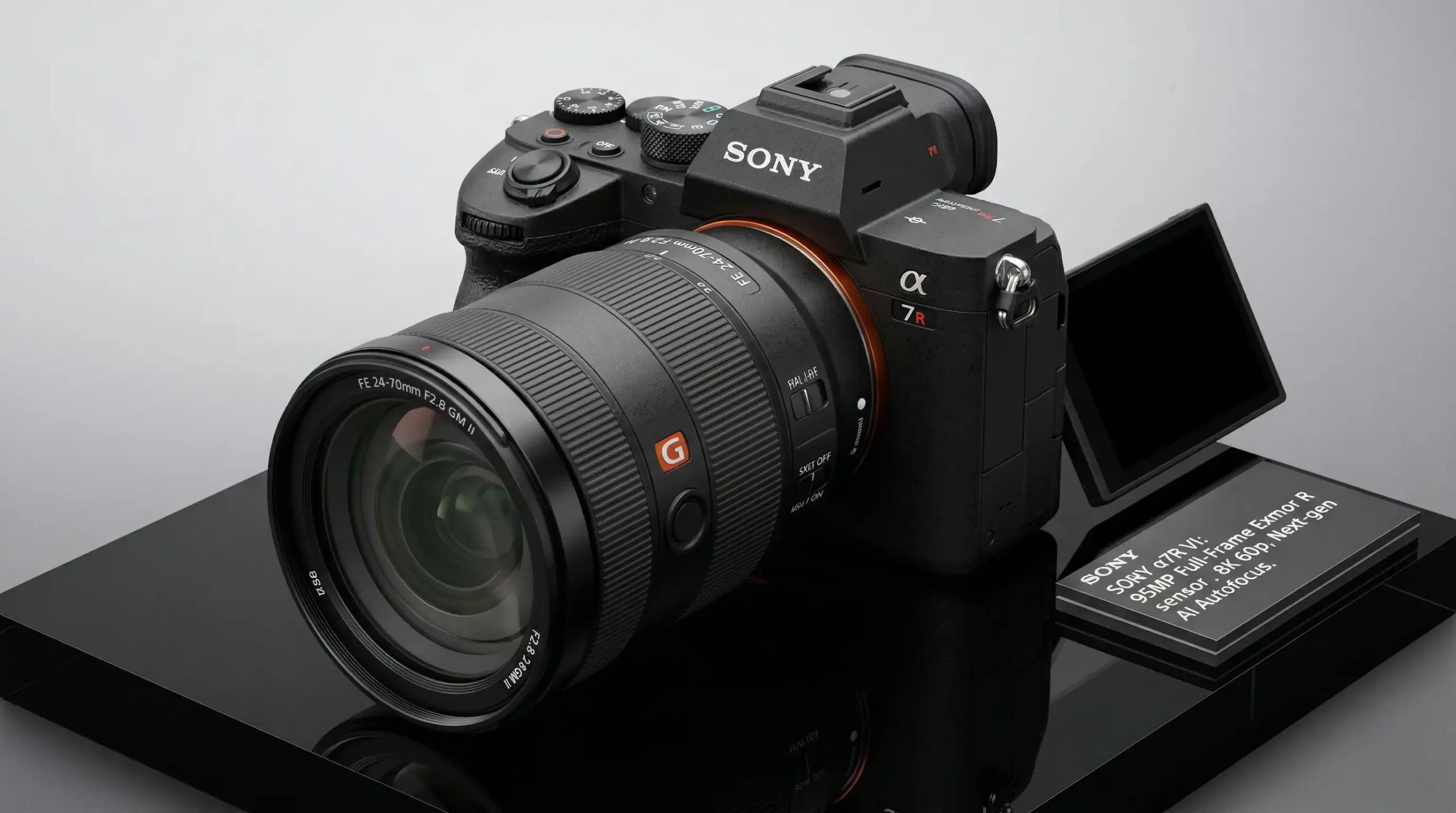
In a recent comparison video, photographer and reviewer Jason Morris focused less on headline specifications and more on how the cameras behave in practical shooting conditions. The result was a comparison that complicates the assumption that the more expensive body is automatically the better fit for every user.
The a7R VI arrives with a 67-megapixel fully stacked sensor and the ability to record 8K video at 30 frames per second, alongside full-frame 4K recording at up to 120 fps. The a7 V, meanwhile, uses a 33-megapixel partially stacked sensor and reaches 4K 120 fps only with a 1.5x crop applied.
What stood out in Morris’ testing was not simply the resolution gap, but the way each camera processes video internally. According to the comparison, the a7 V’s 4K footage, oversampled from a 7K readout, can appear sharper and more detailed than the a7R VI’s standard 4K output, which is derived from a 5K downsample. The distinction becomes more meaningful for editors and hybrid shooters who prioritize clean 4K delivery over the flexibility of reframing 8K footage later in post-production.
The a7R VI gains ground in other areas tied to demanding production work. Morris highlighted the camera’s dual gain ISO mode, which provides roughly one additional stop of shadow latitude in high-contrast scenes. In practical terms, that allows darker portions of an image to retain cleaner detail when exposure is pushed during editing.
Noise performance between the two cameras remained broadly similar through ISO 12,800 in his tests, though the a7R VI showed noticeably cleaner shadows when operating within the limits of its dual gain system at ISO 3200 and below.
Rolling shutter performance also emerged as a point of interest. Morris noted that the a7R VI performs comparatively well in 4K capture despite its high-resolution sensor, with behavior roughly comparable to the Sony FX3 in that mode. Predictably, rolling shutter becomes more apparent when recording in 8K.
For still photography, the distinction shifts toward shutter performance and handling. The a7R VI tops out at 1/8,000 sec, while the a7 V reaches 1/16,000 sec, giving the less expensive model an advantage when shooting wide apertures in bright light without neutral density filtration.
Both cameras include a pre-capture feature that buffers up to one second of frames before the shutter is fully pressed, a function increasingly valued by wildlife and action photographers trying to catch unpredictable moments.
Externally, the bodies remain largely similar, though the a7R VI adds several refinements aimed at professional production environments. Those include a front tally light, illuminated controls, dual CFexpress Type-A card slots, Ethernet connectivity, and a 9.44-million-dot electronic viewfinder, compared with the a7 V’s 3.69-million-dot panel.
The a7R VI also introduces support for Sony’s newer SA100 battery system. That change may carry added cost for photographers already invested in FZ100 batteries and compatible accessories used by the a7 V.
Audio capability is another area where the cameras are closely aligned. Both support 32-bit float internal audio recording when paired with Sony’s XLR-K3M adapter, although the feature is currently available on the a7R VI and scheduled to arrive on the a7 V through a firmware update.
Rather than presenting one camera as a clear winner, the comparison underscores how differently the two bodies are positioned. The a7R VI leans toward shooters who need high-resolution capture and broader post-production flexibility, while the a7 V appears to retain advantages that may matter more to users focused primarily on detailed 4K delivery and faster shutter operation.
Read More;
Vivo X300 Pro Arrives in Market With ZEISS Telephoto Support and Larger Battery
For many photographers and filmmakers, the decision may come down less to specifications on paper and more to the kind of work they expect to do once the camera leaves the studio.

Follow iNews Zoombangla On Google
Open the Google follow page and tap the checkmark option to receive more updates from iNews Zoombangla in your Google news feed.