MIT astronomers and collaborators have identified the earliest known flickering quasar, observing a supermassive black hole from a period only about 850 million years after the Big Bang. The finding gives researchers a way to study the structure of matter surrounding a very young black hole.
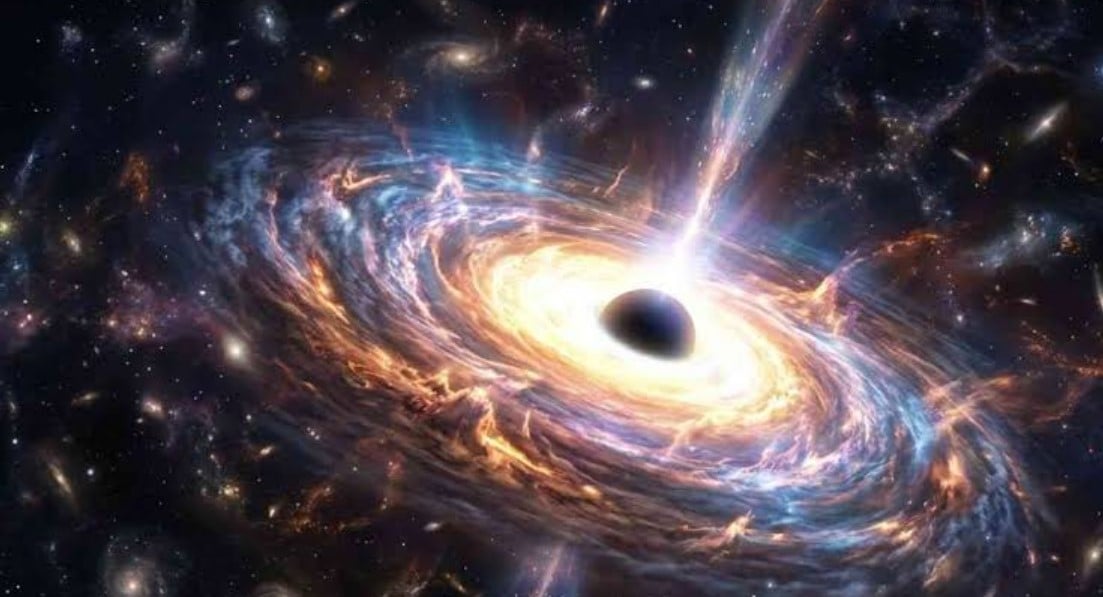
MIT News reported that the team detected changes in the quasar’s brightness in infrared data collected over years by NASA’s NEOWISE mission. The signal allowed the researchers to examine how material in the accretion disk responded as it moved around the central black hole.
The discovery is notable because quasars from the cosmic dawn are already difficult to observe, and a measurable flicker provides information beyond a single image. The team said the ancient accretion disk appeared surprisingly similar in shape to disks seen around more modern quasars.
Phys.org’s report on the study described the object as a quasar whose light was recorded at different times and wavelengths. That pattern helped scientists estimate the scale of the region producing the changes, while the age of the object places it among the earliest examples of this behavior.
The result does not mean the researchers watched the black hole change in real time across human history. The observations combine repeated measurements of very distant light, which has travelled for billions of years before reaching Earth. Further measurements will help test how common such early flickering quasars were.
Sources: MIT News — https://news.mit.edu/2026/mit-astronomers-discover-earliest-known-flickering-quasar-0608; Phys.org — https://phys.org/news/2026-06-astronomers-earliest-flickering-quasar.pdf