The global race to build artificial intelligence infrastructure just got a crucial partnership. NVIDIA and SK Hynix announced on June 7 that they’re joining forces on memory chips for the next generation of AI supercomputers.
This isn’t just another tech deal. Memory has become the bottleneck in AI development. Processors are only as fast as the data flowing into them. When memory can’t keep up, everything slows down. Both companies know this. Both need each other.
SK Hynix will codevelop memory for NVIDIA’s Vera Rubin AI supercomputers, Vera CPUs, and RTX Spark personal computers. The South Korean chipmaker will also supply memory for Jetson Thor robotic platforms. It’s a multiyear commitment. More importantly, it’s an exclusive commitment. SK Hynix is banking on one partner rather than spreading itself thin across multiple customers.
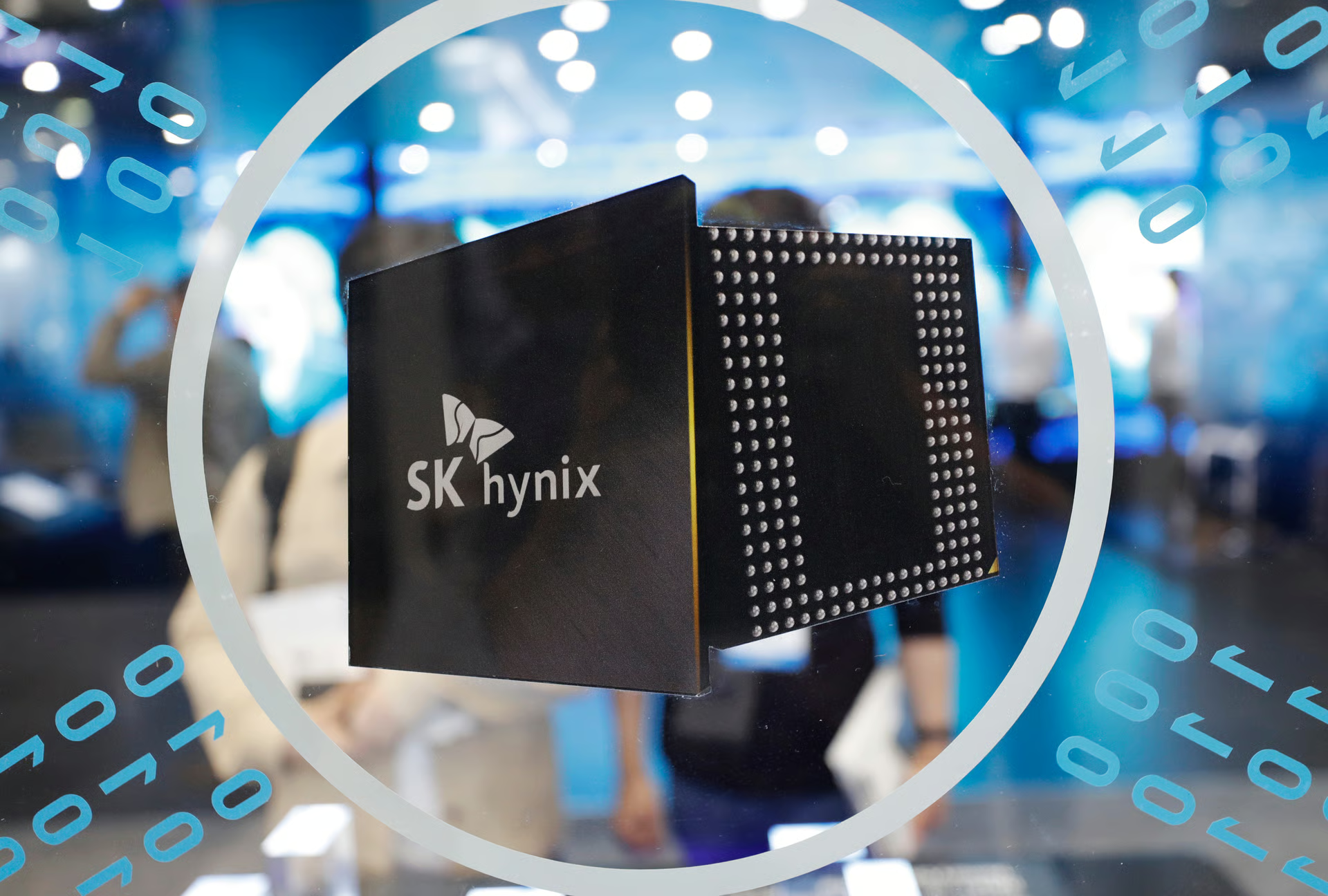
The headline number: SK Hynix has already begun mass production of 192GB SOCAMM2 memory modules. These deliver more than double the bandwidth of conventional memory and show 75 percent better power efficiency. In AI data centers, power consumption is a major cost. Efficiency matters.
SK Hynix now supplies roughly 60 to 70 percent of the HBM4 high-bandwidth memory that Vera Rubin requires. Samsung handles 25 to 30 percent. Micron gets the rest. But the partnership with NVIDIA gives SK Hynix first place in the value chain. First place in securing supply for future platforms. First place in the design conversations.
This moves beyond simple supply and demand. SK Hynix and NVIDIA will work together on semiconductor simulation and manufacturing. They’ll use NVIDIA’s tools to build digital twins of SK Hynix factories—virtual representations that let engineers test changes without touching real equipment. When you can optimize a fab digitally, you catch problems before they become expensive in the real world.
The timing matters too. NVIDIA’s Vera Rubin entered full production just days before this announcement. The partnership isn’t a future promise. It’s already happening. SK Hynix memory is already flowing into Vera Rubin supercomputers that companies are building right now.
The broader picture: NVIDIA needed a reliable memory partner. SK Hynix needed guaranteed access to NVIDIA’s roadmap. Both needed to ensure that memory doesn’t become the weak link in AI infrastructure. This deal gives them what they wanted. And it gives them a reason to plan farther ahead than the next quarter.

Follow iNews Zoombangla On Google
Open the Google follow page and tap the checkmark option to receive more updates from iNews Zoombangla in your Google news feed.