Tesla delivered 480,126 electric vehicles in the second quarter of 2026, a 25% year-over-year increase that beat Wall Street estimates. The quarter represented a sharp 34% jump from Q1 2026, signaling a rebound in global EV demand after a soft early year. European demand fueled much of the recovery. Tesla’s market share in premium EVs expanded despite competitive pressure from traditional automakers launching new models. The company signaled confidence by announcing the electric Roadster for August 2026 reveal and scaling production of the Cybercab autonomous vehicle later this year.
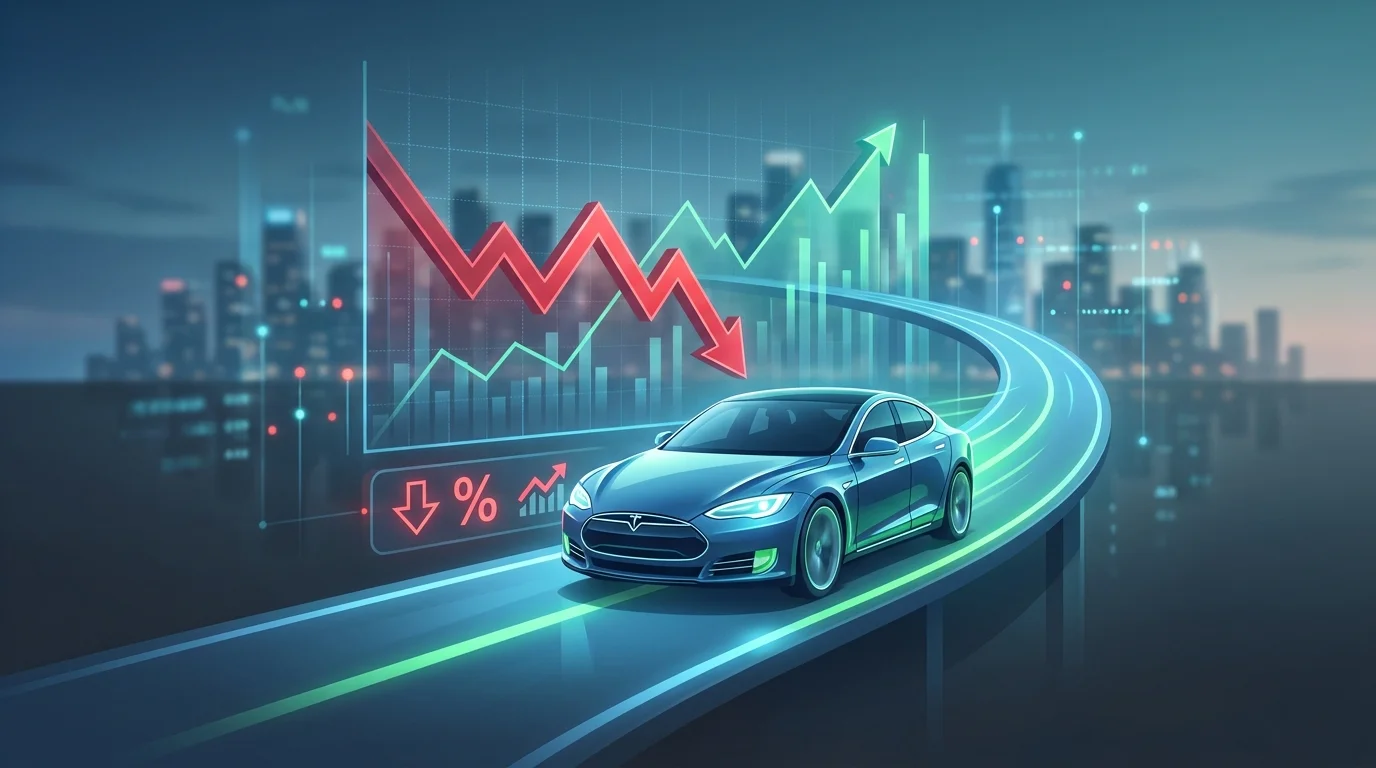
The Q2 surge reflects several factors: Tesla’s price cuts in late 2025 moved inventory off lots. New Model Y variants, particularly the Model Y L with captain’s chairs and climate-controlled seating, attracted family-oriented buyers. Full Self-Driving Supervised matured enough that 12-month trials are now bundled with Launch Series Model Y deliveries. Competition intensified, but Tesla’s vertical integration and production efficiency gave it cost advantages competitors couldn’t match.
The Roadster Announcement
Tesla announced the all-electric Roadster will debut in August 2026, nearly a decade after the original 2020 announcement. The production timeline remains uncertain—the company typically misses Roadster ship dates—but the vehicle itself is real. It uses three motors delivering all-wheel drive, claimed 0-60 mph in 1.9 seconds, and 620 miles of range. Pricing is expected to start near $200,000, positioning it as a hypercar competitor to Bugatti and Pagani.
The Roadster is a halo product. It won’t move volume. But it proves Tesla is still pushing the boundary of what electric acceleration can achieve. Every previous Roadster announcement created waves in the media. This one will too.
Cybercab and Autonomous Production
Tesla is scaling production of the Cybercab, its autonomous vehicle, later this year. The Cybercab is Tesla’s answer to Waymo’s robotaxi fleet. It’s designed for autonomous-only operation with no steering wheel or pedals. Whether full self-driving capability materializes as promised remains an open question, but production scaling signals Tesla’s commitment to the category.
The Cybercab would transform Tesla from a car manufacturer into a transportation and robotics company. The financial implications are massive. If autonomous fleets work, Tesla becomes a logistics and mobility provider with recurring revenue. The capital requirements shift entirely.
Model Y L and the Late-2026 Lineup
The Model Y L with third-row seating, climate-controlled captain’s chairs, and power recline is attracting customers who might otherwise buy traditional SUVs. Arriving in late 2026, it’s positioned as Tesla’s family vehicle. Combined with pricing discipline and improved production efficiency, Tesla is capturing buyers who weren’t previously EV customers. This signals market expansion, not just market share defense.
Tesla’s Q2 results prove EV demand is real. The question now is which companies can sustain it. Tesla’s track record suggests it will.

Follow iNews Zoombangla On Google
Open the Google follow page and tap the checkmark option to receive more updates from iNews Zoombangla in your Google news feed.