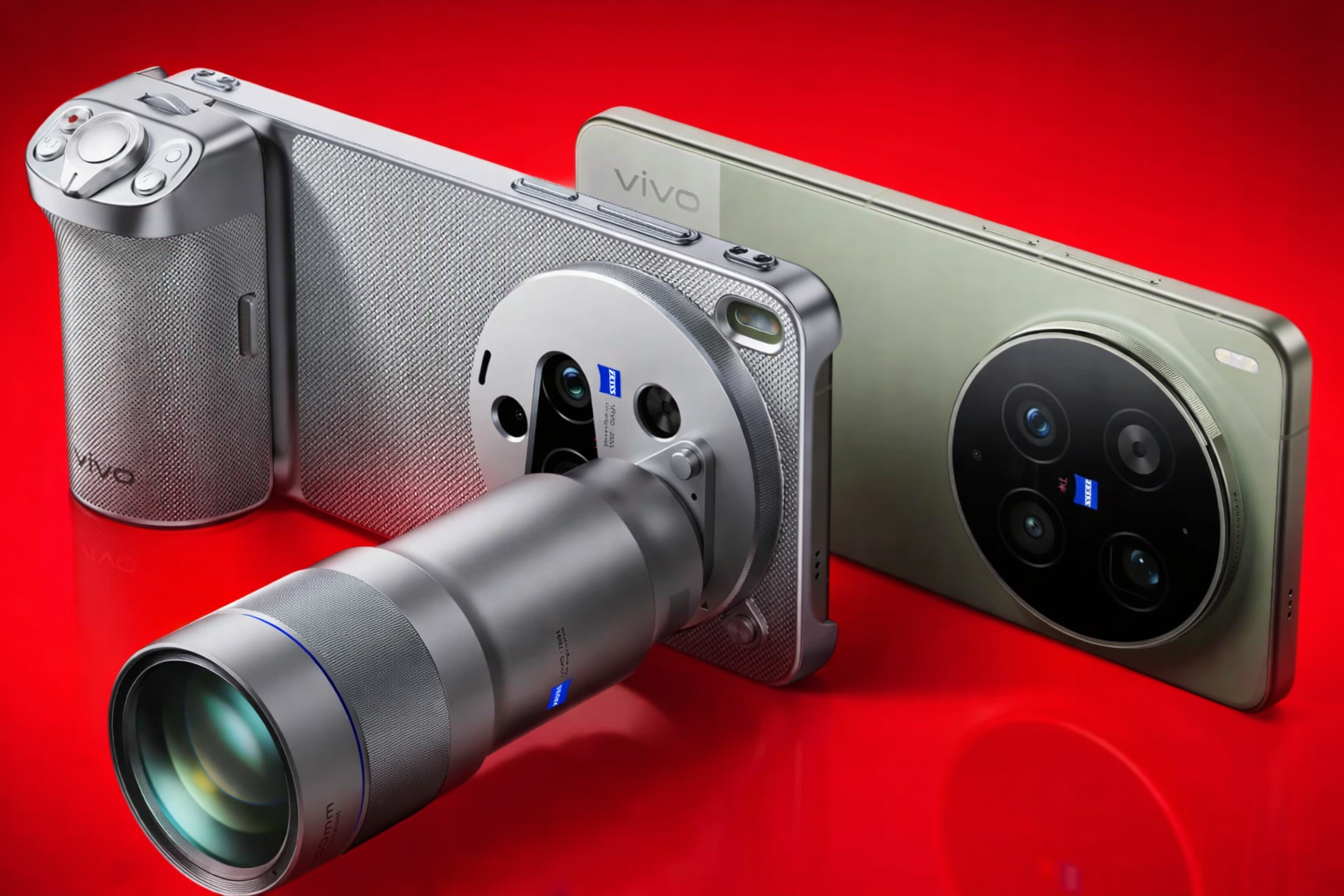
Vivo has introduced the X300 Ultra, a phone built less around the usual flagship script and more around what serious photographers actually carry in their bags. The company is treating it as a modular imaging system rather than a sealed device, and the difference shows up in nearly every part of the camera setup.
The headline addition is a ZEISS Master Lenses lineup that brings 14mm, 35mm, and 85mm focal lengths to the phone, each one running on its own dedicated sensor. Most smartphones lean on digital cropping to fake those framings. Vivo has gone the harder route, giving each focal length its own optical pipeline.
The 85mm ZEISS Gimbal Grade APO telephoto sits at the heart of it. It uses a 200 megapixel sensor and stabilisation tuned for handheld long range work, which is where most phone telephotos start to fall apart. Vivo says autofocus tracking goes up to 60 frames per second, the kind of figure that only makes sense if you are actually shooting football matches or birds in flight. ZEISS T coating and Super Blue Glass have been added to keep flare and ghosting in check.
A Camera System That Behaves Like One
The 35mm ZEISS Documentary camera uses Sony’s LYTIA 901 sensor, and the focal length itself tells you the intent. It is the classic street and reportage view, neither tight nor sweeping. The 14mm ultra wide closes out the main set, bringing better distortion control and a wider aperture for landscape and interior work.
What pushes the X300 Ultra into less familiar territory is what you can attach to it. Vivo is offering optional telephoto extenders that take the phone out to 200mm and 400mm equivalents. The 400mm extender uses a fifteen element design borrowed from Kepler optics, the sort of thing intended for stage shows, distant wildlife, and other situations where regular phone zoom collapses into noise.
Colour gets its own rework through what Vivo calls Vivo Color Science, built around a twelve channel multispectral sensor that reads light more carefully across mixed conditions. Skin tones under tungsten, neon at night, daylight bouncing off concrete, these are the situations where phone cameras usually slip, and Vivo is clearly aiming at them.
Video is treated with similar seriousness. The phone records 4K at 120 frames per second across focal lengths, supports 10 bit Log capture, and shoots in Dolby Vision. There is LUT preview built in and ACES workflow compatibility, both of which matter to anyone moving footage between a phone and a colour suite. A quad microphone array with directional presets handles audio, useful for interviews and live environments where you cannot reshoot.
Sitting alongside the Ultra is the X300 FE, a smaller and more affordable sibling. It carries a 50 megapixel ZEISS telephoto, works with the 200mm extender, and includes Stage Mode and AI assisted imaging. It is the version for people who want most of what the Ultra does without carrying the weight or paying for the full kit.
Pricing for the Vivo X300 Ultra and the optional ZEISS extenders has not been confirmed in the information available at this stage.
The phone arrives at a moment when the gap between dedicated cameras and high end smartphones keeps narrowing in odd, uneven ways. Vivo is not trying to replace a working photographer’s body and lenses. It is making a clear case that for a lot of assignments, especially the ones where you have to travel light and move fast, a phone like this one is starting to be enough.

Follow iNews Zoombangla On Google
Open the Google follow page and tap the checkmark option to receive more updates from iNews Zoombangla in your Google news feed.