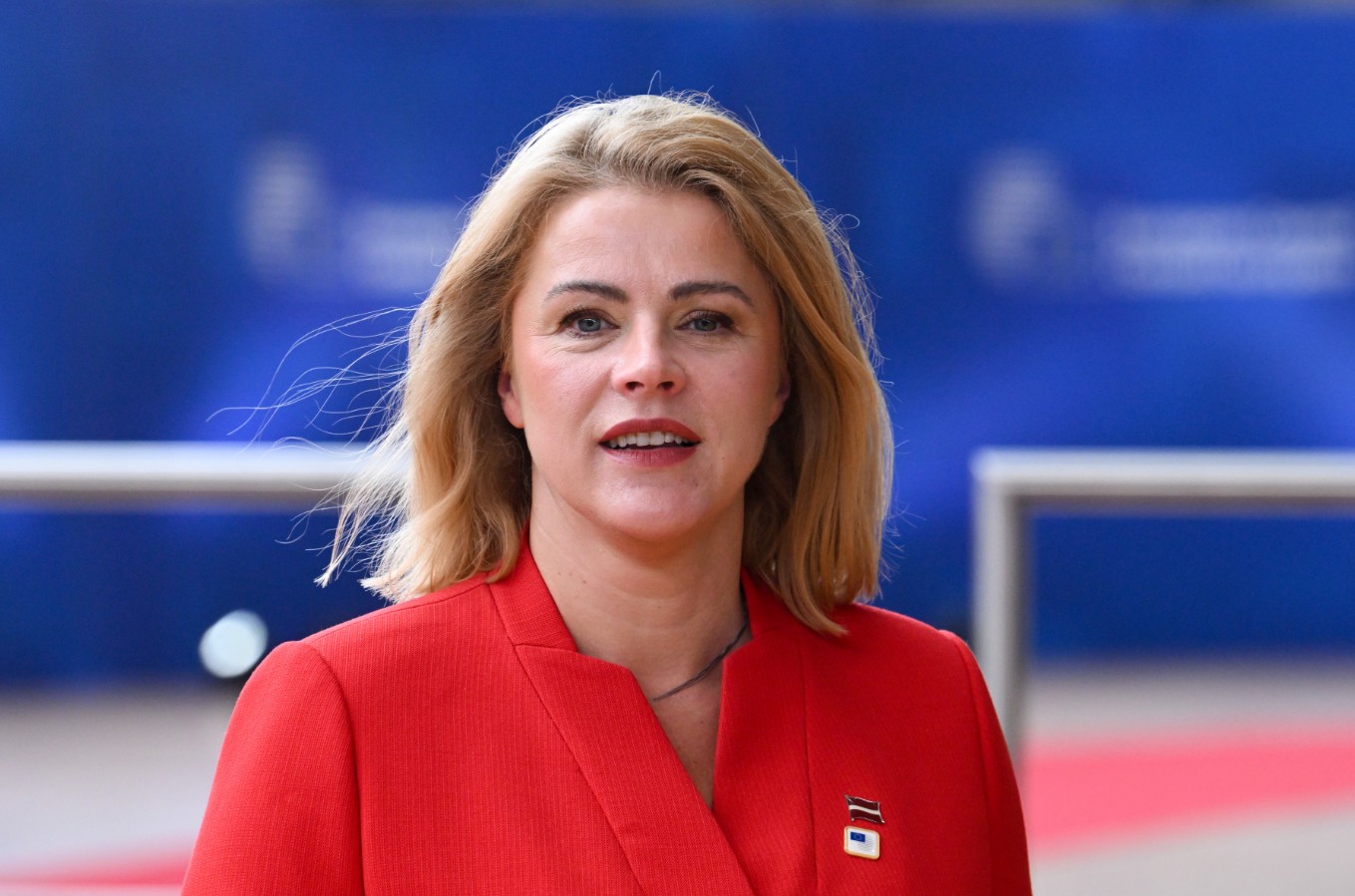
Evika Siliņa said on Thursday she would resign as Latvia’s prime minister, ending a tense week that exposed deep cracks inside the country’s governing coalition.
Her decision came before parliamentary elections due in October. It also followed a row over Ukrainian drones that entered Latvian airspace after being diverted from Russia, according to Ukraine’s foreign minister.
Siliņa said she had made a “difficult but honest decision” to step down. She said Latvia’s security and people had been her priorities, but party interests had overtaken responsibility.
The resignation leaves Latvia facing a fresh political test at a sensitive time. The Baltic state is already watching Russia’s war in Ukraine closely, while its own air defence system has come under sharp public and political pressure.
The immediate crisis grew after Defence Minister Andris Sprūds left his post. Siliņa had called for his resignation after Latvian air defences were breached by Ukrainian drones diverted from Russia.
Sprūds’ Progressives Party then withdrew support from the government. That move left Siliņa’s Unity Party without a working majority and pushed the coalition toward collapse.
President Edgars Rinkēvičs now has to guide the next stage. He is expected to meet representatives of all parliamentary parties on Friday before choosing a new head of government.
Ukraine has tried to frame the drone incidents as part of Russia’s wider electronic warfare. Foreign Minister Andrii Sybiha said on Sunday that Russian systems had deliberately diverted Ukrainian drones from their intended targets in Russia.
He also offered Ukrainian help to Latvia, other Baltic states and Finland. Kyiv has built strong drone and air defence experience through years of war, where long range missiles and unmanned systems have shaped the battlefield.
The political damage in Riga did not stop with the drone dispute. Latvia was also hit by a separate corruption investigation involving senior officials.
Agriculture Minister Armands Krauze and State Chancellery Director Raivis Kronbergs were detained by the Corruption Prevention and Combating Bureau, according to prosecutors cited by Latvian news agency LETA.
Raids were carried out at their homes and workplaces. Their phones were reportedly switched off while investigators pursued the case.
The allegations concern misuse of authority and carelessness in the illegal allocation of government aid to companies in the timber sector.
That sector matters deeply to Latvia’s economy. Forests cover 3.441 million hectares, or 53 percent of the country’s territory, and timber processing is its largest industrial sector.
For Siliņa, the timing could hardly have been worse. A security dispute weakened her coalition. A corruption probe added pressure. Then one partner walked away.
Latvia now enters the months before the October vote with no settled governing majority. The next prime minister will inherit the same hard questions, but with less time and less political calm.

Follow iNews Zoombangla On Google
Open the Google follow page and tap the checkmark option to receive more updates from iNews Zoombangla in your Google news feed.