Smartphones in 2026 have crossed a threshold. They’re no longer just tools that talk to cloud servers. They’re becoming autonomous agents that think on the device itself, process commands with reasoning, and handle complex tasks without requiring an internet connection.
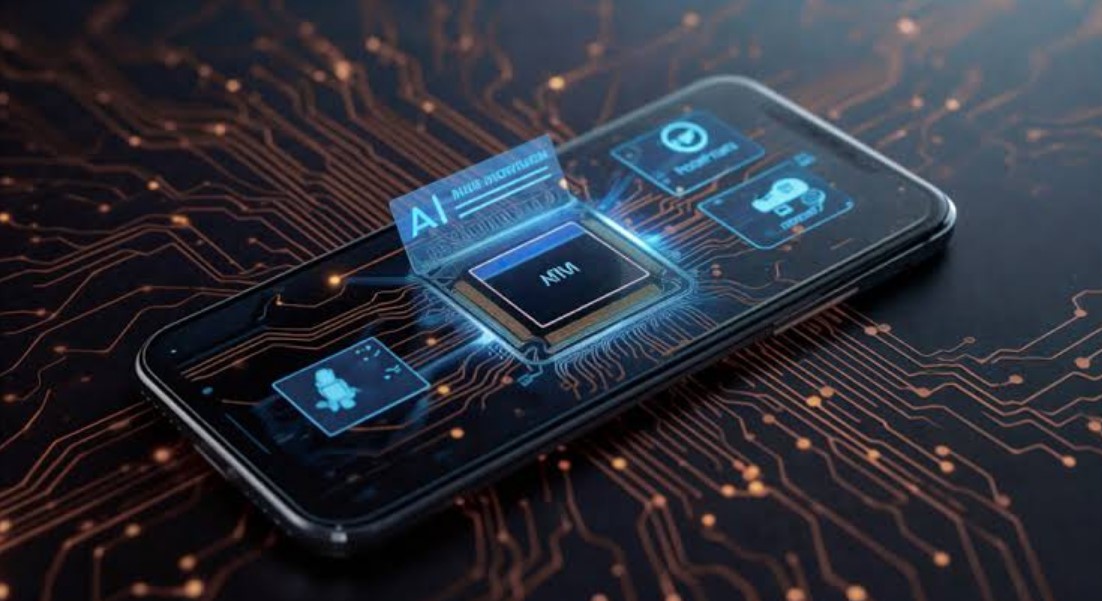
The shift to on-device AI isn’t marketing hype. It’s fundamental. When AI functions run on the phone instead of in a distant data center, information stays private, responses come faster, and the phone works even without connectivity.
Agentic AI Phones Demo at Shanghai Summit
ZTE Corp. showcased its lineup of co-designed smartphones at China’s premier tech summit in Shanghai. The NaviX Ultra, which ZTE called the world’s first agentic AI smartphone, can order food, compose messages, and handle voice commands that require reasoning—all running locally on the device.
Tech firms racing to roll out advanced smartphones with AI to do everything from customer service to content creation are betting that on-device AI is the next frontier. Samsung‘s Galaxy S25 ranks among the top AI phones of 2026 for users who multitask across applications.
Privacy and Performance Win Together
On-device AI offers faster responses because information no longer travels to remote servers. More importantly, sensitive information can stay on the phone instead of being uploaded to external systems. That’s a real advantage for privacy-conscious users and enterprises that handle confidential data.
The Architecture Shift
Traditional smartphone architecture had the processor and memory handling local tasks, with cloud AI for heavy lifting. Now, processors are getting smarter cores designed specifically for AI reasoning. Memory is expanding to hold larger models on-device.
On-device AI is not coming someday—it’s the defining feature of flagship phones shipping in 2026.
References
Bloomberg. (2026). China joins rush to rethink the smartphone for the AI era. Published July 18, 2026.
The Star. (2026). Pocket-size AI: Powerful phones star at China show. Published July 20, 2026.

Follow iNews Zoombangla On Google
Open the Google follow page and tap the checkmark option to receive more updates from iNews Zoombangla in your Google news feed.