Apple shares slipped during the company’s latest product event as investors weighed a larger foldable phone, higher Pro-model prices and the cost of turning new hardware into profitable volume. The market reaction showed that a headline-making launch still has to answer a basic business question: can Apple expand its premium range without putting pressure on demand?
CNBC reported that Apple stock opened at $315.49 on September 9, briefly rose to $318 and then moved lower for most of the nearly 80-minute presentation. The stock finished at $315.34, down 0.28% for the session, according to the live event recap. CNBC also reported that Apple remained up about 15% for the year, slightly ahead of the Nasdaq.
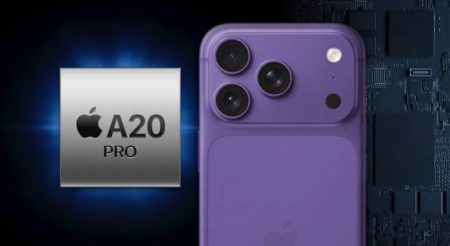
Reuters reported that Apple unveiled the foldable iPhone Duo at a starting price of $1,999. The passport-shaped device opens to a 7.6-inch display and has a 5.4-inch outer screen. It uses the A20 Pro chip, a new C2 modem and up to 2 terabytes of storage. Pre-orders are scheduled to start October 16, with store sales beginning October 23.
The Duo gives Apple a new product category and a higher-priced item to sell to its most affluent customers. It also raises execution demands. Foldable phones require more complex screens, hinges and durability engineering than conventional smartphones. Reuters said Apple priced the Duo about $100 above comparable base versions of Samsung’s Galaxy Z Fold8 and Google’s Pixel 11 Pro Fold.
Apple also raised the starting price of the iPhone 18 Pro by $100 to $1,199 and the iPhone 18 Pro Max to $1,299. Reuters said the company linked the increases to a surge in memory-chip costs. CNBC likewise reported that Apple had raised prices on Macs and iPads earlier in the year as memory and storage costs increased.
That cost pressure makes the product mix important for investors. A higher selling price can protect revenue per device, but it may also limit unit demand if customers delay upgrades or choose lower-priced models. The foldable Duo could improve Apple’s product mix even if its sales volume is smaller than that of the regular iPhone, but the company must still control manufacturing yields, component availability and launch timing.
Apple is also pushing its own hardware and software systems deeper into the product economics. Reuters said the A20 Pro is built on a 2-nanometer process and is designed to improve on-device artificial-intelligence performance. The C2 modem is Apple’s second-generation in-house modem, which reduces reliance on Qualcomm. CNBC reported that Apple said the C2 is 50% faster than its previous modem and uses 15% less energy.
Those developments can give Apple more control over product design and supplier costs over time, but they require substantial investment before the benefits appear in earnings. A new modem, a new processor and a first-generation foldable phone each carry separate production and quality risks. The initial share reaction suggests investors are looking for proof that the strategy can scale, rather than treating the launch itself as a guaranteed growth event.
The Apple share price therefore reflects a balance between product momentum and execution risk. The event delivered a new premium category, but it also highlighted higher prices and component inflation. Pre-order demand, supply availability and early margin commentary will be more useful tests of the strategy than the launch-day move alone.

Follow iNews Zoombangla On Google
Open the Google follow page and tap the checkmark option to receive more updates from iNews Zoombangla in your Google news feed.