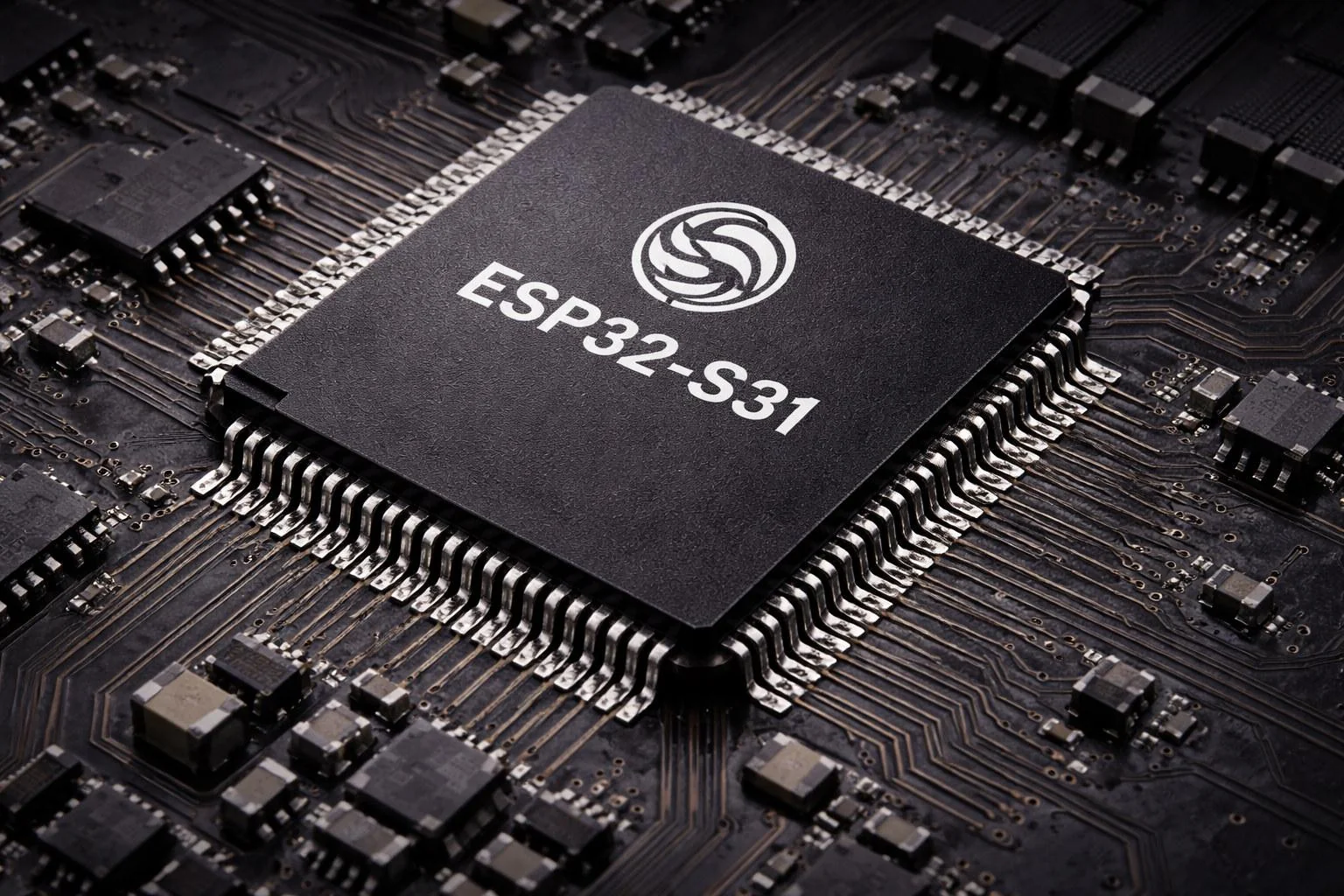
Espressif has moved the ESP32-S31 family into mass production, giving developers a new board platform built around a dual-core RISC-V processor. The company’s product news lists a clock speed of up to 320MHz and combines Wi-Fi 6, Bluetooth 5.4 and IEEE 802.15.4 connectivity. Espressif’s DevKit catalog also places the ESP32-S31 DevKit in its current developer-hardware lineup.
The biggest change for many ESP32 developers is the move to Wi-Fi 6. Espressif says the chip supports 2.4GHz Wi-Fi 6, which can help connected devices manage busy wireless environments more efficiently when paired with a compatible network. It does not automatically make an IoT project faster in every situation, because range, router support, antenna design and the software stack still shape the result.
Bluetooth 5.4 gives the board another short-range option. The same chip also includes IEEE 802.15.4 support for protocols such as Zigbee and Thread, according to Espressif. That combination could let one design serve a wider mix of sensors, controllers and smart-home products instead of requiring separate hardware for each radio standard.
Espressif is also listing a Gigabit Ethernet MAC. For developers, that matters in gateways and fixed installations where a wired link is more predictable than Wi-Fi. The MAC is a controller feature inside the chip; a finished device still needs the right external physical-layer hardware, board layout and software configuration before it can operate as a Gigabit Ethernet product.
The RISC-V architecture gives programmers a familiar open instruction-set foundation, but the useful question is how the chip behaves in an actual project. Developers will need to check the current SDK support, peripheral documentation, power modes and available examples before assuming an existing ESP32 application will move across unchanged. Mass production improves availability, yet software maturity can still vary between a launch board and a stable long-term platform.
Espressif’s official product news says the ESP32-S31 is available through distribution channels including AliExpress. That makes it easier for hobbyists and small teams to experiment, although local pricing, shipping and supply can change. A DevKit is best treated as a development tool rather than proof that a finished commercial product will have the same radio performance or power consumption.
The ESP32-S31 DevKit is notable because it brings several current connectivity standards into a small developer-focused package. Wi-Fi 6, Bluetooth 5.4, Zigbee, Thread and a Gigabit Ethernet MAC give programmers more design choices at the start of a project. The next test is practical: stable toolchain support, accurate power measurements and reliable behavior across the network environments where the final device will be used.

Follow iNews Zoombangla On Google
Open the Google follow page and tap the checkmark option to receive more updates from iNews Zoombangla in your Google news feed.