Google has introduced a new wearable under its Fitbit brand, returning to the mainstream fitness tracker market with a product that takes a notably different direction from recent smartwatch trends. The new Fitbit Air arrives nearly three years after the company’s last major tracker launch and leans heavily on minimalism, passive health monitoring, and app-driven insights rather than constant on-device interaction.
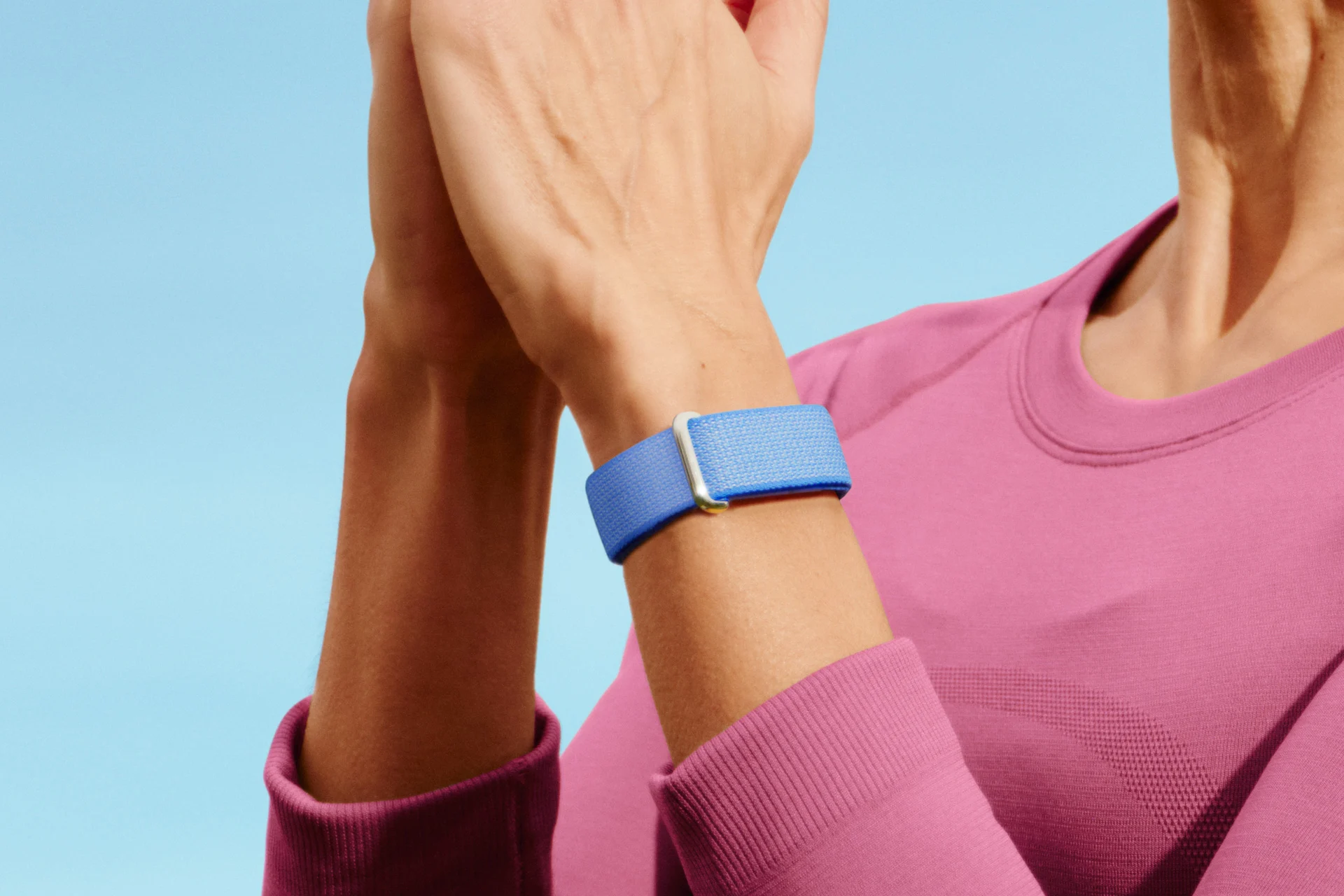
At first glance, the Fitbit Air barely resembles the smartwatch-style wearables that have come to dominate the category. There is no screen, no physical buttons, and no notifications competing for attention throughout the day. Instead, the device is built around the idea of staying largely unnoticed while continuously collecting health and activity data in the background.
The tracker weighs 12 grams and is roughly 25 percent smaller than the Fitbit Luxe. Google has positioned it as a lightweight option for users who may find larger smartwatches uncomfortable, distracting, or unnecessary for routine health tracking.
Most interaction happens through the Google Health app, where users can view metrics, activity summaries, and wellness insights. On the device itself, feedback is limited to subtle haptic alerts and a small status light.
Despite the simplified design, Fitbit Air includes a broad range of health sensors. The device supports continuous heart rate tracking, heart rhythm monitoring with Afib alerts, blood oxygen tracking, resting heart rate measurement, and heart rate variability monitoring. Sleep tracking remains a major focus, with support for sleep stage analysis and overnight wear designed to remain comfortable over extended periods.
Google is also bringing automatic workout detection to the device, with the system expected to improve recognition accuracy over time. Users can still manually log workouts and access guided fitness routines through Google Health Coach.
Battery life is another area where Fitbit Air appears aimed at practicality rather than feature overload. Google says the device can last up to seven days on a single charge, while a brief five-minute charge is expected to provide enough power for a full day of use.
The body uses a polycarbonate shell with 50-metre water resistance. The central tracker module can be detached and paired with interchangeable bands, allowing users to switch between styles depending on activity or preference. Google plans to offer several options, including a breathable Performance Loop, a sweat-resistant Active Band, and a more fashion-oriented Elevated Modern Band.
A special edition version developed with basketball player Stephen Curry adds a rye brown finish, orange accents, and a textured inner surface intended to improve airflow during workouts.
Fitbit Air starts at USD 99.99, while the special edition model is priced at USD 129.99. Buyers will receive a three-month trial of Google Health Premium, although the company says standard tracking functions will continue to work without a subscription.
Pre-orders have opened ahead of retail availability in the United States on May 26.
Google has not announced an India launch timeline so far. That leaves some uncertainty around how aggressively the company plans to position the device in markets where subscription-based health wearables such as Whoop and Oura have gradually gained attention among athletes and fitness-focused users.
What distinguishes Fitbit Air, at least initially, is its attempt to simplify the wearable experience rather than expand it. Instead of adding more screens, apps, or real-time interaction, the device appears built around quiet, continuous tracking that asks very little from the user once it is worn.
Read More:
Canvas Hacked as Cyberattack Disrupts Exams at Universities and Schools Across the US
For consumers looking primarily for health and sleep monitoring without the demands of a full smartwatch interface, that restraint may end up being the product’s defining feature.

Follow iNews Zoombangla On Google
Open the Google follow page and tap the checkmark option to receive more updates from iNews Zoombangla in your Google news feed.