Flipper One is being built as a very different device from the company’s smaller Flipper Zero. Flipper Devices describes the new project as an open Arm Linux computer and networking tool based on Rockchip’s RK3576 platform. Its Flipper One offline AI plan is part of that hardware story, but the company is still asking the community to help develop the system.
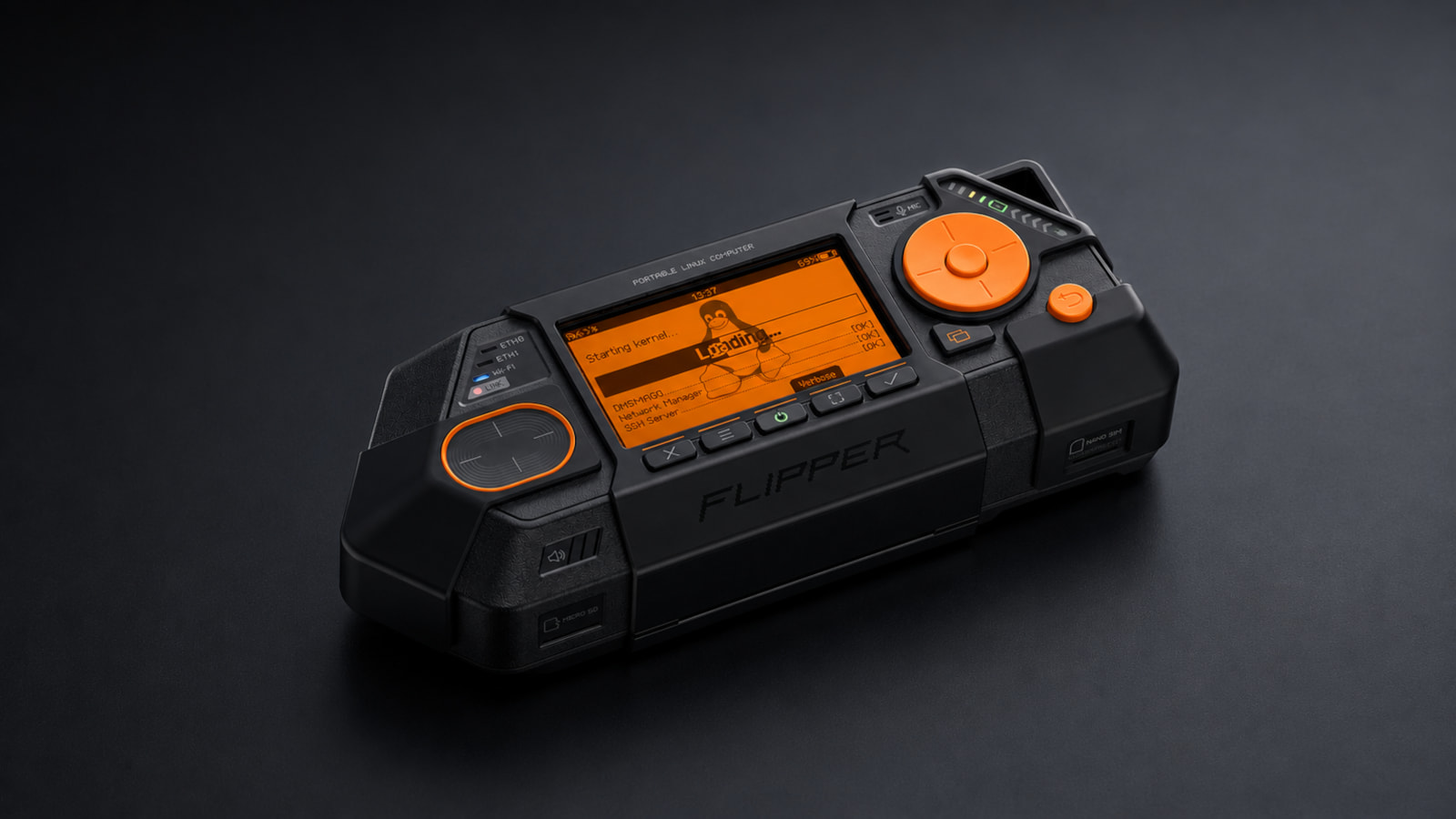
The central AI idea is local processing. Flipper’s announcement says the built-in accelerator could run a language model on the device instead of sending every request to a cloud service. That could reduce dependence on an internet connection and keep some experiments closer to the hardware, although it does not guarantee that a finished local model will match a large online assistant.
TechRadar reported that Flipper One combines an octa-core Rockchip processor with a separate low-power microcontroller for device controls. The report also noted that features such as an integrated offline LLM had not yet been demonstrated. That is an important qualification: the current news is an engineering direction and community project, not proof that consumers can already buy a working offline AI computer.
The open Linux approach is central to the design. Flipper’s development material points to work on the upstream kernel, boot process, display, buttons, power system and other drivers. Opening those layers gives developers a chance to inspect the platform, contribute fixes and build tools that would be difficult to support on a closed appliance.
Local AI would also change the device’s practical role. A model running on the NPU could help with short technical queries, device notes or network tasks while the computer is away from a stable connection. The quality will depend on model size, memory, thermal limits and software optimization. A local model can be private and responsive, but it may know less, reason less reliably and consume more power than a remote service.
Because Flipper One is a networking and radio-oriented computer, responsible use matters. Security researchers should test only systems they own or have permission to assess. An offline assistant does not make an action safe by itself, and users still need clear boundaries around scanning, credentials, personal data and any automation that can affect another device.
Flipper Devices has not published a final retail date or a complete consumer specification in the sources reviewed. For now, the confirmed picture is an open RK3576 Linux platform with an AI accelerator and a proposed path to local language-model experiments. Flipper One will become a stronger AI story only after the offline model, performance, battery behavior and safety controls are shown in repeatable testing.

Follow iNews Zoombangla On Google
Open the Google follow page and tap the checkmark option to receive more updates from iNews Zoombangla in your Google news feed.