The Group of Seven summit in Evian-les-Bains, France concluded on Tuesday with leaders issuing a series of targeted statements on Ukraine aid, the forthcoming Iran nuclear deal, and a coordinated push to reduce Western dependence on Chinese-controlled rare earth supply chains.
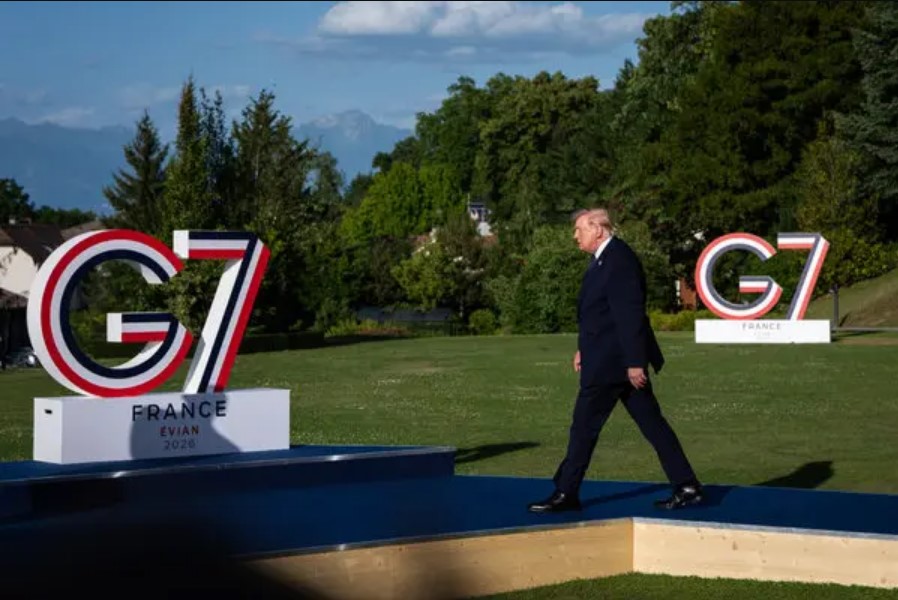
The three-day summit, hosted by French President Emmanuel Macron, ended without a traditional joint communiqué. Instead, leaders agreed on a set of individual statements covering specific issues, a format that reflects the difficulty of reaching unanimous agreement among seven governments with increasingly divergent positions on trade, foreign policy, and development finance.
On Ukraine, the G7 reaffirmed collective support for Kyiv and renewed the commitment to use proceeds from frozen Russian sovereign assets to fund Ukrainian defence and reconstruction. The statement stopped short of announcing new military packages, with those expected to be handled bilaterally in the weeks ahead. Leaders also expressed support for peace negotiations resuming in July through a format proposed by Gulf mediators.
The Iran discussion was dominated by the upcoming Geneva signing ceremony on June 19, where the United States and Iran are expected to formalise a nuclear deal that has been negotiated over several months. European leaders broadly welcomed the development, with French and German officials expressing particular relief that a military confrontation had been averted. President Trump is still considering whether to attend the signing in person.
The critical minerals statement was more substantive. G7 nations agreed to a set of joint investment principles designed to accelerate domestic mining and processing capacity in member countries and friendly partners, specifically to reduce the roughly 70 percent dependence on Chinese processing facilities for rare earth elements used in electric vehicles, wind turbines, and defence systems. The initiative builds on groundwork laid at the previous year’s summit and includes new commitments from Japan, Canada, and Australia.
Trade tensions between the United States and European members over steel and aluminium tariffs were discussed in private sessions but did not produce a public resolution. The tariff dispute has complicated transatlantic economic relations and is expected to continue through diplomatic channels.
The next G7 summit is scheduled to be hosted by Canada in 2027. Italy holds the G7 presidency for the remainder of 2026.