Garmin has introduced the Forerunner 70, delivering the first major refresh to its entry-level running watch range in several years and bringing a number of long-awaited updates to the most affordable end of the company’s dedicated running portfolio.
The launch addresses a segment that had seen relatively little change since the arrival of the Forerunner 55 in 2021. While Garmin continued to expand and refine its higher-end products with new display technologies, health-tracking tools and sensor upgrades, its lower-priced running watch offering remained largely unchanged.
With the Forerunner 70, Garmin has moved its entry-level category closer to the broader design and feature direction seen across its current Forerunner family. The watch joins a lineup that now includes newer AMOLED-equipped models such as the 170, 570 and 970, incorporating hardware and software improvements that had previously been associated with more expensive devices.
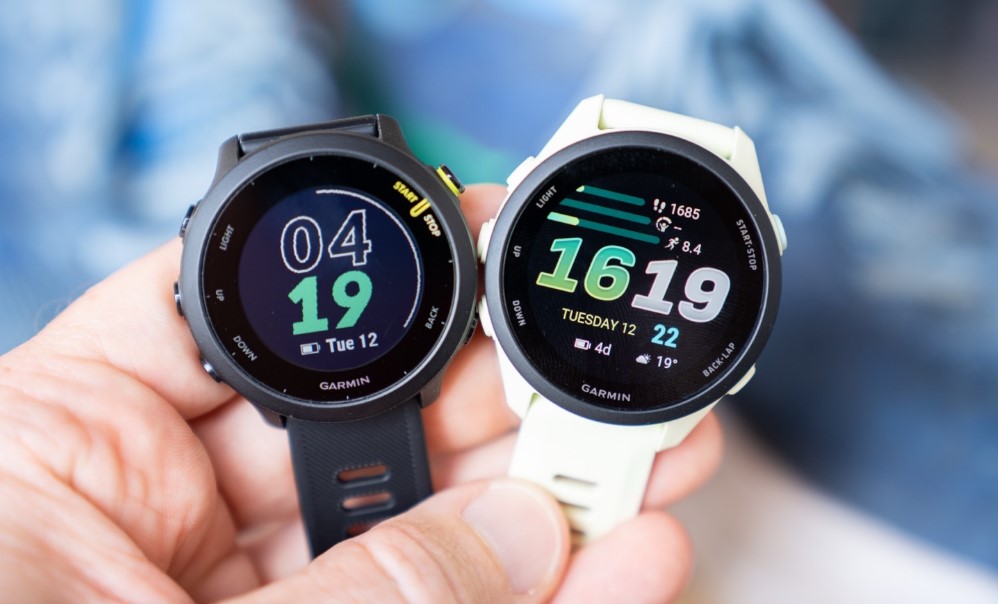
The company has retained a familiar design language. The Forerunner 70 continues to use Garmin’s established five-button configuration, with two buttons positioned on the right side of the case and three on the left. It also supports standard 20 mm silicone straps, allowing users to swap bands without relying on proprietary attachment systems.
At launch, Garmin is offering the watch in a single case size. Measuring about 43 millimeters, the device sits close to the dimensions of the Forerunner 165 and is broadly aligned with the smaller version of the 570 series. The sizing suggests an emphasis on a lightweight running watch that remains suitable for a wide range of users.
Battery life remains an important consideration in the category. Garmin rates the Forerunner 70 for up to 13 days in smartwatch mode when the always-on display feature is disabled. Reported testing, however, indicated real-world performance of roughly nine and a half days under similar settings and around six days with the always-on display enabled.
The watch continues to use Garmin’s existing charging ecosystem. A standard rear charging connector is included, and the device ships with the same USB charging cable used across much of the modern Forerunner range.
One area where Garmin has opted against the latest hardware concerns heart-rate monitoring. The company confirmed that the Forerunner 70 uses the same sensor found in the Forerunner 165 rather than the newer version introduced with the 570 and 970.
Even so, reported testing suggested only limited practical differences during everyday use. The earlier sensor was found to deliver dependable performance, despite lacking Garmin’s most recent refinements.
The market environment facing the new watch is markedly different from the one that greeted the Forerunner 55 several years ago. Competition in the affordable running watch segment has intensified as manufacturers including Coros and Suunto have expanded their own offerings for budget-conscious runners.
At the same time, Garmin has increasingly concentrated on premium devices, with some flagship products now carrying prices above $700. Against that backdrop, the arrival of the Forerunner 70 represents an effort to maintain a strong presence in the entry-level category while bringing its lower-priced running watch closer to the standards established elsewhere in the lineup.
Also Read:
Nubia Z80 Ultra Expands Globally With Snapdragon 8 Elite Gen 5 and 7,200 mAh Battery
Rather than introducing a dramatic shift in strategy, the Forerunner 70 appears focused on updating a long-overlooked part of Garmin’s portfolio. Its significance lies in narrowing the gap between the company’s most affordable running watch and the features, design approach and user experience found across the broader Forerunner family today.

Follow iNews Zoombangla On Google
Open the Google follow page and tap the checkmark option to receive more updates from iNews Zoombangla in your Google news feed.