The Perseid meteor shower reached its peak overnight Wednesday into Thursday, with skywatchers across the Northern Hemisphere getting a rare assist from a new moon that kept the sky dark for viewing, astronomers said. The broad peak window ran from Wednesday evening through Thursday morning GMT, with the highest rates expected in the pre-dawn hours, according to Space.com and the Planetary Society.
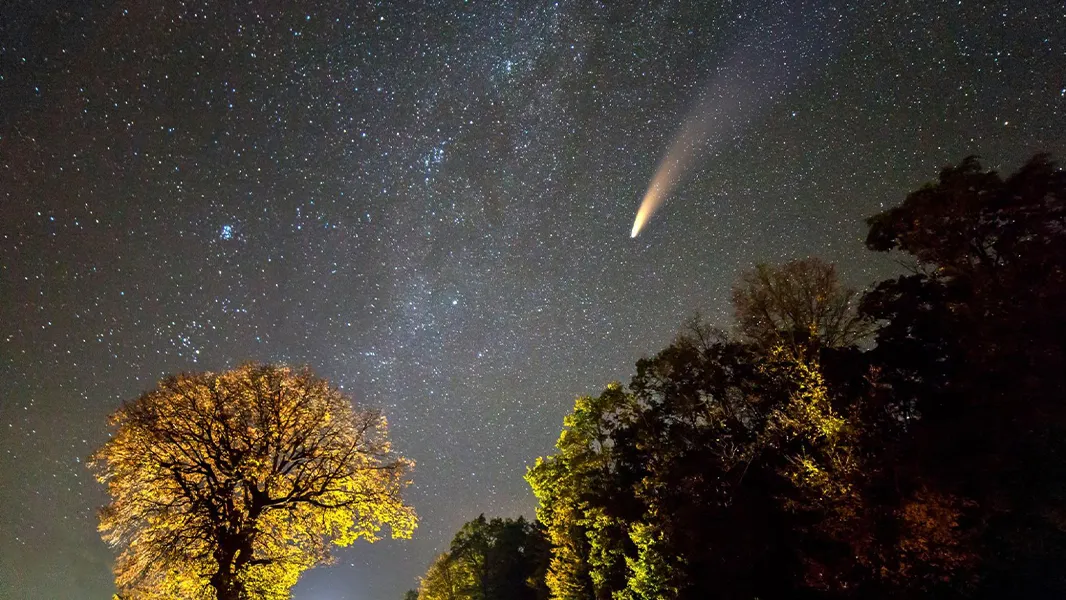
Under clear, dark conditions away from city lights, viewers could see between 50 and 75 meteors an hour, though the International Meteor Organization’s shower calendar suggested activity could run somewhat lower than usual this year before picking back up in 2027, when Earth is expected to cross a denser part of the debris stream disturbed by Jupiter’s gravity.
The Perseids are debris shed by comet Swift-Tuttle, which last passed through the inner solar system in 1992. Each August, Earth passes through the trail of dust and ice left behind, and the particles burn up in the atmosphere at roughly 58 kilometers per second, producing the fast, bright streaks the shower is known for.
This year’s peak carried an unusual coincidence. Earlier on August 12, the moon passed directly in front of the sun in a total solar eclipse visible along a path crossing Russia, Greenland, Iceland and Spain, marking the first time in the 21st century that a total solar eclipse and the Perseid peak have landed within a day of each other, astronomers noted.
Skywatchers were advised to look away from the constellation Perseus, the shower’s radiant point, rather than directly at it, since meteors appear longer and more dramatic farther from that point. The shower remains active in a weaker form through late August, giving stragglers a smaller chance to catch a few more meteors in the coming nights.

Follow iNews Zoombangla On Google
Open the Google follow page and tap the checkmark option to receive more updates from iNews Zoombangla in your Google news feed.