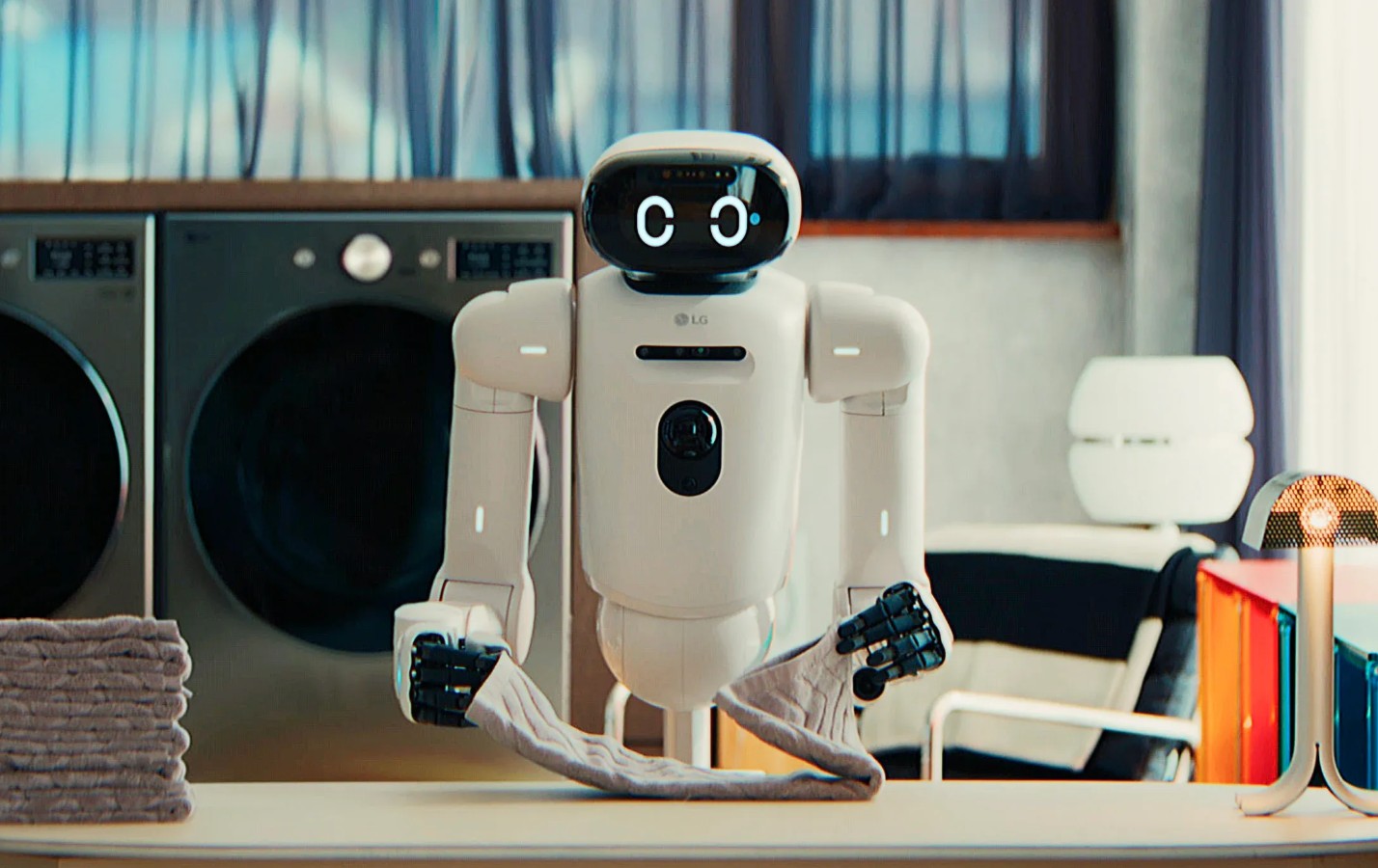
LG has unveiled CLOiD, a home AI robot designed to perform household tasks including cooking and laundry, bringing an AI-powered domestic assistant closer to the consumer market than any previous offering from the company.
CLOiD combines a vision-based system with AI processing to navigate the home, identify objects and execute multi-step tasks without human intervention during each action. LG demonstrated the robot loading and running a washing machine, setting ingredients on a cooking surface and monitoring food preparation, all from voice instructions issued by a person in another room.
The robot is designed to integrate with LG’s existing ThinQ appliance ecosystem, which allows it to communicate directly with connected washing machines, ovens and other smart home devices. Rather than operating with physical manipulation alone, CLOiD can send commands directly to a ThinQ-connected appliance and monitor its status through the network, reducing the physical load on the robot’s arm and improving task reliability.
LG has not announced a commercial release date or price for CLOiD. The announcement positions the company in a market where several robotics startups and larger manufacturers have been racing to deliver a working home robot at a price consumers will pay. Previous attempts — from iRobot’s cleaning-focused devices to various AI companion robots — have either remained in specialized niches or failed commercially before reaching scale.
The appeal of a robot that handles laundry and cooking is obvious. Both tasks are time-consuming, regular and sufficiently structured that a machine with adequate vision and dexterity can theoretically perform them. The gap between theory and a reliable product at household scale is still significant, but LG’s demonstration showed a level of capability that earlier home robotics efforts had not publicly matched.
The announcement came alongside a broader wave of AI hardware launches at industry events in 2026. The SwitchBot AI MindClip wearable targeting meeting translation, and the Xreal 1S AR glasses targeting portable displays, reflect a market that is expanding from smartphones and laptops toward a broader range of AI-embedded devices.
LG’s entry into home robotics builds on its position in home appliances. Google’s Android 17 rolling out to Pixel devices this month showed how AI is embedding deeper into the software layer, while CLOiD represents the hardware counterpart to that same trend. The wearable and robotics category is growing — Samsung’s Z Fold 8 launches in July as another premium AI-forward device. LG’s full product roadmap for CLOiD will be presented at an upcoming LG innovation event later in 2026.
Whether CLOiD reaches consumers at an affordable price and with reliable enough performance to justify it will be the real test. LG has shown what the robot can do in controlled conditions. The harder question is whether it works the same way in a real kitchen and real laundry room, every time.

Follow iNews Zoombangla On Google
Open the Google follow page and tap the checkmark option to receive more updates from iNews Zoombangla in your Google news feed.