Astronomers have confirmed GJ 523b, a rocky exoplanet that is roughly 23 times more massive than Earth and about 2.5 times wider. The unusual world became a rising science search in the United States on August 21 after fresh coverage of the planet’s confirmation and orbit.
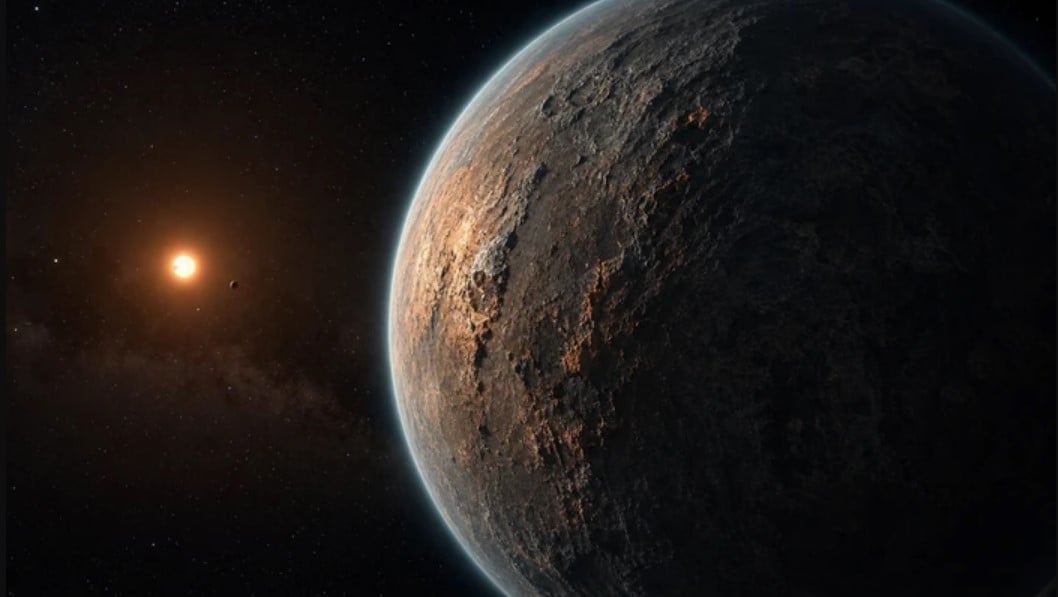
Space.com reported that GJ 523b was first identified as a candidate by NASA’s Transiting Exoplanet Survey Satellite, or TESS. Researchers then used radial-velocity measurements to confirm the planet and estimate its mass. The planet circles the mid-K dwarf star GJ 523, which is relatively close in astronomical terms.
The research paper deposited in the arXiv database describes GJ 523b as a massive, approximately 170-million-year-old mega-Earth that is likely on a polar orbit. A polar orbit means the planet’s path is highly inclined relative to the star’s equatorial plane, a feature that can help scientists understand how planetary systems form and evolve.
Calling GJ 523b a mega-Earth does not mean it is a larger version of Earth with a known surface environment. The term refers to its unusually large mass and rocky nature. Scientists do not yet have evidence that it supports life, and the current observations do not provide a detailed picture of its atmosphere or surface conditions.
The discovery matters because it gives researchers a laboratory for studying the limits of rocky planets. A world this massive can help test whether planets remain rocky as they grow, how young systems arrange their orbits and how measurements from transit and radial-velocity methods complement each other.