A meeting in Paris between French President Emmanuel Macron and Italian Prime Minister Giorgia Meloni was intended to focus on urgent geopolitical concerns, but it briefly took an unexpected turn into the public spotlight for a different reason.
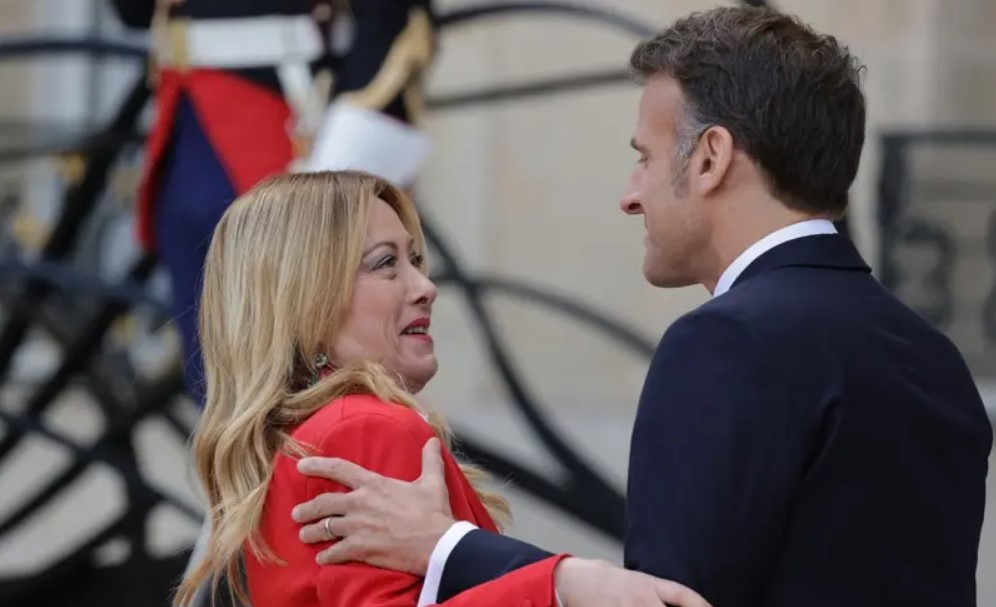
Video footage from their greeting circulated widely online, showing what appeared to be a routine exchange evolving into a moment that some viewers found awkward. Meloni’s reaction, captured on camera, prompted a wave of interpretations across social media, with users debating whether the interaction reflected discomfort or simply a light, unscripted exchange between two leaders.
Some online responses dismissed the speculation. One user suggested the moment was nothing more than a shared joke, while another interpreted Macron’s gesture as an expression of enthusiasm. The clip’s rapid spread underscored how even minor diplomatic moments can draw disproportionate attention in the digital space.
Behind the brief distraction, the meeting itself formed part of broader discussions centred on rising tensions in the Middle East, particularly the situation involving Iran and the Strait of Hormuz. The narrow waterway remains a critical artery for global trade, and recent developments have raised concerns over potential disruptions.
France and the United Kingdom have since outlined plans to lead a multinational maritime mission aimed at ensuring safe passage through the strait. Officials described the initiative as defensive in nature, with deployment contingent on the establishment of a lasting peace in the region.
British Prime Minister Keir Starmer, speaking alongside Macron during international talks in Paris, indicated that preparations were already underway. He noted that more than a dozen countries had expressed willingness to contribute resources, framing the effort as a stabilising presence rather than a military escalation.
The discussions brought together representatives from 49 countries across Europe and Asia, though the absence of both the United States and Iran was notable, given their direct involvement in the ongoing conflict. Iran’s earlier blockade of the strait, following hostilities with the US and Israel that began on February 28, had triggered global concerns over supply chains, fuel availability and inflation.
Markets showed some signs of easing after Iran’s Foreign Minister Abbas Araghchi stated that commercial shipping would be allowed to continue as long as a ceasefire holds. Even so, participating leaders stressed the need for a full and unconditional reopening of the route.
Meloni signalled Italy’s readiness to join the proposed mission but made clear that any deployment would depend on an end to hostilities. German Chancellor Friedrich Merz echoed support for the plan and suggested broader international participation would strengthen its effectiveness.
Read More:
Srinivas Narayanan OpenAI Exit Marks Transition After Three Years in B2B Leadership
For now, the focus remains on maintaining stability in one of the world’s most strategically sensitive corridors, even as moments from high-level diplomacy continue to unfold under an increasingly watchful public gaze.

Follow iNews Zoombangla On Google
Open the Google follow page and tap the checkmark option to receive more updates from iNews Zoombangla in your Google news feed.