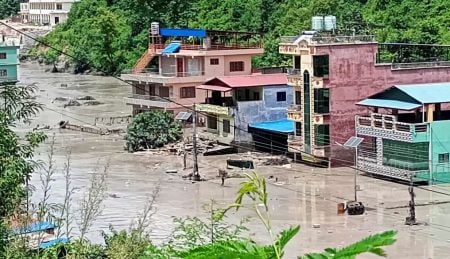
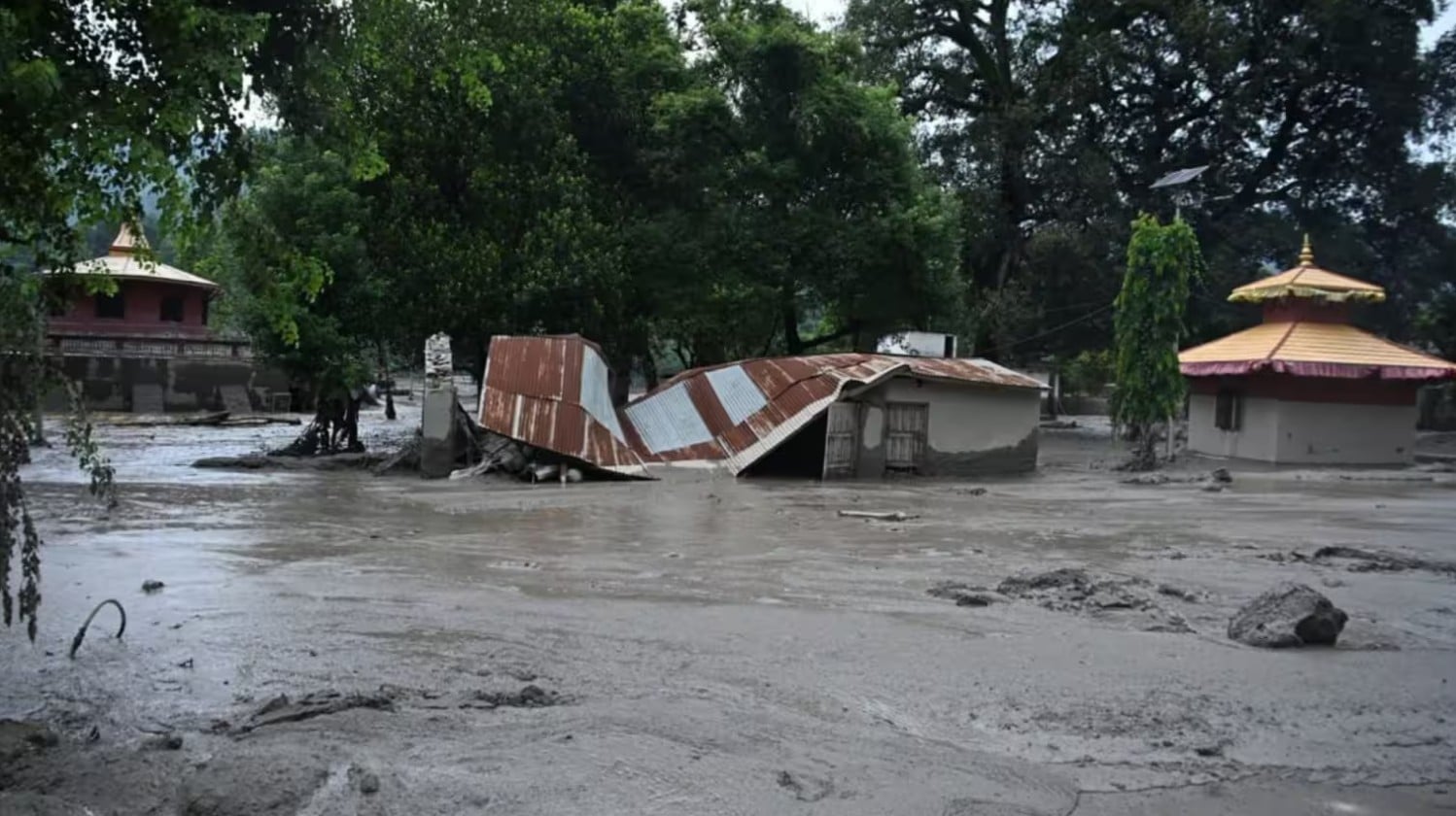
Nepal floods in the northern district of Rasuwa have triggered a widening rescue operation after an avalanche of ice and rock sent a destructive surge through the Bhotekoshi river system. The Associated Press reported that the disaster killed at least 72 people by Wednesday, while hundreds remained missing. Earlier local reporting recorded a lower confirmed toll as officials worked through damaged settlements and difficult access routes.
The Kathmandu Post reported that 384 people, including 291 foreign nationals and 32 security personnel, were out of contact in the early assessment. The numbers are not a final casualty list. They show the scale of the communications and transport disruption in an area where roads, bridges and other infrastructure were swept away or blocked by debris.
Rescue teams have faced a second challenge in reaching the affected communities. According to the Kathmandu Post, poor weather repeatedly disrupted helicopter operations. The airport rescue coordination centre recorded 29 private and six military helicopter flights from Tribhuvan International Airport, with several returning to Kathmandu carrying injured people. That air bridge is important because damaged roads have limited the movement of medical teams, food and emergency equipment.
Radio Nepal said the government ordered immediate rescue, treatment and relief work for victims in Rasuwagadhi and downstream areas. The Cabinet directed agencies to provide free medical treatment to the injured, reopen blocked roads and restore telecommunications and electricity. It also said financial help would be provided to families of people who died, while affected local levels could be declared disaster areas for three months.
The flood has also raised cross-border concerns. The AP reported that China began search-and-rescue efforts near the northern border, while Radio Nepal said India and China had expressed support for Nepal’s relief work. Officials still have to verify the missing-person figures, inspect unstable riverbanks and assess the damage to homes and public infrastructure. For families searching for relatives, the immediate priority remains contact, evacuation and medical care. For authorities, the next phase will be turning a fast-moving emergency response into a coordinated recovery operation.

Follow iNews Zoombangla On Google
Open the Google follow page and tap the checkmark option to receive more updates from iNews Zoombangla in your Google news feed.