The pete ferrell kansas wind ranch story has drawn attention because it combines a working cattle operation with a large commercial wind project. Pete Ferrell, a fourth-generation rancher in Beaumont, Kansas, hosts 50 industrial turbines on part of the family’s roughly 7,000-acre property, according to The Times of India. The turbines form half of the Elk River Wind Project, a 150-megawatt facility that began operating in 2005.
The ranch has not been converted into an industrial site with cattle removed. Reporting on the property says livestock continue to graze across much of the tallgrass prairie while turbines occupy the western portion. That coexistence is central to the economic argument for the project: the land can continue supporting ranch work while also producing lease income linked to electricity generation.
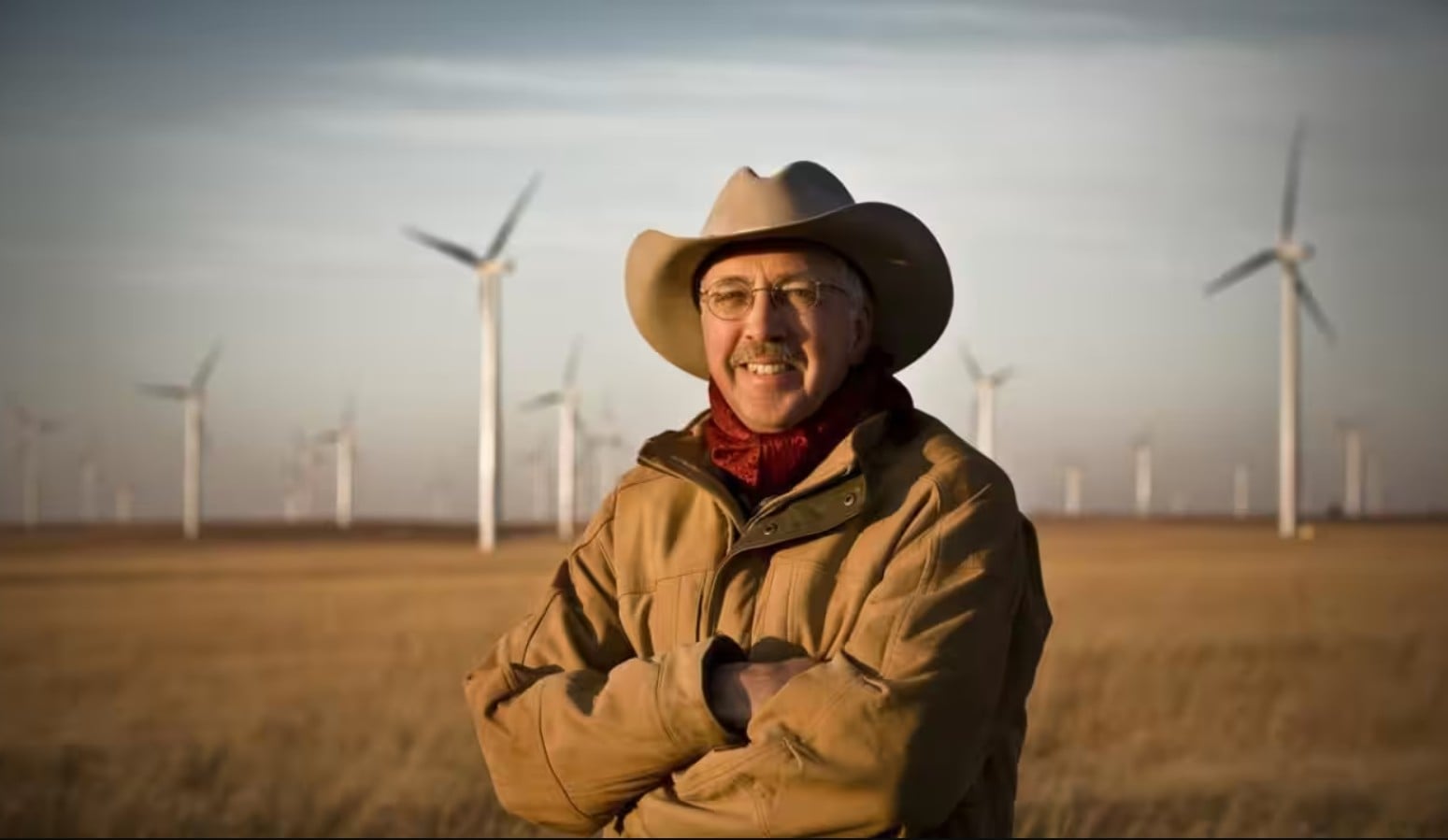
The Renewable Energy Farmers of America described Ferrell as the landowner behind one of the early wind projects on working agricultural land. Its virtual ranch-tour listing says he planned to discuss the early conversations with developers, the experience of hosting turbines for nearly two decades, lease questions and the way renewable energy can fit into long-term farm operations.
For ranch families, the income structure is as important as the technology. The Times of India reported that wind royalties became a reliable financial cushion for Ferrell, especially when drought makes forage, livestock prices and traditional ranch revenue uncertain. Unlike cattle sales, a turbine lease is not directly tied to the number of calves sold or the amount of grass available in a particular season.
The project also sits inside a wider debate about rural land use. Wind farms can attract opposition over views, roads, construction, wildlife and local control, while supporters point to lease payments, tax revenue and new electricity generation. A single ranch cannot settle those arguments, but Ferrell’s experience provides a concrete example of how a landowner weighs a long contract against changes to the landscape.
The pete ferrell kansas wind ranch trend is less about a sudden policy announcement than about a working example of energy and agriculture sharing the same property. The case offers a practical question for other landowners: whether stable renewable-energy payments can strengthen a farm’s succession plan without displacing the agricultural activity that gives the land its identity. Any decision would still require independent legal, financial, environmental and land-use advice before a lease is signed.

Follow iNews Zoombangla On Google
Open the Google follow page and tap the checkmark option to receive more updates from iNews Zoombangla in your Google news feed.