Observations from 17 spacecraft have helped scientists reconstruct the shape of a complex coronal mass ejection and identify a fast component that was difficult to see from Earth’s line of sight. The term 17 spacecraft solar eruptions refers to this multi-point study.
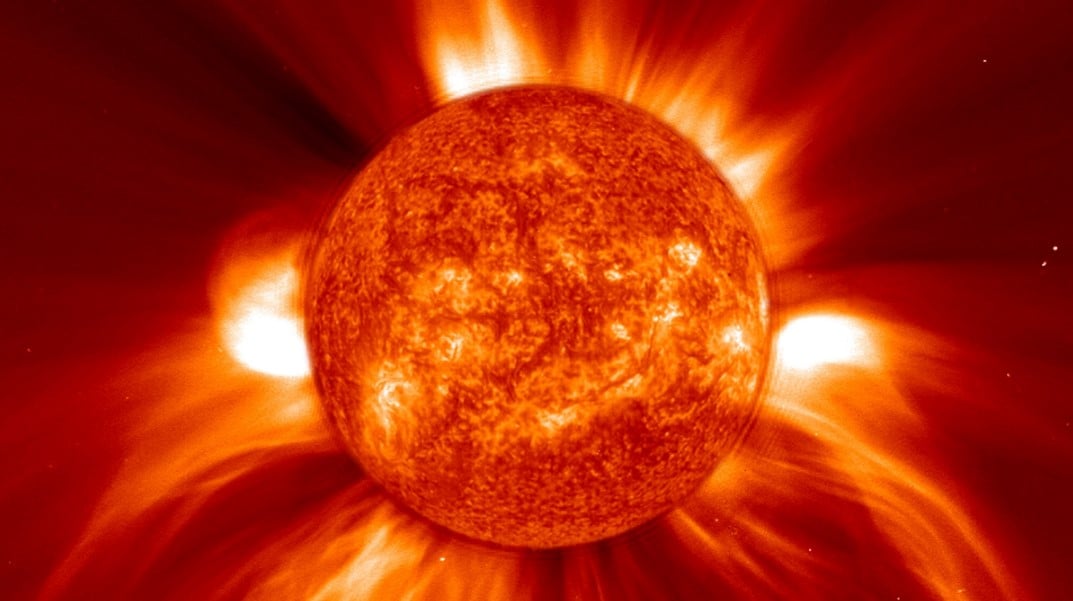
Phys.org reported that the event was detected in December 2024 by spacecraft positioned at different locations across the inner solar system. The network included NASA’s Europa Clipper, STEREO-A, Solar Orbiter and several spacecraft operating near Earth and the Moon.
The observations showed that the eruption was not a single uniform front. STEREO-A viewed a faster part of the event from the side, while other spacecraft recorded different sections of the shock, magnetic cloud and wake as the material moved through space.
The result matters for space-weather forecasting because a solar eruption can have an uneven structure. A view from Earth may suggest that most of the material is moving away, while another spacecraft can reveal a component heading toward a planet or a crewed mission.
The study’s authors said spacecraft travelling through the solar system could add useful warning information for future human missions. Such measurements would not replace dedicated space-weather satellites, but could fill observational gaps between planets.
The event examined in the research occurred in 2024, so the article is about a new analysis rather than a current solar storm warning. The finding points to a need for multi-location monitoring when agencies assess radiation and plasma hazards for spacecraft and astronauts.