Super Typhoon Sinlaku took shape in the western Pacific in mid-April 2026, forming southeast of the Northern Mariana Islands and Guam before strengthening at a rapid pace. Within a short span, the system intensified into a category 5 storm, carrying sustained winds of around 150 miles per hour, with gusts nearing 185 miles per hour.
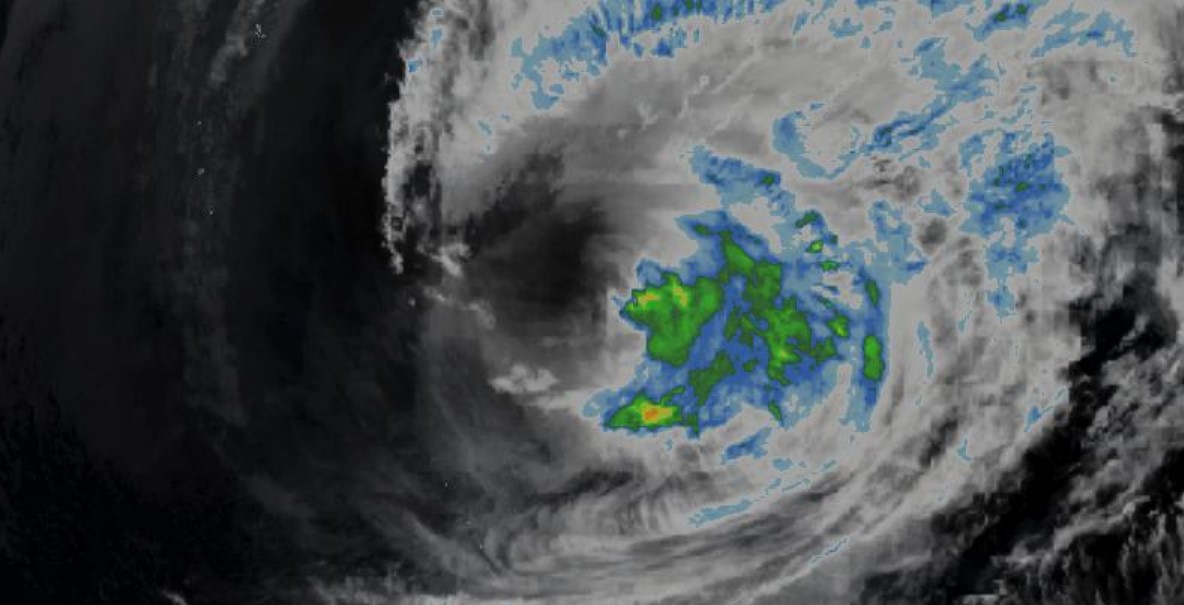
The storm’s movement placed Guam, Saipan, Tinian, and nearby islands directly in its path. As Sinlaku advanced, it brought prolonged periods of heavy rainfall, with satellite imagery highlighting dense bands of precipitation stretching across the region. The heaviest rain appeared in deep red shades on monitoring maps, signaling intense downpours over already vulnerable island terrain.
Visual data comparing corrected reflectance imagery with sea surface temperatures showed a clear pattern along the storm’s track. Warmer ocean waters, also marked in red tones, lay directly beneath Sinlaku’s path, offering conditions that supported its rapid intensification. The overlap between these warm waters and the storm’s trajectory remained consistent as it moved closer to populated areas.
Residents across the Northern Mariana chain experienced flooding as rainfall accumulated over time. The islands’ geography, with limited drainage capacity in some areas, made them particularly susceptible to runoff and waterlogging during sustained storms of this scale.
Satellite-based observation tools allowed for near real-time tracking of Sinlaku’s development and movement. By examining successive imagery across different dates, meteorologists were able to follow the storm’s structure, rainfall distribution, and interaction with ocean conditions in detail.
The progression of Sinlaku underscores the intensity such systems can reach over warm Pacific waters. For communities across Guam and the Northern Mariana Islands, the immediate concern has remained the impact of heavy rain and flooding as the storm passed through the region.
Read More:
DJI Osmo Pocket 4 Camera Adds 1-Inch Sensor and Expanded Video Controls
As imagery continues to document its path, Sinlaku stands as a clear example of how quickly conditions can evolve in the western Pacific during peak storm activity.

Follow iNews Zoombangla On Google
Open the Google follow page and tap the checkmark option to receive more updates from iNews Zoombangla in your Google news feed.