The United States and Iran were set to begin a formal new round of diplomacy in Geneva on Friday, but the talks collapsed before they started. Vice President JD Vance cancelled his planned trip to Switzerland after Iran suspended its own delegation, citing continued Israeli military strikes in Lebanon.
The breakdown came on the same day a new Israel-Hezbollah ceasefire took effect, after fighting between the two sides killed four Israeli troops and sparked the most serious flare-up since the US-Iran war ended. Iran had made a stop to Israeli attacks in Lebanon a condition for the negotiations to proceed.
The White House confirmed the delay on Thursday evening. A spokeswoman said Vance remained ready to travel the moment technical arrangements for the talks were finalized. She did not give a new date.
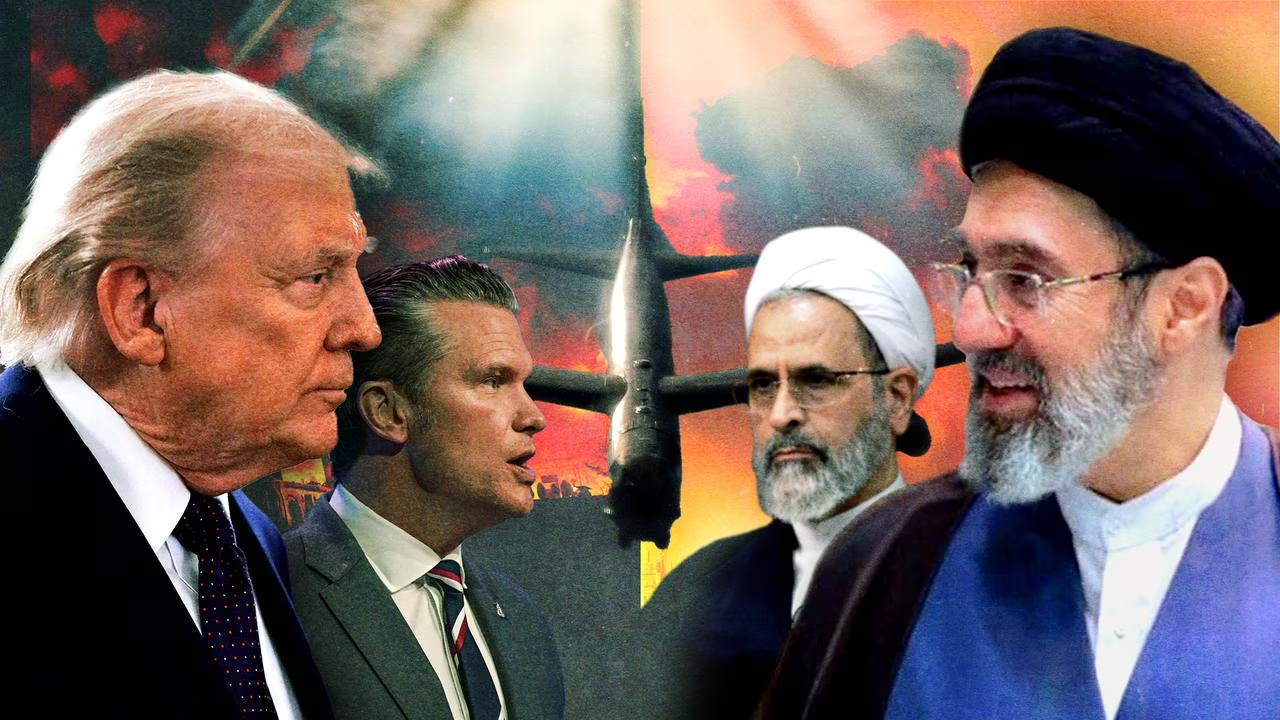
The Geneva meeting was meant to open the 60-day negotiation window set out in the memorandum of understanding that the US and Iran signed on June 14. That agreement ended more than three months of US military strikes on Iranian targets, reopened the Strait of Hormuz, and lifted the US naval blockade of Iranian waters.
The agenda for the planned Geneva session covered three core issues: the future of Iran’s nuclear program, the scope of US and international sanctions relief, and the terms of a proposed $300 billion reconstruction fund for Iran. Iran’s enriched uranium stockpile of roughly 440 kilograms was explicitly left untouched under the interim deal and remains a sticking point for the longer agreement.
Iran’s foreign ministry blamed Israel for the delay. A spokesman said Tehran could not send negotiators to Switzerland while Israeli forces were bombing Lebanon in violation of the terms agreed under the memorandum. Israel has said its operations in Lebanon are directed against Hezbollah and are separate from the US-Iran arrangement.
The delay rattled oil markets briefly on Friday morning, with Brent crude ticking up by around a dollar a barrel before settling back as analysts noted that the ceasefire in Lebanon was still holding. Oil prices had dropped sharply in the days after the Iran peace deal was announced, and traders remain sensitive to any sign that the agreement is unravelling.
Pakistan and Qatar, the two countries that mediated the original memorandum, were in contact with both sides on Friday to try to reschedule the Geneva session. Officials familiar with the talks said there was no indication either party intended to walk away from the framework.
Vance described the postponement as a practical delay rather than a diplomatic rupture. Speaking to reporters at the White House, he said negotiations of this complexity were rarely straightforward and that the US remained committed to the process. He declined to say when he expected to travel.
Iran’s new leadership under Mojtaba Khamenei has been careful in its public statements since the MOU was signed, neither embracing the deal enthusiastically nor rejecting it. Analysts have watched Khamenei closely for any sign of how far Tehran is willing to go in the negotiations. Friday’s suspension was read by some observers as a signal that Iran intends to use each stage of the process to extract concessions before moving forward.
The 60-day clock set out in the MOU begins when the first formal negotiating session takes place, not when the MOU was signed, giving both sides more time to find a path back to the table.

Follow iNews Zoombangla On Google
Open the Google follow page and tap the checkmark option to receive more updates from iNews Zoombangla in your Google news feed.