The August 2026 lunar eclipse will be a deep partial eclipse visible on the night of Aug. 27 and into Aug. 28 in some time zones, giving observers across several regions a chance to watch the Moon pass through Earth’s shadow.
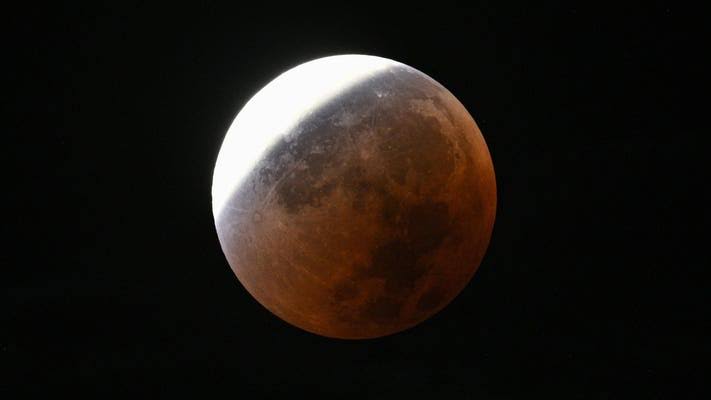
NASA said the partial lunar eclipse will be visible from much of North and South America and parts of Europe and Africa. During the maximum phase, about 93% of the Moon’s diameter will be inside Earth’s dark central shadow, or umbra.
Because the Moon will not be completely covered, the event is different from a total lunar eclipse. NASA said the covered edge may appear dramatically darkened with a rusty or coppery tint as the Moon moves through the shadow.
Space.com described the event as a deep partial lunar eclipse and said just over 96% of the Moon would pass through the shadow, using a different measurement of the eclipse’s coverage. The publication advised observers to check local timing because the visible phases depend on location.
A lunar eclipse can be viewed safely without special eye protection. NASA said binoculars or a small telescope may provide a closer look, although clear skies and a dark viewing location will matter more than specialized equipment.
People planning to watch should check the date and local visibility for their city, since the eclipse spans Aug. 27–28 across time zones. The event is not a solar eclipse, so regular night-sky viewing precautions are sufficient.