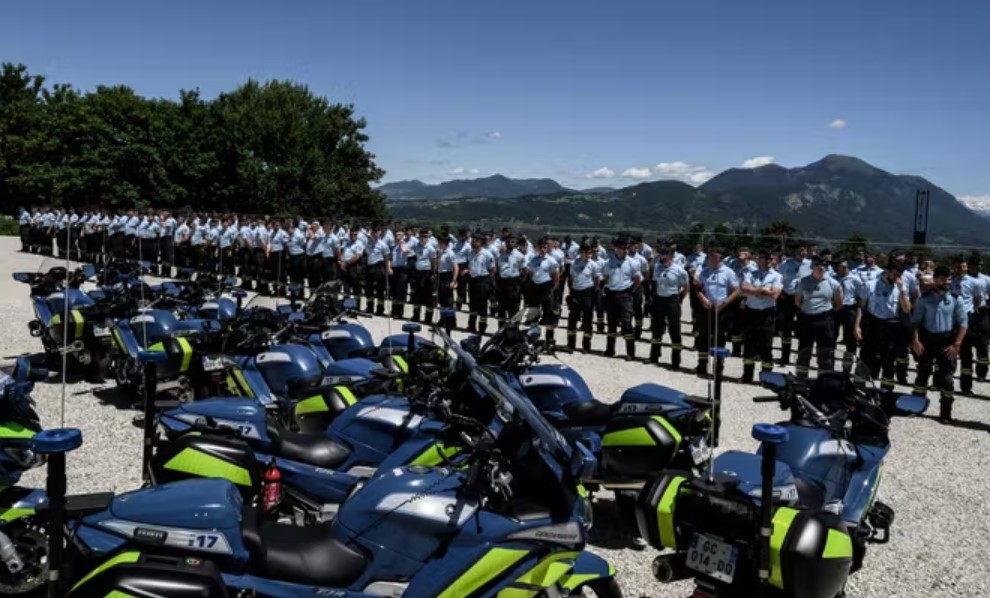
The 52nd G7 summit opened in Évian-les-Bains, France on Monday as leaders from the United States, United Kingdom, France, Germany, Italy, Japan and Canada gathered for three days of talks on Iran, trade and Ukraine. The French Alps resort, which last hosted a major world summit in 2003, became the focal point of global diplomacy as the dust settles on more than three months of war between the US and Iran.
French President Emmanuel Macron, who is hosting this year’s summit, set out an agenda that puts the consequences of the Iran peace deal at the centre of discussions. He said the priority for the summit was to see the Strait of Hormuz permanently reopened, ensure Lebanon is included in the ceasefire framework and push both sides toward a lasting agreement on Iran’s nuclear activities. The formal signing of the deal is scheduled for June 19 in Geneva.
US President Donald Trump arrived with his own list of priorities. American officials said tariff policy would be a major talking point, with a universal 15 percent import tariff set to legally expire on July 24. European governments have been pushing for clarity on whether Trump intends to let the deadline pass or introduce new measures. The expiry date gives allied governments less than six weeks to reach a deal.
A rare-earth crisis is also on the table. Europe sources nearly all of its heavy rare earth elements from China, along with 98 percent of its rare-earth magnets. American and European officials face an estimated $1.5 trillion each in direct economic losses if the current supply imbalance is not addressed. The summit in Évian was seen as an opportunity to align on a strategy for diversifying rare-earth sourcing, though no formal agreement was expected.
Ukraine’s President Volodymyr Zelensky is scheduled to join G7 leaders on Tuesday for a dedicated session on the war with Russia. He is expected to press for more Patriot PAC-3 missiles and other air defence systems, following a series of Russian strikes that have targeted cultural landmarks and civilian infrastructure in recent days. European governments have been shouldering most of the military and financial aid to Kyiv since the suspension of US bilateral military support earlier this year.
The summit also touches on artificial intelligence governance, with Macron pushing for a coordinated framework on regulating large AI models. Several EU governments want the G7 to produce shared principles ahead of broader multilateral negotiations expected later in 2026.
Arab leaders, including Egypt’s President Abdel Fattah al-Sisi, are expected to attend portions of the summit on the Middle East. The inclusion of regional leaders reflects the summit’s unusual scope this year, driven by the convergence of the Iran conflict, the Gaza ceasefire negotiations and a broader reshaping of the region’s security architecture.
France 24 reported that Trump’s bilateral meetings on the first day of the summit were focused on the Iran deal timeline and the tariff expiry deadline. Macron is pushing for a joint communiqué that commits all seven nations to supporting the Hormuz reopening and welcoming the Iran framework. Whether Trump signs that statement alongside the European members will be watched closely in the days ahead.

Follow iNews Zoombangla On Google
Open the Google follow page and tap the checkmark option to receive more updates from iNews Zoombangla in your Google news feed.