At 29, Zabeen Rukshar Khan did not expect her career to move away from the structured environment of tourism into open farmland. Trained in Hospitality and Hotel Management, she once worked in Fiji’s tourism sector, a path that seemed far removed from livestock and land management.
That changed after marriage, when she began raising a small herd of goats, starting with just 15 to 20 animals. What began as a modest step has gradually evolved into a full-scale farming operation spread across more than 100 acres.
Today, Khan manages around 150 goats and sells between 40 and 60 animals each year. The steady turnover reflects both demand and the gradual expansion of her business, shaped through trial, adjustment, and persistence.
A gradual shift shaped by necessity and learning
The transition was not immediate or easy. Farming introduced challenges she had never encountered before, from controlling parasites to protecting livestock from stray dogs and seasonal fire risks. Each problem required practical solutions learned on the ground rather than in classrooms.
Over time, her approach to farming shifted. She began integrating modern tools into daily operations, including quad bikes for mobility across large land areas and surveillance cameras to monitor livestock. These additions have helped her manage the scale of the farm more effectively while maintaining oversight.
Khan has since been recognized twice as the National Woman Goat Farmer of the Year, a reflection of both productivity and consistency in her work. The recognition marks a broader shift within Fiji’s agricultural sector, where more women are taking on leadership roles in primary industries.
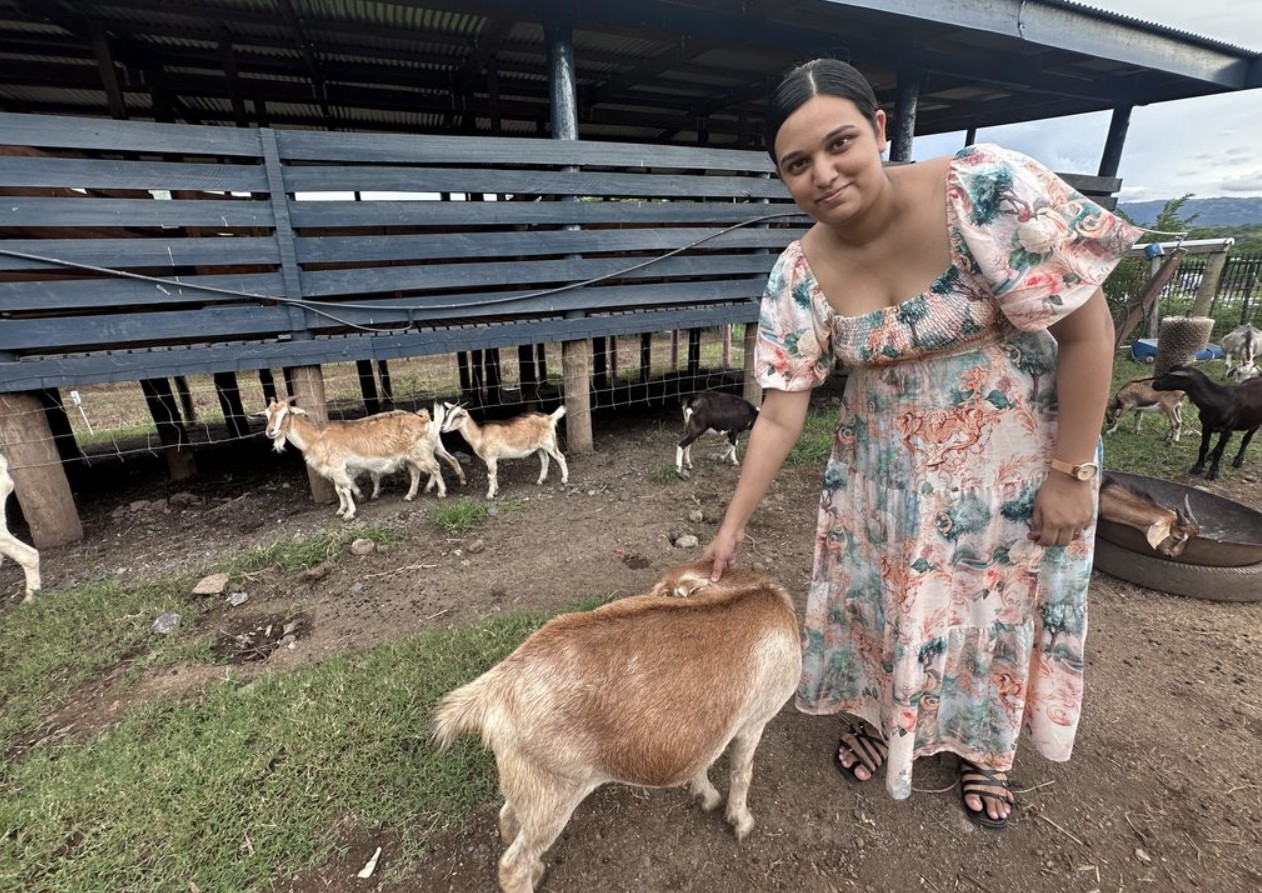
What stands out in her journey is not rapid success, but a steady rethinking of what work can look like. She has spoken openly about how she once viewed farm life as a step down from her previous career. That perspective, she admits, has changed with experience.
Her message to others, particularly young women considering agriculture, is grounded in practicality. Start small, she says, remain disciplined, and focus on steady progress rather than immediate results.
The story sits within a wider conversation about rural enterprise and self-reliance. As traditional employment pathways shift, cases like Khan’s suggest that agriculture continues to offer viable opportunities, provided there is patience and willingness to adapt.

Follow iNews Zoombangla On Google
Open the Google follow page and tap the checkmark option to receive more updates from iNews Zoombangla in your Google news feed.