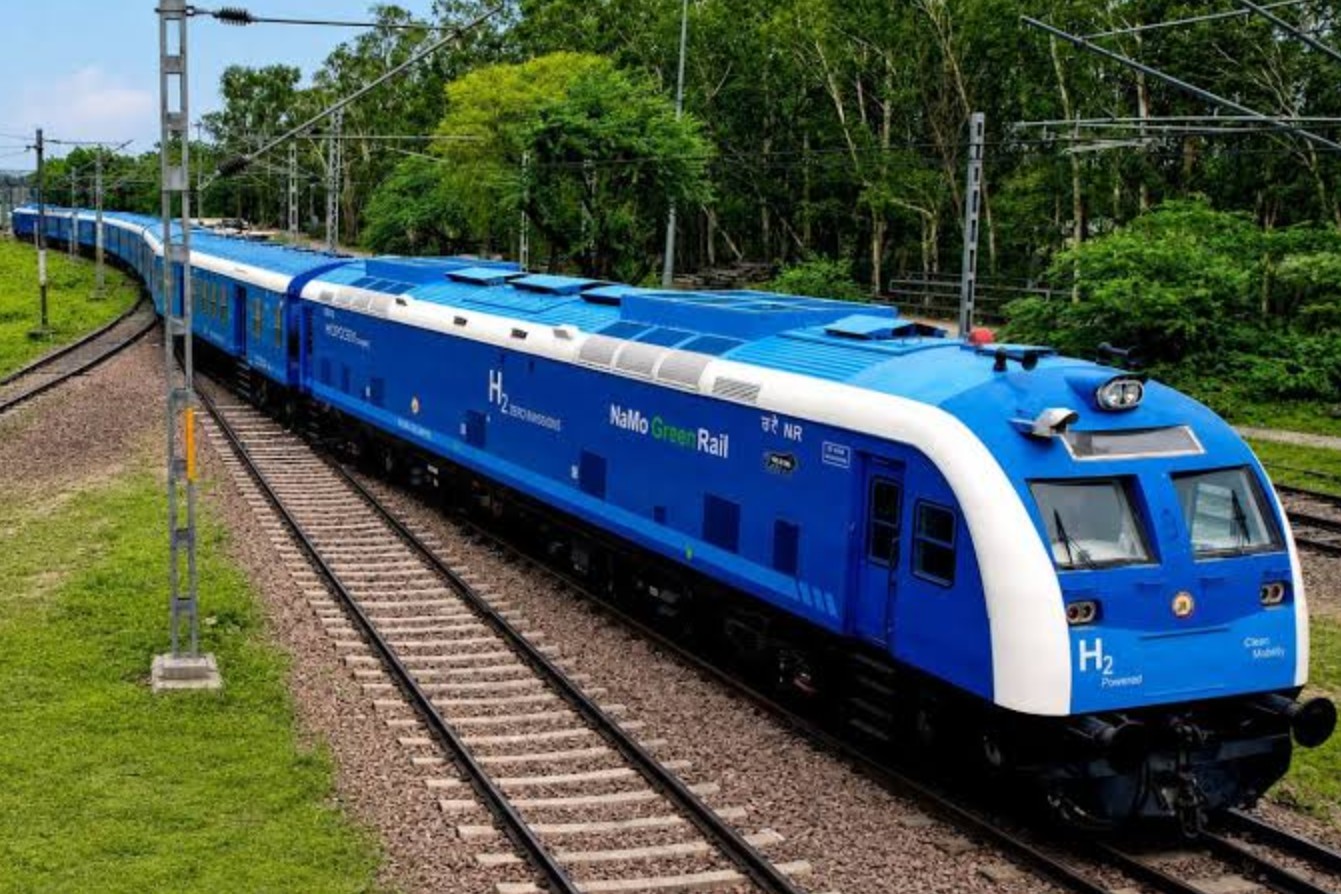
India launched its first hydrogen-powered passenger train on July 17, 2026. Prime Minister Narendra Modi inaugurated the locomotive before its maiden journey on the Jind–Sonipat corridor in Haryana.
The 10-coach train seats about 2,600 passengers and travels at speeds up to 75 kilometers per hour. It runs on a 1,200-kilowatt hydrogen fuel cell propulsion system. Hydrogen fuel cells combine hydrogen and oxygen to generate electricity. The only emission is water vapor.
Why Hydrogen Matters for Rail
Diesel trains produce carbon dioxide and nitrogen oxides. They choke urban air. Hydrogen trains produce nothing but water. For countries trying to meet climate commitments, switching freight and passenger rail to hydrogen makes sense.
The 89-kilometer route between Jind and Sonipat is a test bed. If the train runs reliably, operates safely, and passengers prefer it, India can scale. The government has committed to more hydrogen trains in coming years.
Global Context
India joins a small club. Japan, China, the United States, and Germany operate hydrogen-powered trains. Germany launched the world’s first hydrogen fleet in 2022. Sardegna, Italy, unveiled its first hydrogen multiple-unit on June 30, 2026.
The technology works. The question is cost. Building hydrogen infrastructure—stations to produce and store hydrogen—requires capital. Trains themselves are expensive. But long-term, hydrogen beats diesel on lifecycle costs and emissions.
What Comes Next
This train is proof of concept. Passengers will ride it. Data will flow back. Engineers will refine the system. If all goes well, more routes convert to hydrogen in 2027 and beyond.
India’s first hydrogen train runs today. In five years, this route may be one of dozens across the country.

Follow iNews Zoombangla On Google
Open the Google follow page and tap the checkmark option to receive more updates from iNews Zoombangla in your Google news feed.