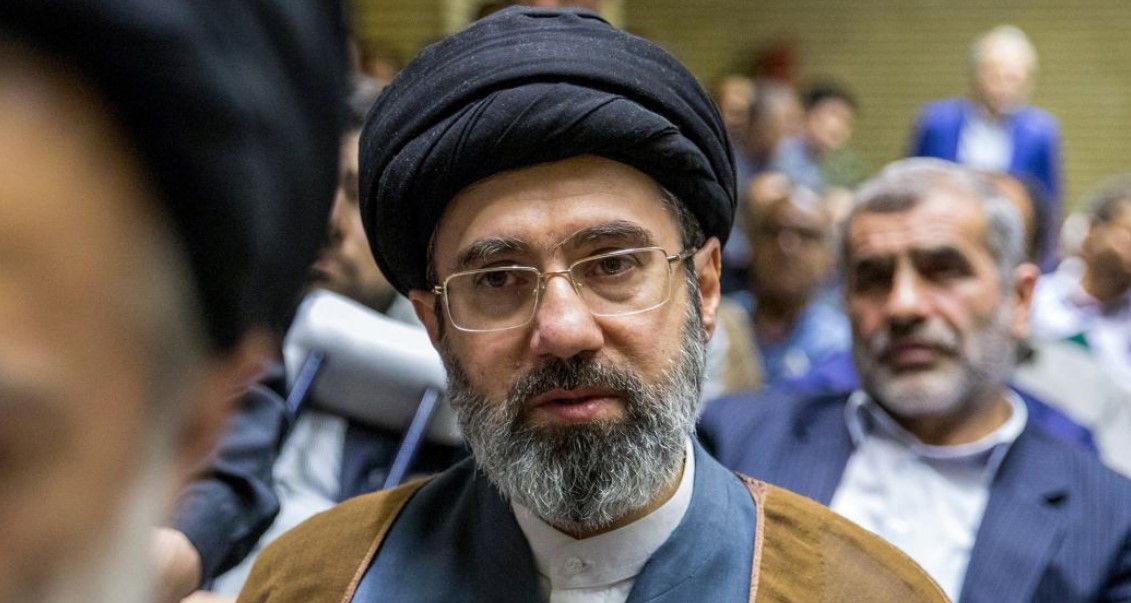
Mojtaba Khamenei became Iran’s supreme leader on March 9, nine days after US and Israeli airstrikes killed his father Ali Khamenei in the opening night of the conflict. At 55, he was a relatively unknown figure outside Iran’s clerical establishment. Now, barely a hundred days into his tenure, he faces the most consequential decision of Iran’s post-revolutionary history.
The choice before him is whether to endorse the Islamabad Declaration, a ceasefire memorandum with the United States that would end a war that killed his father, cost Iran more than a hundred days of crippling economic isolation, and exposed the limits of the country’s military capacity. Signing it would be pragmatic. It would also be politically complicated for a leader who came to power in the immediate aftermath of a national trauma.
Mojtaba Khamenei was elected by the Assembly of Experts in a process that lasted from March 3 to 8. He secured the required 59 votes out of 88 expert members, a majority that reflected both his father’s legacy and the lack of a clearly prepared successor. His father had not publicly named an heir, and the rapid election under wartime conditions compressed what would normally be a longer deliberation process.
He has kept an unusually low public profile for a supreme leader in his first hundred days. He has not appeared at major public events or given televised addresses of the kind his father used to frame national direction. Some analysts attributed this to caution, others to a lack of the established authority that his father had accumulated over three decades.
His role in the peace negotiations has been indirect. Iran’s foreign minister and parliament speaker Mohammad Baqer Qalibaf have led the public-facing diplomatic effort. Qalibaf is expected to sign the Islamabad Declaration alongside US Vice President JD Vance. The supreme leader’s office has given no public statement on the negotiations, which Iranian officials say reflects deliberate strategic ambiguity rather than opposition.
For Mojtaba Khamenei, the deal offers a way to stabilize Iran’s economy — now under severe pressure from the closure of the Strait of Hormuz — and to consolidate his authority in the domestic political landscape. Iran’s clerical and military factions have complicated relationships with each other, and a peace agreement that delivers tangible economic relief could strengthen his hand internally. Iran’s longer-term trajectory under his leadership will depend heavily on whether nuclear talks succeed in the sixty days after the ceasefire is signed.
His father’s state funeral, announced Saturday for July 4 in Tehran, will be a major political moment. It gives the younger Khamenei a national stage at a time when the ceasefire is expected to be taking effect and the Strait of Hormuz reopening. Managing those two events simultaneously — mourning and normalization — will require considerable political skill. Observers said the funeral timing was almost certainly deliberate. Iran’s relationship with Pakistan will also be a defining early foreign policy marker, given Islamabad’s central role in brokering the peace.

Follow iNews Zoombangla On Google
Open the Google follow page and tap the checkmark option to receive more updates from iNews Zoombangla in your Google news feed.