NASA has released new satellite images showing the crater left behind after a discarded SpaceX Falcon 9 rocket stage slammed into the Moon, giving scientists their clearest look yet at the impact site.
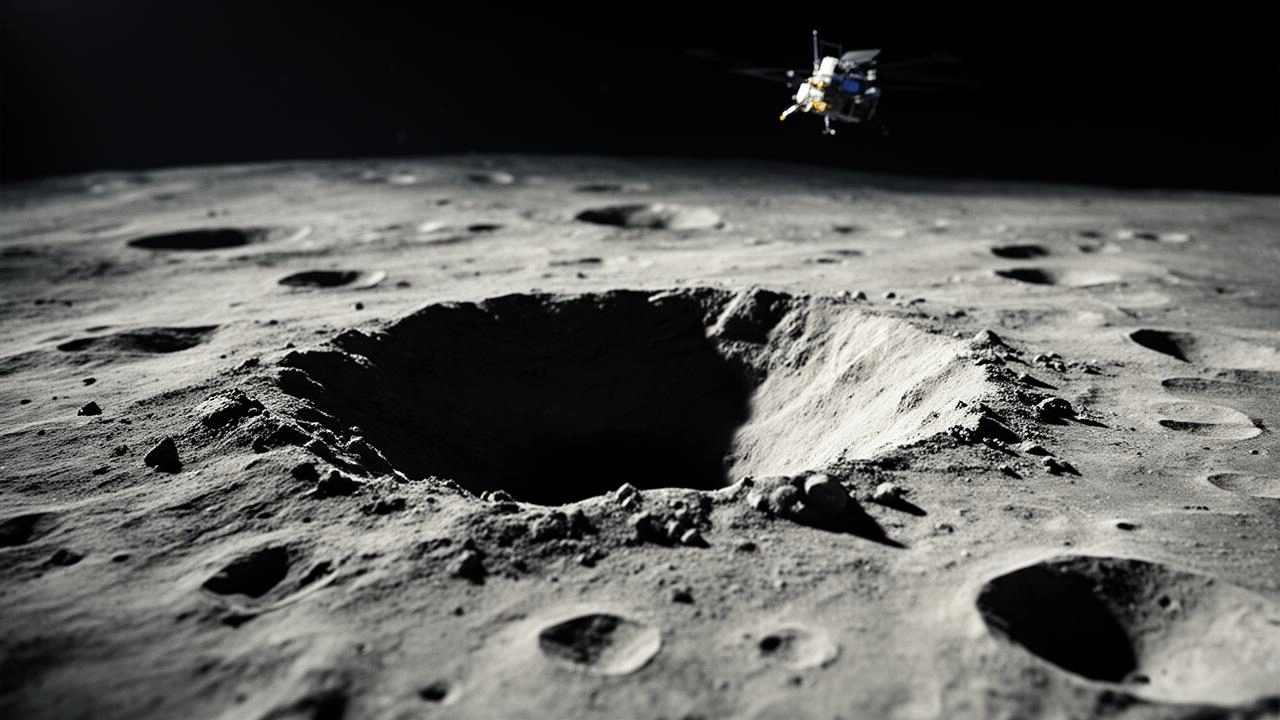
The rocket stage struck the lunar surface on August 5, traveling at more than 5,000 miles per hour, according to NASA and reporting from CNN. The roughly 10,000-pound piece of hardware left a crater NASA estimates at 60 feet across and 12 feet deep.
The stage had launched from Earth in January, carrying Firefly Aerospace’s Blue Ghost 1 lunar lander toward the Moon. Once that mission was complete, SpaceX discarded the spent upper stage in space, a routine step after a launch.
What followed was not routine. Solar activity and gravitational forces gradually pulled the drifting stage off its expected path and onto a collision course with the Moon, NPR reported, turning ordinary space debris into an unplanned lunar impactor.
Observatories around the world tracked the event as it unfolded. The European Southern Observatory’s Very Large Telescope in Chile was among the first instruments to detect the impact, and South Korea’s Danuri lunar orbiter shared its own images shortly afterward.
The freshly released NASA satellite photos, published this week, give researchers a sharper view of the crater’s shape and the debris field scattered around it. Scientists use impacts like this one to study how objects interact with the Moon’s surface, information that feeds into planning for future landings.
Unintentional impacts on the Moon are uncommon but not unheard of. Spent rocket stages and other hardware have occasionally ended up there before, and each new case gives NASA and outside observatories another data point on how lunar debris behaves once it leaves Earth orbit.
SpaceX has not issued a detailed public statement on the incident beyond confirming the stage’s origin. NASA said it will continue monitoring the site as more imagery becomes available.