The Obama Presidential Center opened to the public on Friday in Chicago’s Jackson Park, completing a project that began nearly a decade ago and drew fierce debate over its impact on the historic South Side neighborhood.
The opening on June 19 — Juneteenth, a federal holiday marking the end of slavery in the United States — was seen by organizers as symbolically fitting. The campus sits in Woodlawn and Kenwood, neighborhoods where Barack Obama worked as a community organizer in the 1980s before entering politics. The project was designed to be rooted in the community rather than constructed as an external institution.
The center includes the Obama Presidential Museum, a branch of the Chicago Public Library, a community garden, a sledding hill, and an athletic facility. The museum traces Obama’s path from Hawaii to Harvard Law School to the United States Senate and through his eight years in the White House, with an emphasis on the grassroots organizing work he considers central to his identity.
Friday’s opening came after years of legal challenges from residents who argued the development would accelerate gentrification and displace longtime South Side families. Opponents won a series of delays in federal court, citing concerns about construction in a national historic landmark district. A community benefits agreement eventually secured local hiring commitments and affordable housing pledges, allowing construction to move forward.
More than 4,000 tickets were distributed for Friday’s first public entry day, with an estimated 700,000 visitors expected in the first year. Tickets for the museum are free for Chicago Public Schools students. Adult admission is $25, with a discounted rate for Chicago residents.
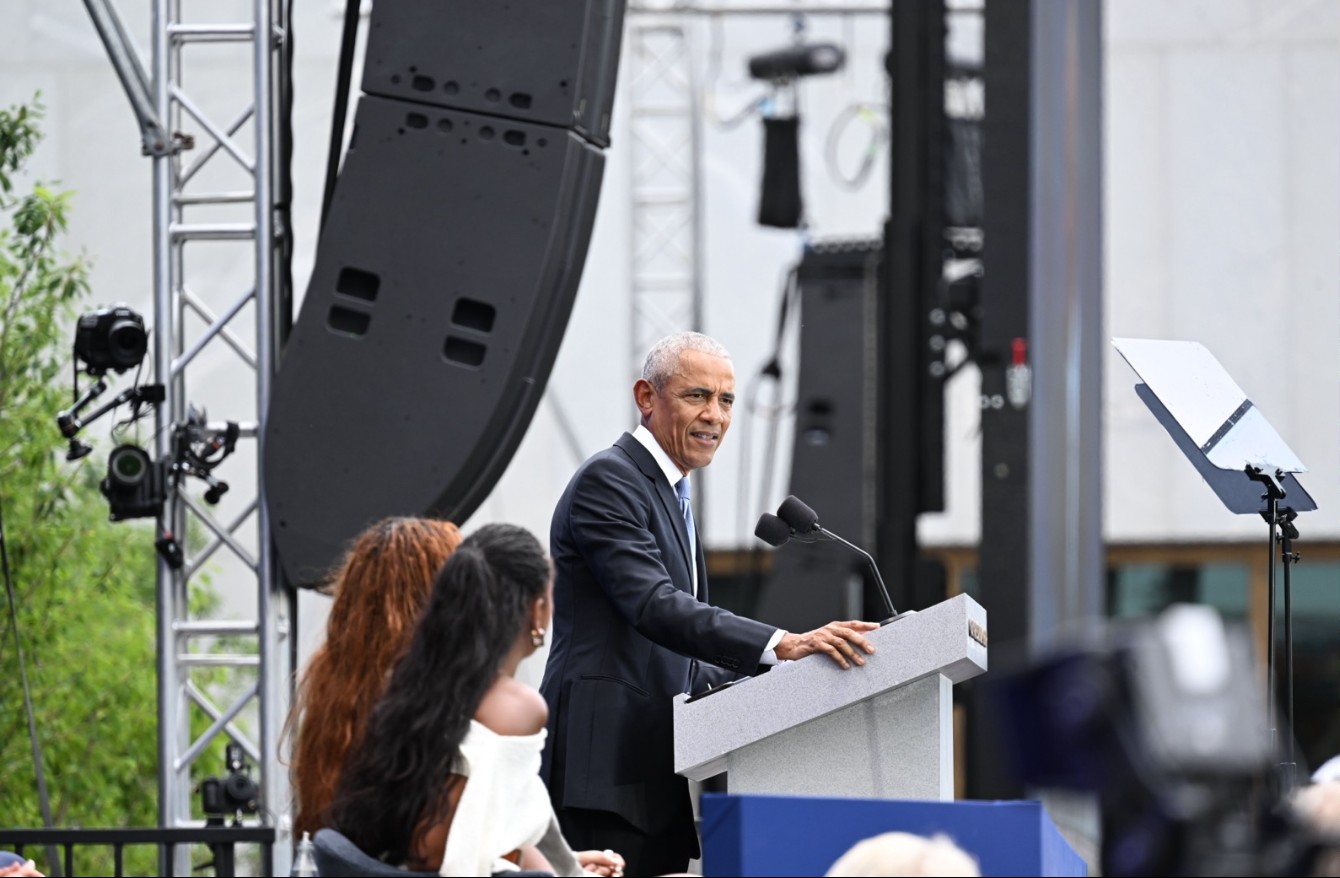
Former President Obama did not attend Friday’s opening in person. He delivered a recorded address in which he described the center as “a place where the next generation can believe that change is possible if you’re willing to work for it.” Michelle Obama participated in a separate recorded segment focused on the garden and wellness programming.
The project cost approximately $830 million, funded through private donations. The Obama Foundation raised money from corporate donors, foundations, and individual contributors over a decade. No federal construction funds were used, though the site itself is on Chicago Park District land under a long-term lease. Community advocates pushed for transparency in how foundation funds would be managed going forward.
The center is the first presidential library to be privately operated rather than administered by the National Archives. That decision, made in 2017, sparked a separate debate among archivists who argued it would limit public access to presidential records. The Obama Foundation says all historical materials will be available digitally through a partnership with the National Archives.
Chicago Mayor Brandon Johnson spoke at a Juneteenth ceremony near the center Friday morning, calling the opening a moment of pride for the South Side. He said the city had invested in transit improvements and park upgrades in the surrounding area in anticipation of increased foot traffic. The Obama Foundation said its local economic impact study projected 2,500 permanent jobs tied to the campus within five years.
The center’s opening on a national holiday drew visitors from across the country. Lines formed before the 9 a.m. entry time. Park staff said wait times in the first hour ran to about 45 minutes.

Follow iNews Zoombangla On Google
Open the Google follow page and tap the checkmark option to receive more updates from iNews Zoombangla in your Google news feed.