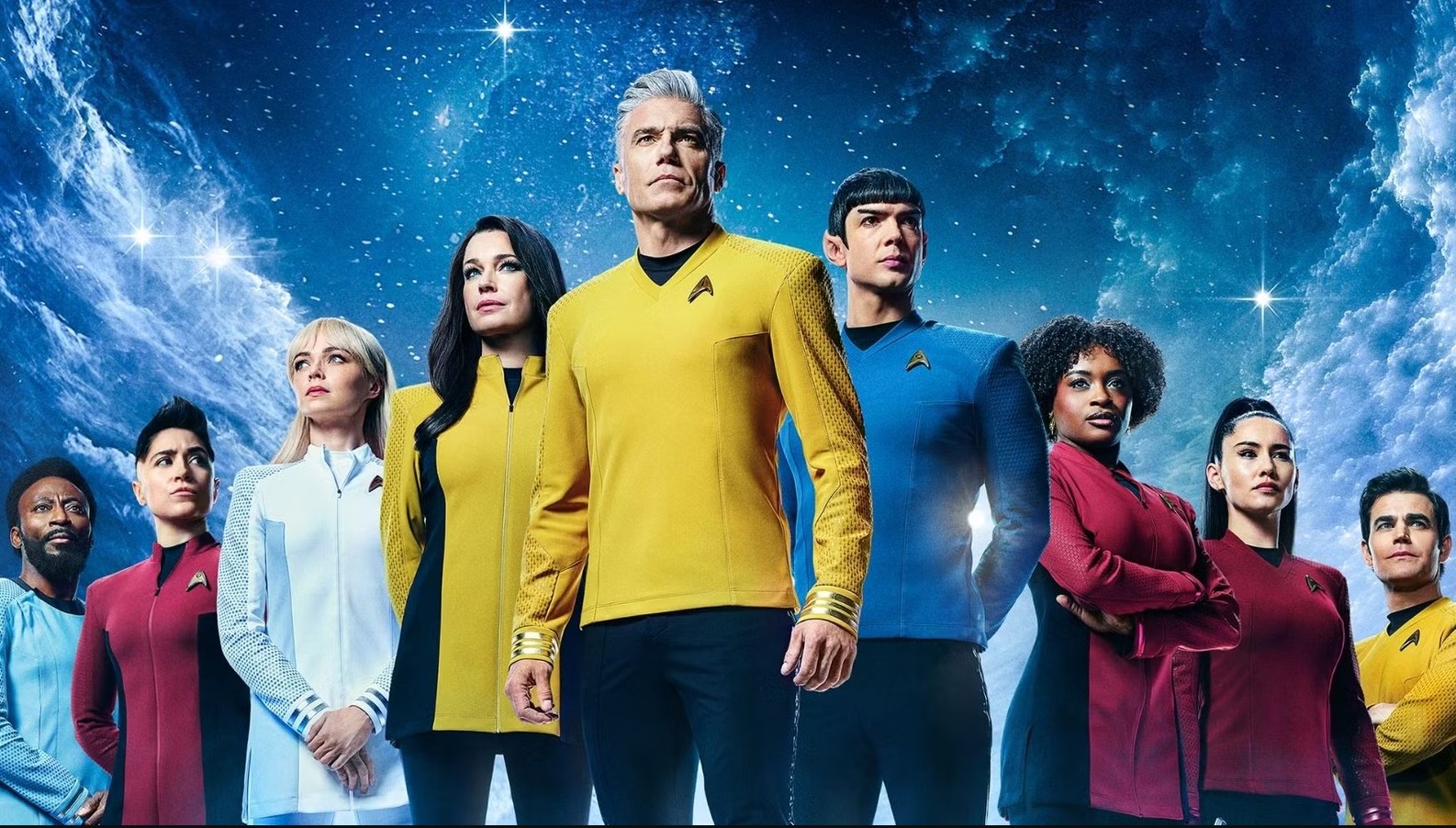
Paramount+ will premiere Star Trek: Strange New Worlds Season 4 on July 23, 2026, with new episodes launching every Thursday through September 24. The 10-episode season features Captain Pike and crew taking on classic standalone adventures with puppets, cowboys, and dinosaurs.
Paul Wesley, who first portrayed Kirk in Season 1, is confirmed to return for Season 4. The rollout capitalizes on Star Trek’s 60th anniversary year, maintaining franchise momentum as the streaming series continues gaining critical acclaim.
New Adventure Format
Season 4 emphasizes episodic storytelling, moving away from serialized narratives that dominated earlier seasons. Each episode promises self-contained adventures, appealing to viewers who prefer contained storylines over multi-episode arcs.
The creative team’s willingness to experiment with unconventional settings—puppets, cowboys, dinosaurs—demonstrates confidence in the show’s premise and execution, enabling creative risks that traditional episodic television often avoided.
Critical and Audience Reception
Strange New Worlds has emerged as Paramount+’s flagship Star Trek series, balancing nostalgia for the original 1960s series with modern production values and storytelling. The show appeals both to franchise veterans and newcomers unfamiliar with Star Trek’s deep history.
Paramount+ relies on Star Trek content to retain subscribers and attract new ones, positioning Strange New Worlds as a cornerstone of the streamer’s strategy for competitive original programming.
Franchise Expansion
Strange New Worlds exists within a broader Star Trek universe on Paramount+ including Discovery, Prodigy, and upcoming Series. This content volume ensures that Star Trek fans have multiple entry points and extensive viewing material.
The franchise’s resurgence on streaming contrasts with theatrical Star Trek films that struggled at the box office, suggesting television remains the optimal format for the brand.
Strange New Worlds’ success proves episodic Star Trek storytelling still captivates audiences despite decades of serialized television’s cultural dominance.

Follow iNews Zoombangla On Google
Open the Google follow page and tap the checkmark option to receive more updates from iNews Zoombangla in your Google news feed.