Ukrainian drones struck the Kapotnya oil refinery in southern Moscow on Monday night in one of the most significant long-range attacks of the war, setting fire to storage units at a facility that processes approximately 11.6 million tonnes of crude oil annually and is considered Moscow’s primary fuel supply installation.
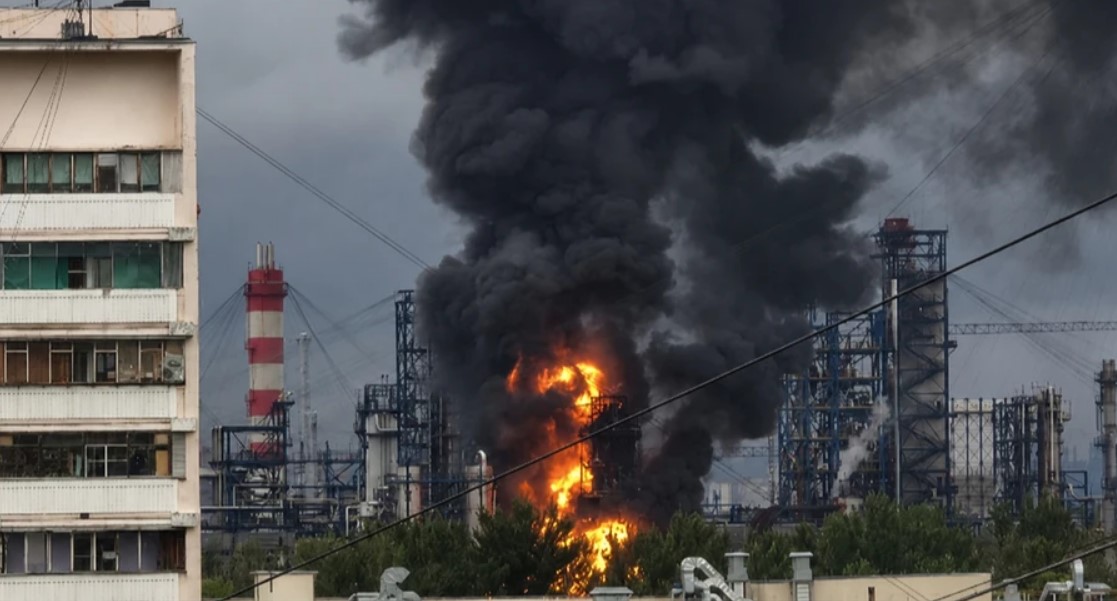
Russian emergency services confirmed the fire at Kapotnya shortly after midnight local time and said it was brought under control within several hours. Moscow mayor Sergei Sobyanin posted on Telegram that air defence systems had intercepted the majority of the drones involved in the attack, which Ukrainian military sources said involved 25 unmanned aerial vehicles launched from multiple directions.
No casualties were reported at the refinery. Russian authorities said several drones were shot down over the Moscow region before reaching their targets, but acknowledged that at least one struck the Kapotnya facility directly, causing damage to one of the primary processing units. The extent of the structural damage and its impact on fuel production was still being assessed on Tuesday morning.
Ukraine’s military did not immediately claim the strike publicly, which has become standard practice for attacks on Russian territory. But officials in Kyiv speaking on background described the operation as a response to Russia’s recent strike on the Kyiv Pechersk Lavra complex, a UNESCO-listed Orthodox monastery that was damaged in a Russian missile attack last week.
Kapotnya sits roughly 12 kilometres from the Kremlin. It is one of the oldest refineries in Russia, built in the 1930s, and has been a chronic source of air pollution complaints from Moscow residents. Its location deep inside the Russian capital makes it a symbolically significant target, demonstrating Ukraine’s ability to reach critical infrastructure well beyond the front line.
The attack follows a pattern of Ukrainian long-range strikes targeting oil refineries, fuel depots, and energy infrastructure across Russia. Ukrainian officials have argued that degrading Russia’s fuel production capacity directly affects the logistical chain supplying Russian forces in occupied Ukrainian territory.
Russia’s foreign ministry condemned the strike and promised retaliation. The incident is expected to be raised at the UN Security Council, where Russia has routinely sought to frame Ukrainian infrastructure strikes as terrorism while defending its own attacks on Ukrainian cities as legitimate military operations.
The war has now entered its fifth year with no formal ceasefire in place, though diplomatic contacts between the parties have increased in recent months through Gulf and Turkish intermediaries.