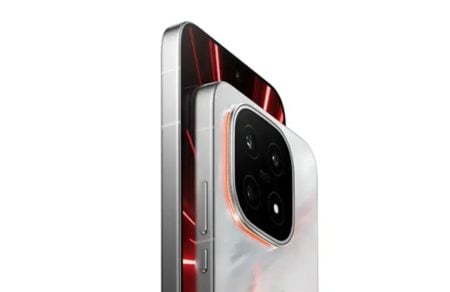
At a media interaction following the launch of the Vivo X300 Ultra, senior executives from Vivo offered a clearer sense of where the company intends to take its imaging strategy next. The conversation, led by Huang Tao and Han Boxiao, moved beyond the flagship itself, touching on hardware directions that could shape upcoming devices and possibly extend into new product categories.
The company used the occasion to acknowledge a gap that has persisted despite advances in smartphone cameras. While rear camera systems have grown increasingly capable for video, users who film themselves still tend to rely on external tools. Devices like the DJI Osmo Pocket 3 have effectively filled that space, especially among vloggers and livestream creators.
Vivo now appears ready to enter that territory. Executives indicated that a dedicated, self-recording device is in development, expected to arrive alongside the next generation of its X-series lineup. Early descriptions suggest a compact, pocket-sized form factor with built-in stabilisation, aimed at simplifying handheld video capture without additional gear.
That timing points toward a Q3 debut, with the next flagship range tentatively referred to as the Vivo X500 series. The shift is notable. The current X300 lineup was introduced in October last year, but the next release cycle seems to be moving forward, with September in China emerging as a likely window. The company’s first vlogging-focused device could be unveiled at the same time, placing it in direct conversation with upcoming competitors such as the anticipated DJI Osmo Pocket 4.
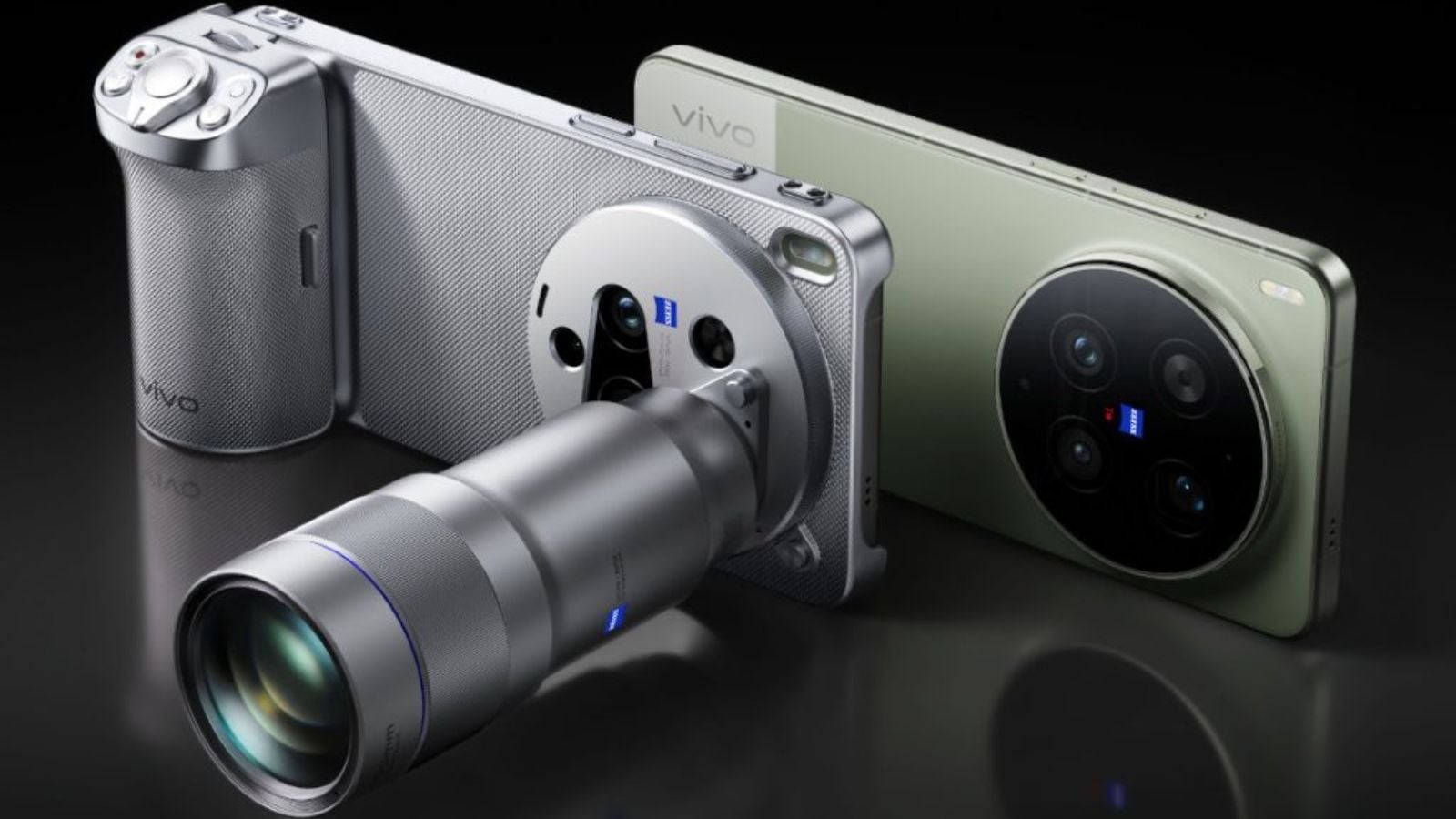
Alongside new hardware categories, Vivo is also revisiting how it approaches modular photography. In China, the company has already introduced external telephoto extenders, including the G2 and G2 Ultra, designed to improve long-range shooting. These add-ons are positioned less as experimental features and more as practical tools, particularly in scenarios where distance limits smartphone photography, such as concerts or large venues.
Han Boxiao described these accessories as a way to solve specific user challenges rather than complicate the camera experience. The company is now working toward a more standardised mounting approach, which could allow such accessories to be used across a wider range of devices.
That effort may extend to Vivo’s youth-focused S series. The upcoming S60 lineup is being considered as a potential candidate for telephoto extender support, though Huang Tao made it clear that image consistency remains a deciding factor. Any expansion, he noted, would depend on whether the devices can maintain reliable output when paired with external optics.
The S60 series itself is expected to arrive in China around May or June. Taken together, these developments suggest Vivo is exploring both ends of the imaging spectrum, refining high-end capabilities while testing new formats that respond to how people are actually using cameras today.
Read More:
Adidas Ring Watch Brings Retro Digital Design to Fingertip Accessory
For now, much of this remains in development, but the direction is becoming harder to miss. Vivo’s camera ambitions are no longer confined to the smartphone body alone.

Follow iNews Zoombangla On Google
Open the Google follow page and tap the checkmark option to receive more updates from iNews Zoombangla in your Google news feed.