Asus is putting a second full-size screen back at the center of laptop work with the 2026 Zenbook Duo. SlashGear’s current review examines whether the design is useful beyond the novelty of two displays. Asus lists the UX8407 as a Copilot+ PC with two 14-inch OLED touchscreens.
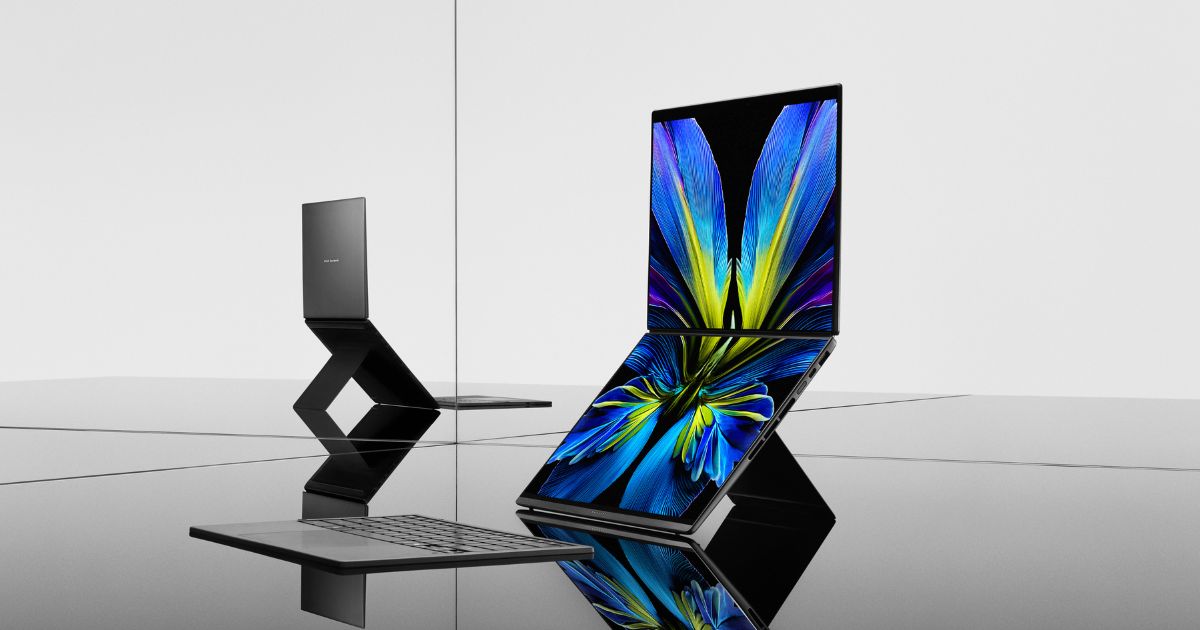
The format gives users a choice of layouts. The machine can work like a conventional laptop with a physical keyboard, or it can open flat so both panels sit in one wide workspace. The keyboard and kickstand determine how comfortable each mode feels, which is why the hardware layout matters as much as the screen specification.
Asus’s product information lists two 3K OLED panels and support for a high refresh rate. The company also describes a 99Wh battery, six speakers and Intel Core Ultra X9 Series 3 processing on its launch material. Configurations can vary by market, so buyers should check the exact model code before comparing prices.
SlashGear’s review focuses on a problem that earlier dual-screen laptops often had: the design looked clever but felt awkward to use. A more reliable hinge, a stable kickstand and a keyboard that can be placed without wobbling are essential if the second screen is meant for daily work.
A dual-screen layout can help with research, writing, spreadsheets and creative applications. A browser can stay open on one panel while a document fills the other. A video timeline, chat window or reference image can also sit below the main work area. Those benefits depend on software support and on the user’s willingness to carry a larger laptop footprint.
There are tradeoffs. Two panels draw more power than one, and a detachable keyboard is not as rigid as the keyboard deck on a standard notebook. The device can also be more expensive and heavier than a single-screen laptop with similar processor performance. A buyer who rarely multitasks may gain little from the extra display.
Asus has positioned the Zenbook Duo for work, creation and mobile use. The official specifications establish the core hardware, while SlashGear provides independent review context. Neither source turns the format into a universal replacement for a desktop monitor or a regular laptop.
The strongest reason to consider the 2026 model is flexibility. It lets a user switch between a familiar notebook layout and a two-screen workspace without carrying a separate monitor. Buyers should test the keyboard position, screen brightness, battery behavior and local warranty before choosing the design.

Follow iNews Zoombangla On Google
Open the Google follow page and tap the checkmark option to receive more updates from iNews Zoombangla in your Google news feed.