Daimler Truck is targeting a driver-out milestone for its autonomous freight program in North America. Its Torc subsidiary aims to operate a truck on public roads without a safety driver in the cab before the end of 2026, according to a September 14 report from Autocar Professional.
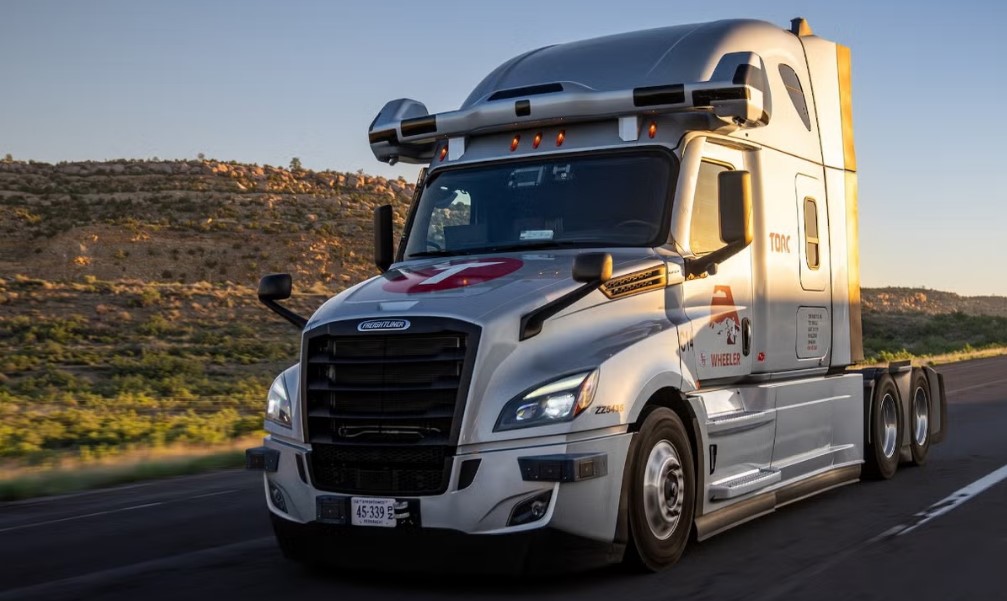
The proposed run would be different from today’s supervised testing. Torc’s own information says its self-driving trucks are currently being tested on public roads with a safety driver behind the wheel. Those routes include parts of Virginia, New Mexico and Texas. The 2026 target would remove that safety driver from the cab during the planned operation, subject to the company’s development and validation work.
Daimler Truck says the North American program combines two major pieces. Daimler Truck North America is developing an autonomous-ready vehicle platform with redundant systems for functions such as steering and braking. Torc is developing the virtual-driver software designed to control the truck. The approach covers the vehicle hardware and the driving system together.
Torc’s FAQ says its self-driving semi-trucks are planned to be commercially available in 2027. Daimler Truck’s stated roadmap places the first commercial freight operations after the driver-out testing milestone, with wider scaling planned from 2028. These are company targets, not evidence that autonomous trucks are already carrying ordinary commercial loads without human supervision.
The underlying truck platform is the fifth-generation Freightliner Cascadia prepared for autonomous use. Daimler Truck’s 2025 release describes redundant safety features and a productization phase for Torc. The company also said the trucks were being tested on routes including a corridor between Laredo and Dallas in Texas, alongside existing work in New Mexico, Texas and Arizona.
Daimler’s case for starting in North America is based on the operating pattern of heavy trucks. Autocar reports that the company sees longer daily distances and more severe driver shortages in the United States than in Europe. Those factors could give hub-to-hub freight a clearer business case, but they do not remove the need for regulatory approval, operational safeguards or reliable system performance.
The next test is therefore a specific engineering and safety milestone: whether Torc can complete public-road operations without a safety driver before year-end. Daimler Truck has not announced a commercial launch date earlier than 2027, and the program remains subject to testing and validation.