Apple’s iOS 27 release includes a new direction for video in CarPlay, extending the software beyond navigation, music and phone controls. The feature is designed for situations where a vehicle is parked, rather than for watching video while the car is moving.
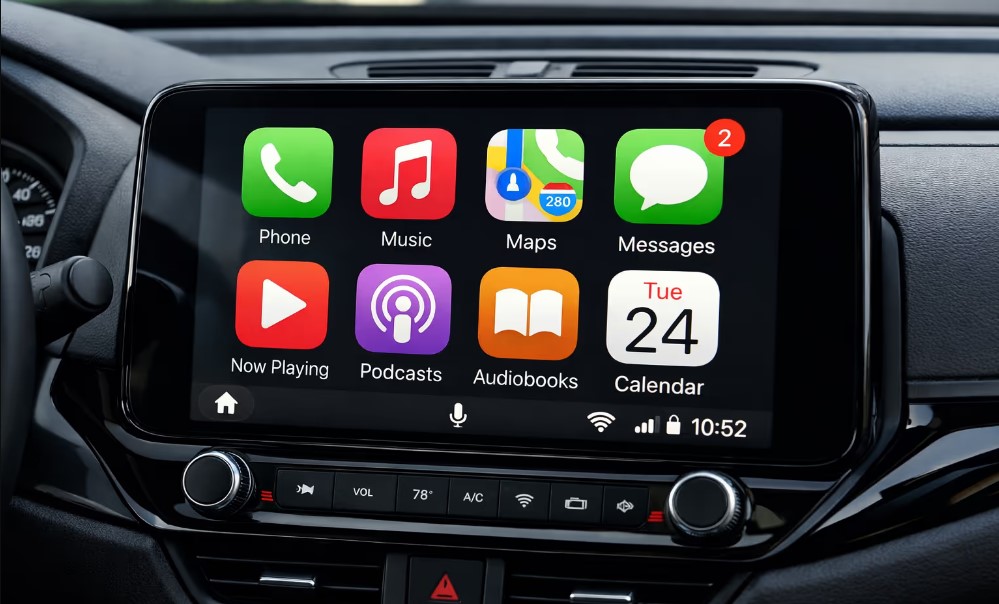
CarPlay has always depended on the vehicle and the iPhone working together. Apple supplies the interface, but the carmaker controls the screen, input methods and safety restrictions. That means an iOS feature may appear differently across models, and some vehicles may not support every new capability.
The video change is tied to the parked-car condition. A compatible vehicle can decide when its screen is safe to use for video, while the iPhone provides the content and system integration. The arrangement is meant to prevent entertainment features from becoming a distraction during a drive.
Support for video does not turn a dashboard into a general-purpose tablet. Apple’s rules still depend on the vehicle’s configuration and the app’s support. The company has also described limits around when content can appear, which helps separate a stationary passenger experience from driver-facing controls.
For drivers, the practical benefit may be simple. A vehicle waiting at a charging station, parked outside a school or stopped before a journey could offer more entertainment without another screen. Families and passengers may find the option useful, but the availability of content will depend on approved apps, connectivity and the car’s display hardware.
Developers face their own work. A video app must support the CarPlay framework and follow Apple’s interface and safety requirements. An app that works on an iPhone cannot assume that it can appear in a vehicle. Developers also need to handle the transition between parked and moving states without interrupting navigation or emergency functions.
iOS 27’s CarPlay video direction shows how connected-car software is becoming more capable while safety rules remain central. The release does not promise that every car will gain the feature. Owners will need a compatible iPhone, a compatible vehicle and an approved app before the option appears in their dashboard.