Lenovo has shown Project AeroBlade, a 14-inch laptop concept that replaces conventional fans with solid-state AirJet cooling. Lenovo presented the proof of concept at IFA 2026 as an experiment in reducing laptop thickness and weight.
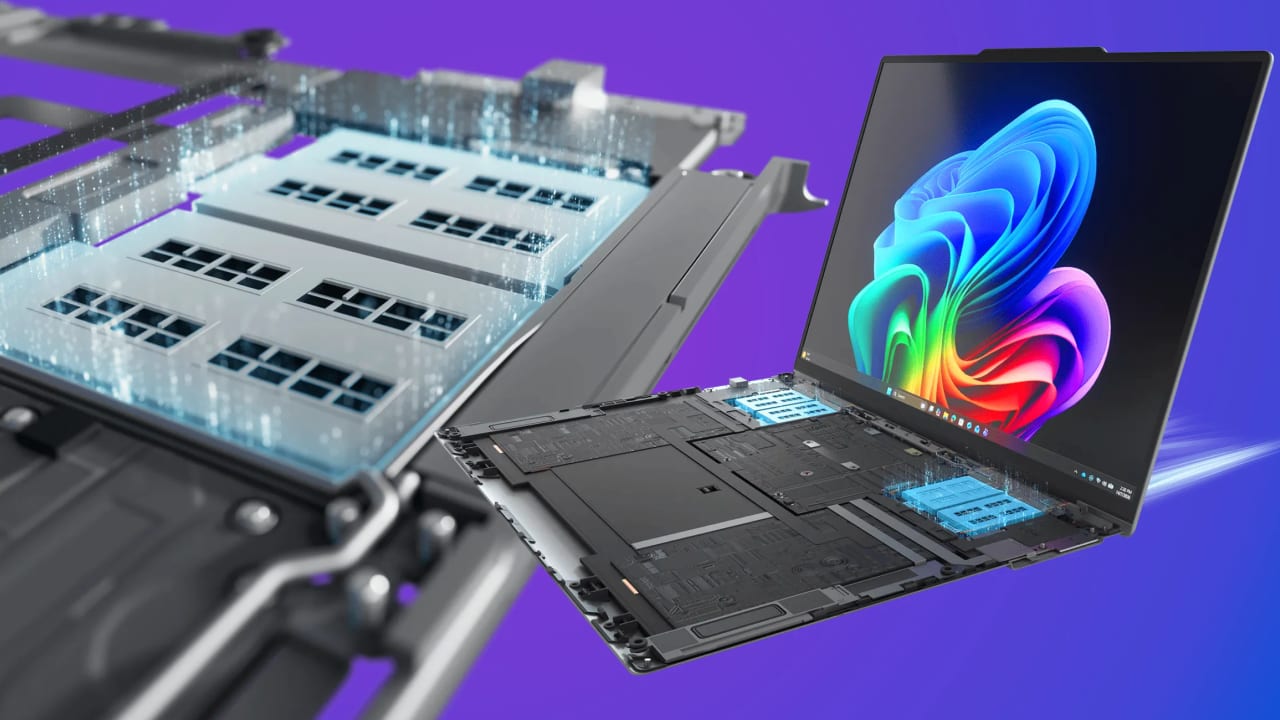
The design uses four AirJet Mini modules from Frore Systems, according to Lenovo. The modules use ultrasonic piezoelectric membranes to move air and transfer heat. That mechanism has no rotating fan blades, but the concept still needs a complete test for sustained performance and noise.
Lenovo says each module can dissipate 7.5 watts, giving the four-module design a stated active dissipation figure of 30 watts. The target aligns with the 17W to 30W range cited for the Intel Lunar Lake silicon used in the demonstration machine.
The cooling system is part of a compact internal layout. Lenovo lists a magnesium-aluminum frame, a small motherboard and a thickness of 10 millimeters. The company says the concept weighs less than 1.83 pounds, or about 830 grams.
Port selection reflects the thin body. The official project page lists three USB-C or Thunderbolt 4 ports. It also names an OLED display and Wi-Fi 7. Lenovo has not presented the concept as a finished retail model, so those features should be read as the specification of the demonstration design.
A fanless approach could reduce the mechanical parts inside a laptop and may change how the computer sounds under load. It does not remove the need to manage heat. The chassis, keyboard, display and power settings all affect how a thin system feels during long workloads.
Tom’s Hardware reported that the AeroBlade was shown alongside Lenovo’s Project Swan rollable-screen laptop concept. The report described AeroBlade as a concept and noted that a future production version would use a newer processor if Lenovo decides to build one.
There is no retail price, release date or final performance claim for Project AeroBlade in the sources reviewed. The confirmed news is a Lenovo proof of concept built around four AirJet modules. Readers should treat battery life, sustained speed and repairability as open questions until a production model appears.

Follow iNews Zoombangla On Google
Open the Google follow page and tap the checkmark option to receive more updates from iNews Zoombangla in your Google news feed.