Maruti Suzuki says India’s cleaner-mobility transition will have to keep vehicle prices within reach of first-time buyers. At the SIAM annual convention, managing director and chief executive Hisashi Takeuchi connected affordability with the company’s wider mix of battery-electric, hybrid, CNG, compressed-biogas, ethanol and hydrogen technologies. The Maruti clean mobility technology debate is therefore about choosing a workable combination rather than waiting for one powertrain to fit every driver.
Autocar Professional reported that Takeuchi urged a balance between new safety and emissions requirements and the cost of ownership. He said the entry-level car market had weakened as regulatory and technology costs rose, while also saying that small cars in the lower GST bracket had recently recorded stronger growth. The statement is Maruti’s view of the market; it is not an independent forecast of future sales.
The company’s technology list covers systems at different stages of maturity. Battery-electric vehicles use a high-voltage battery, motor, inverter and charging system. Hybrids add an electric motor and battery support to an internal-combustion engine, while CNG vehicles use a pressurised gas system and compressed biogas would rely on fuel produced from organic waste. Each option has different costs, refuelling needs, maintenance requirements and emissions results.
Maruti’s official Smart Hybrid information explains one part of that portfolio. Its system uses an integrated starter generator and two batteries, with energy recovered during braking stored for idle stop-start and torque assist. The technology can reduce fuel use and emissions in the conditions for which it is designed, but it is not the same as a full hybrid or a battery-electric vehicle. Buyers should compare the system type rather than treat every vehicle carrying a hybrid label as equivalent.
Takeuchi said EVs, hybrids and CNG vehicles together accounted for about 32% of passenger-vehicle sales during the corresponding April-to-July period discussed at the convention, up from about 27% a year earlier. Those figures were presented by the Maruti executive and should be read as the company’s account of industry data. They also combine different technologies, so the total does not show how much of the market belongs to any single powertrain.
Affordability affects more than the price printed on a showroom board. A buyer may need to consider home-charger installation, public charging, fuel availability, battery warranty, insurance, servicing and the cost of replacing sensors or power-electronics parts. CNG vehicles require access to stations, while hybrids can reduce some charging dependence but still carry additional electrical hardware. The cheapest option at purchase may not be the cheapest for every driving pattern.
Maruti also pointed to compressed biogas as a possible extension of the existing CNG network. Takeuchi said three cow-dung-based biogas plants were operating and that seven more such plants plus four agricultural-waste plants were in the pipeline. The statement describes a company programme, not a guarantee of fuel volume or national availability. Feedstock collection, purification, transport, station equipment and fuel quality will determine whether the idea works beyond individual sites.
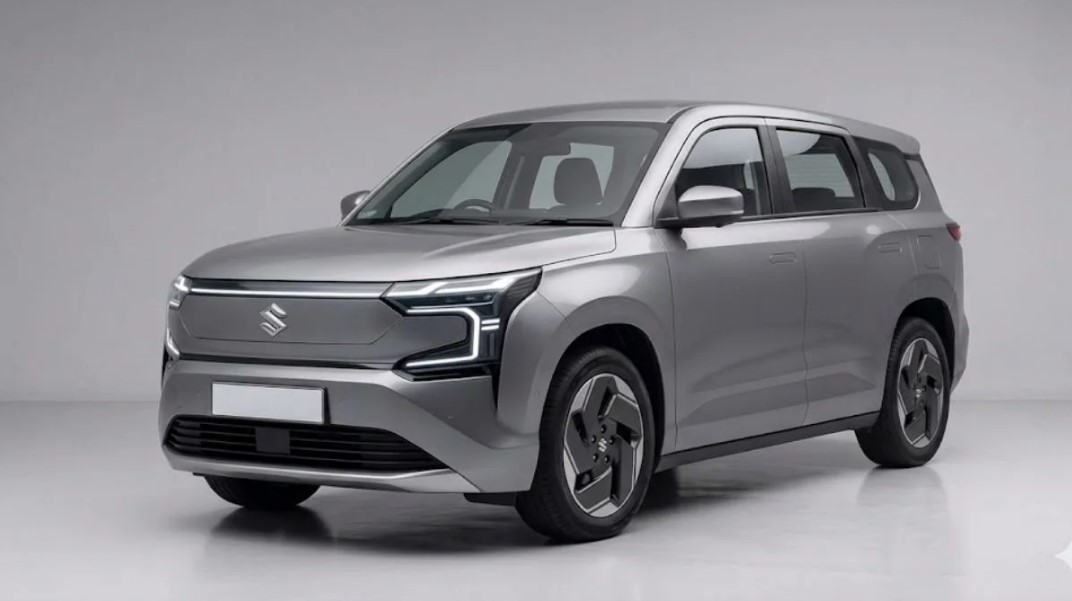
The company’s electric strategy adds another layer. Maruti’s official e VITARA material lists 49 kWh and 61 kWh battery options, a claimed range of up to 543 kilometres and access to its e for me charging service. Those are published product claims, while real range and charging time vary with temperature, speed, load and charger output. The EV’s presence does not mean Maruti has abandoned its other powertrains.
India’s market can support several technologies at once because customers drive in different conditions and have different budgets. Maruti’s message is that cleaner vehicles will scale faster when safety, emissions performance, infrastructure and ownership cost improve together. The evidence to watch is practical: transparent efficiency data, reliable fuel and charging access, durable components and prices that do not shut out the buyers the transition is meant to serve.

Follow iNews Zoombangla On Google
Open the Google follow page and tap the checkmark option to receive more updates from iNews Zoombangla in your Google news feed.