Mecwin Technologies has developed a 45-horsepower-class electric tractor powertrain and is looking for tractor manufacturers to integrate it into their own vehicles. Autocar Professional reported the Bengaluru company’s three-year development effort and its plan to supply a driveline platform rather than sell a complete tractor under the Mecwin name.
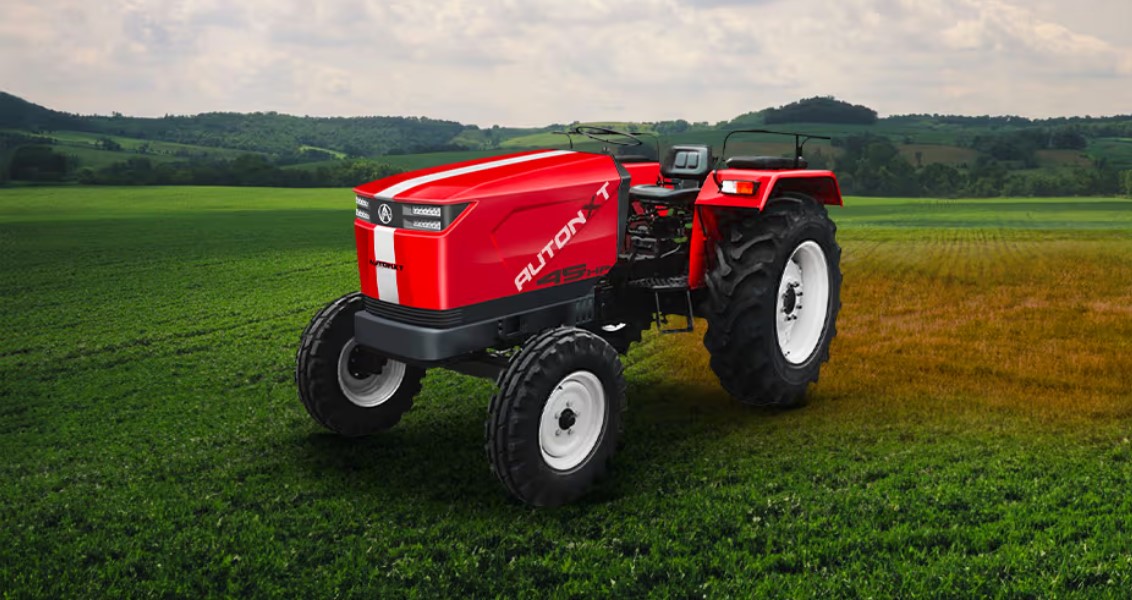
The Mecwin 45hp electric tractor powertrain is built around a 30-kilowatt-class electric drive operating at about 400 volts. It uses an eight-forward, four-reverse multi-speed transmission, along with a differential, final drive, driven rear axle, motor controller and vehicle-control interfaces. The company says the platform is intended for tractors in the 40hp to 55hp range.
Agricultural work creates a different engineering problem from ordinary road driving. A tractor may move slowly while pulling an implement through changing soil. Wheel torque, traction, ground speed and the resistance from the attached equipment can change during the same job. Mecwin says it started its design work at the tyre-soil interface instead of choosing a motor first and trying to fit the rest of the system around it.
That approach affects the transmission and control software. A multi-speed gearbox can keep the electric motor in a more useful operating range as speed and load change. Mecwin says the final-drive ratio, packaging, power-take-off and hydraulic interfaces can be configured around the tractor manufacturer’s design. Those options mean the system is not being offered as one identical kit for every farm machine.
The company says the prototype platform has accumulated more than 500 field hours. Field time is useful because laboratory measurements cannot reproduce every combination of soil, slope, implement load and operator input. The figure is a company-reported development result, however. It does not equal a certified reliability rating or prove that a production tractor using the system will deliver the same result.
Mecwin’s own company material describes work across electric machines, power electronics, controllers and vehicle applications. Its official LinkedIn update also identifies the tractor project as an integrated platform developed for original-equipment manufacturers. The collaboration model would let tractor brands bring their own chassis, tyres, implements and duty cycles to the integration process.
The next stage is more involved than installing a motor and battery. Autocar Professional says Mecwin expects to work through vehicle definition, simulation, packaging, prototype integration, calibration, field validation and production industrialisation. Each step can reveal a different constraint, especially around cooling, battery placement, software response and the power needed for hydraulic equipment.
For tractor makers, a supplier-built powertrain could shorten the path to an electric model if the system fits their existing product architecture. For farmers, the final questions will be practical: operating time, charging access, purchase price, service support and performance during heavy work. None of those customer details has been announced for a production tractor based on this platform.
The current news is therefore a development and partnership opportunity, not a retail launch. Mecwin has shown a 45hp-class electric system, described its configurable mechanical and electronic parts and reported more than 500 field hours. The company still needs an OEM programme, validation and production decisions before buyers can judge a finished electric tractor.

Follow iNews Zoombangla On Google
Open the Google follow page and tap the checkmark option to receive more updates from iNews Zoombangla in your Google news feed.