Airfares in the United States were already trending upward when the latest disruption in the low-cost segment began to take hold. Now, with Spirit Airlines effectively exiting large parts of the market, industry watchers say the pressure on ticket prices could intensify quickly.
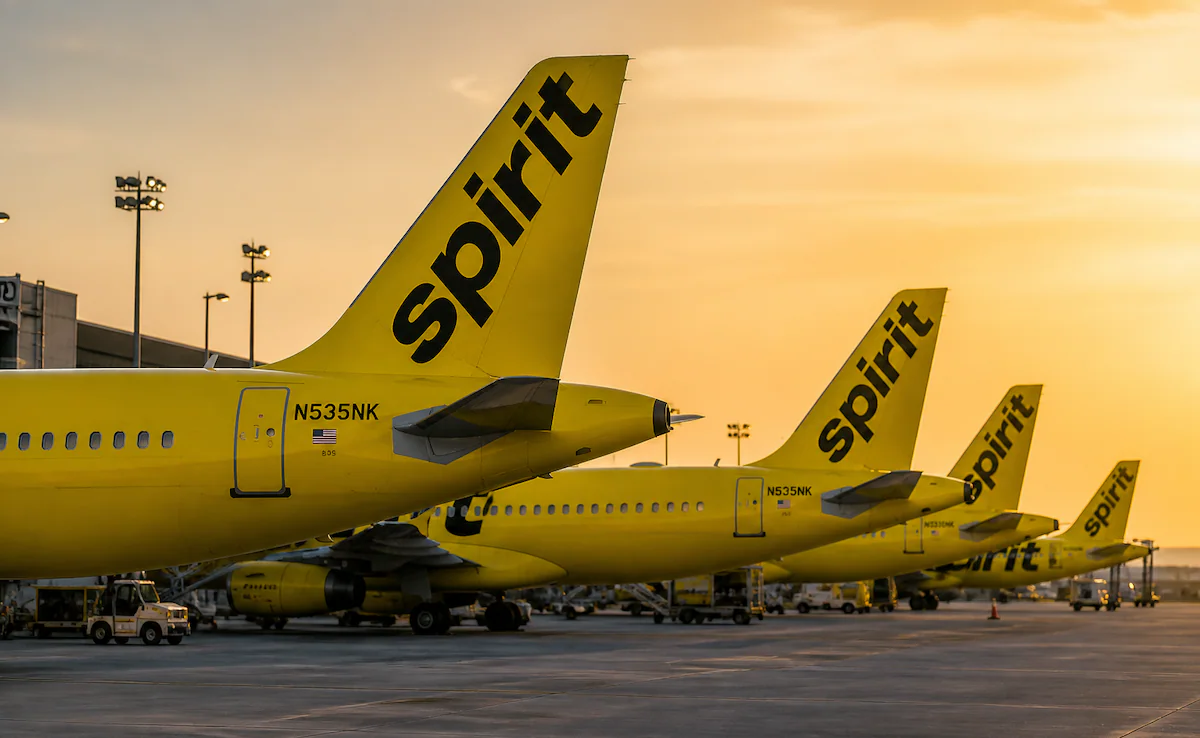
Spirit’s role in the market has long been paradoxical. It drew frequent criticism from passengers and became an easy target for late-night jokes, yet its presence helped anchor fares across many domestic routes. When ultra-low-cost carriers operate on a route, larger airlines tend to respond with sharper pricing, particularly at the lower end.
That competitive balance is now shifting.
Clint Henderson, managing editor at The Points Guy, said travelers should brace for noticeable increases. In some cases, he noted, fares could rise almost immediately as the competitive landscape narrows. The logic is straightforward: fewer budget carriers typically mean less pressure on pricing.
The timing compounds the impact. Airlines are already adjusting to higher jet fuel costs, trimming schedules, and raising ancillary fees, including charges for checked baggage. Without a major low-cost competitor in play, avoiding those higher costs may become more difficult for price-sensitive travelers.
Recent data underscores the trend. Airfares were about 15 percent higher in March compared to the same period last year, according to the Consumer Price Index. Separate figures from travel search engine Kayak show the average domestic round-trip fare reached $365 as of April 27, roughly $70 more than a year earlier.
The effect is not uniform across the country. Markets where Spirit had a strong footprint are expected to feel the change more sharply. Cities such as Fort Lauderdale, Orlando, Las Vegas, and Detroit fall into that category, according to Henderson.
There are early signs of how this plays out. When Spirit exited Minneapolis in December, Delta moved quickly to raise prices on certain routes. A broader analysis by Business Insider, using data from aviation analytics firm Cirium, found fares rose about 14 percent across roughly 90 routes the airline left between 2024 and 2025. In comparison, routes where Spirit remained saw increases closer to 6 to 7 percent.
Even so, the market is adjusting. Other carriers are stepping into gaps left behind. JetBlue plans to expand from Fort Lauderdale with additional destinations, while Breeze Airways is adding routes from Atlantic City. Those moves may soften the immediate impact, though they are unlikely to fully replicate the pricing pressure Spirit once exerted.
The airline’s footprint had already been shrinking. Cirium data cited by the New York Times shows Spirit operated around 12,000 scheduled flights in April, down from approximately 25,000 two years ago.
Read More:
Google Pixel 11 Pro Leak Points to New Chip, Display Tweaks, and Design Changes
For travelers, the shift may be felt less as a sudden shock and more as a steady tightening of options. The cheapest seats, once easy to find on many routes, could become harder to come by, even as overall demand and costs continue to push fares upward.

Follow iNews Zoombangla On Google
Open the Google follow page and tap the checkmark option to receive more updates from iNews Zoombangla in your Google news feed.