Volvo Cars’ new electric-vehicle plant in Košice, Slovakia, is adding a tightly integrated set of final-assembly systems from Dürr. The Volvo Cars Kosice assembly technology project covers conveyors, vehicle filling, chassis measurement, headlamp alignment and end-of-line testing. Production is planned to start in 2027, so the announcement describes equipment for a future factory rather than a plant already building cars.
Dürr announced the contract on September 3, and Autocar Professional reported the project the following day. The Košice facility is designed for maximum annual output of 250,000 vehicles. Volvo has described it as an electric-only plant that will add capacity to its European manufacturing network as the company moves toward a fully electric range.
Dürr will provide turnkey planning and implementation through its NEXT.assembly concept. Instead of treating every station as a separate purchase, the approach joins conveyor, filling, assembly and testing equipment into a coordinated final-assembly system. That can reduce the number of interfaces a factory team has to manage, although actual productivity will still depend on commissioning, worker training, line balance and the vehicles that eventually enter production.
Filling technology is being designed with future vehicle requirements in mind. The systems will handle fluids used in final assembly, while the Košice installation is intended to accommodate low-conductivity coolants and newer air-conditioning refrigerants linked to future European requirements. The provision gives the plant room to adapt, but it is not a claim that every future fluid standard has already been finalised for the vehicles.
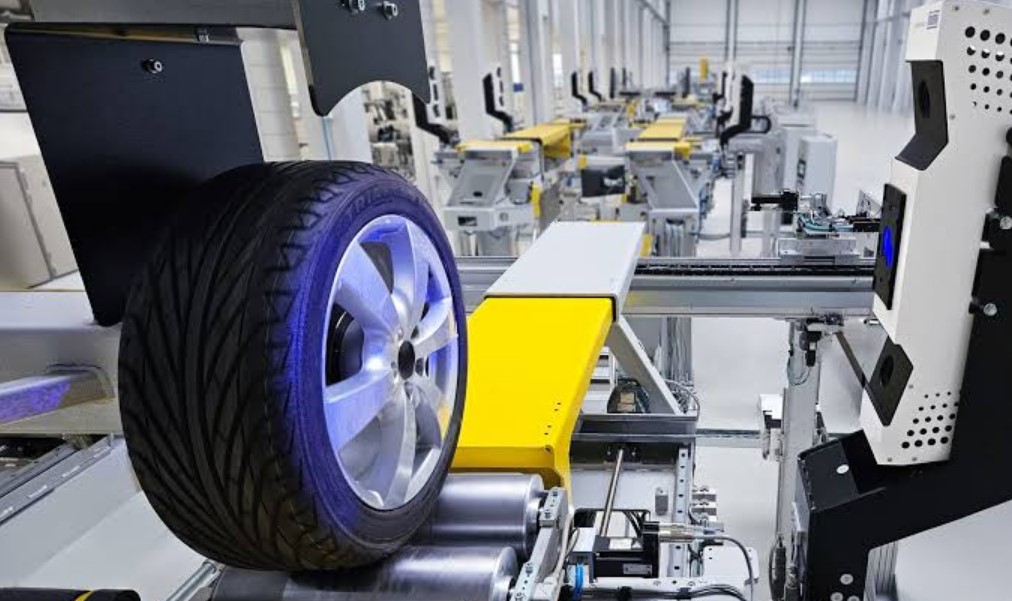
Inspection is another major part of the package. Dürr’s x-wheel system uses a non-contact x-3Dsurface sensor to measure and adjust vehicle geometry across different tyre and body shapes. The driving axis calculated during that process helps set the headlamps. A separate camera-based x-light system will inspect low beam, high beam and fog lamps and adjust them semi-automatically against ECE and SAE standards.
Those checks matter on an electric-car line because vehicle design can vary while the assembly process still has to deliver repeatable alignment. A measurement station can find a deviation near the end of the line, but it cannot replace correct body build, suspension installation or software calibration earlier in production. End-of-line equipment is one layer in a larger quality system.
The factory will also receive more than three kilometres of conveyor technology. Electric monorail systems, skillet platforms and modular chain conveyors will move car bodies and doors through the final-assembly stages. Dürr says the design uses durable, low-maintenance components, while the final result will depend on how the equipment is integrated with Volvo’s production controls and material flow.
Volvo’s own Košice information describes a climate-neutral facility that will build fully electric vehicles and form part of a broader European manufacturing triangle with Ghent and Torslanda. Earlier company material also outlined in-house battery assembly and electric-motor production for the site. Those plans provide context, but the current Dürr announcement is focused on final-assembly technology and does not confirm the final model mix beyond the plant’s electric-only direction.
The Košice project shows how an electric vehicle factory is assembled from many specialised systems. Vehicle capacity is only one measure; repeatable testing, adaptable filling equipment, accurate lighting checks and dependable material movement are equally important. With operations still planned for 2027, Volvo and Dürr will need to complete installation and validation before the plant’s promised output can be assessed.

Follow iNews Zoombangla On Google
Open the Google follow page and tap the checkmark option to receive more updates from iNews Zoombangla in your Google news feed.