Jahid Ikbal : Human civilization has scaled unprecedented heights in technology, economics, and power. From Artificial Intelligence to space exploration, the marks of human success are evident everywhere. Yet, amidst this progress, a fundamental question grows more piercing by the day: have we truly become “good” human beings? Or have we merely learned to build advanced machines while failing to evolve as advanced souls? As the chariot of civilization hurtles forward at breakneck speed, a backward glance reveals that the walls of our morality are increasingly crumbling.
The global unrest, warfare, and inequality we witness today are not rooted in natural disasters, but in the erosion of human character. The true benchmark of a nation’s progress cannot be measured solely by per capita income or infrastructure. Economic development or technological excellence alone cannot sustain a society. For instance, the Scandinavian nations—Norway, Sweden, Denmark—are recognized as the world’s happiest and most stable societies. This is not just due to economic wealth, but because of high levels of social trust, integrity, accountability, and the practice of ethics. In his seminal work Trust, political scientist Francis Fukuyama demonstrated that societies with high mutual trust among citizens develop economically faster. In such societies, a citizen believes that another will not cheat them. This mutual trust is the primary engine of their prosperity.
Conversely, in many developing nations, despite having abundant resources, societies fail to achieve desired growth due to corruption, irregularities, and self-interest. According to data from the World Bank and Transparency International, high levels of corruption lead to a decline in foreign investment, weaken the rule of law, and stagnate the quality of life. Thus, a shortage of “good people” is not just a moral crisis; it is a major impediment to economic and social development.
This reality is reflected in our own society as well. We seek “good people” in every sphere of life—an honest teacher, a just judge, a responsible police officer, a trustworthy businessman, and a compassionate doctor. But the question remains: to what extent do we meet those standards ourselves? While “systems” are strong in developed societies, it is the people who keep those systems functional. In Japan, authorities apologize if a train is delayed by a few seconds. In Germany, citizens do not cross a red light even at midnight on an empty road. This discipline is not merely imposed by law; it is the result of inherent integrity and a sense of responsibility. A good system cannot be sustainable without good people. Just as a machine follows its operator’s command, a state or society operates on the moral foundation of its citizens.
Regardless of race, religion, or creed, every faith has declared morality as the ultimate standard of excellence. History shows that only morally robust nations have survived the test of time. In Islam, the significance of being a good person is paramount. In his Farewell Pilgrimage sermon, Prophet Muhammad (PBUH) clarified that an Arab has no superiority over a non-Arab, nor a white person over a black person; superiority lies only in Taqwa (piety) and character. A famous Hadith states: “The best among you are those who have the best manners and character.”
Similarly, the Bhagavad Gita teaches that general society follows the conduct of its leaders. If there is a void of virtue at the higher echelons of society, the entire community faces decline. Buddhism’s Eightfold Path emphasizes right action, right livelihood, and right speech. Christianity promotes the ‘Golden Rule’: treat others as you wish to be treated. Sikhism identifies the service of humanity as the highest religion. These universal teachings are not for a specific territory but for all of mankind. Yet, in our modern education system, we are obsessed with creating degree-holding skilled laborers, while neglecting to nurture compassionate human beings. Education without morality merely creates “clever criminals.”
We are currently living in the era of the Fourth Industrial Revolution. We are surrounded by AI and robotics. But a robot can never be a “good person” because it lacks emotion and a sense of right and wrong. Thus, in this mechanical age, remaining “human” is our greatest challenge. If we truly wish to build an advanced, just, and humane society, we must first look inward. Before searching for a good person in others, we must mold ourselves to that standard. Society is not an abstract entity; it is the sum of us all. If I change, the family changes; if the family changes, the society and ultimately the state change.
Abraham Lincoln’s famous letter to his son’s teacher requested that the boy be taught that for every enemy, there is a friend, and for every crooked politician, there is a dedicated leader. The greatest strengths on the path to becoming a good person are forgiveness and patience. After 27 years of imprisonment, Nelson Mandela chose the path of forgiveness over revenge. He knew that while malice brings temporary victory, a great heart is required to be a good person. Mahatma Gandhi practiced truth and non-violence throughout his life, believing that one must be the change they wish to see in the world. We often criticize others while ignoring our own minor transgressions. We must remember that just as small grains of sand form a continent, small acts of honesty make a nation great.
The risk that a lack of good people poses to a state is evident in the phenomenon of “brain drain.” Thousands of talented youths are leaving developing countries simply because of a corrupt environment. The nation thus loses its finest children. The price of this moral decay is paid by the entire nation over generations. Conversely, where good people are in the majority, development becomes a natural process because rules are followed voluntarily and the rights of others are respected instinctively.
In this digital age, our morality faces even greater challenges. Spreading rumors or cyberbullying on social media is not the hallmark of a good citizen. A truly good person maintains a refined character in both the virtual and real worlds. The world’s greatest crisis today is not economic, but moral. The erosion of values is more dangerous than inflation. The only way out of this crisis is to intentionally cultivate good human beings.
This must begin at home. Children should not just be pushed into the race for a “GPA 5”; they must be taught the meaning of honesty, the virtue of altruism, and the necessity of truth. Educational institutions must prioritize character development alongside textbooks. We must create an environment where an honest person is not humiliated but is most highly honored. Today, we search for good people on the streets while sacrificing our own principles in private. When we view encroaching on others’ rights as a personal victory, we are essentially sowing the seeds of our own defeat.
Justice and equality are ensured only when good people participate in the driving forces of society. While a criminal might escape through legal loopholes, a good person can never commit an injustice due to the prick of their conscience. Despite having immense potential, we remain held back simply due to a lack of dedicated individuals. We may build roads and factories, but if the human mind remains in darkness, that brilliance serves no purpose. We teach our children English and robotics, but do we teach them to stand by those in danger? Do we teach them compassion for animals? If not, we will leave behind a cold, mechanical world for future generations.
In conclusion, the true yardstick of a nation’s development is not its GDP or its skyscrapers, but the character of its citizens. The rise of a characterless nation is like a house of cards, liable to collapse at any moment. If we truly want to leave a safe and habitable world for the next generation, our greatest investment must be in creating “good people.” Roads, bridges, and technology can be built quickly; but creating a good human being requires awareness, sacrifice, education, values, and long-term dedication. In the march of civilization, let us not forget the darkness within us amidst the light of technology. The world has seen many geniuses and many powerful rulers, but today, the world yearns simply for some good people.
Read More:
Oppo Find X9 Ultra Pre-Orders Open Ahead of Global Launch
The greatest demand and the greatest struggle of our time is the quest for good people. A good person is not just an asset to a family; they are a beacon of light for all of humanity. Let us strive to be that beacon. Only then will our science, our technology, and our long-cherished civilization find true fulfillment. Being a good person should be life’s greatest achievement and its finest identity.
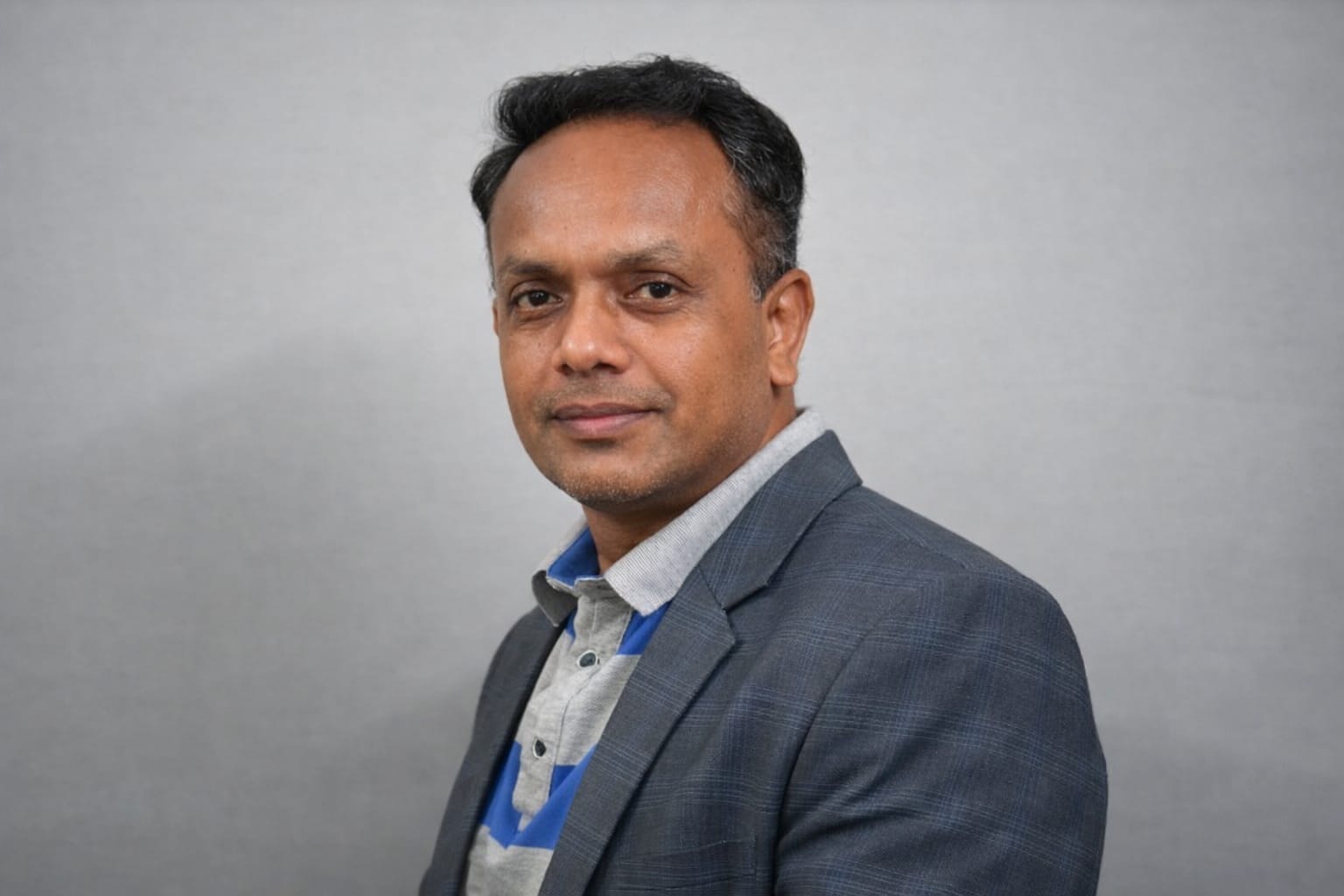
The author is a senior journalist and President of the Bangladesh Online Journalist Association-BOJA.