By Jahid Ikbal : In the political history of Bangladesh, many leaders are remembered for their movements, some for their role in state-building, and others for their political philosophies. However, very few leaders evoke a single defining word in the minds of ordinary people the moment their names are mentioned—integrity. Shaheed President Ziaur Rahman remains one of those rare political figures whose personal honesty continues to be discussed and appreciated decades after his death.
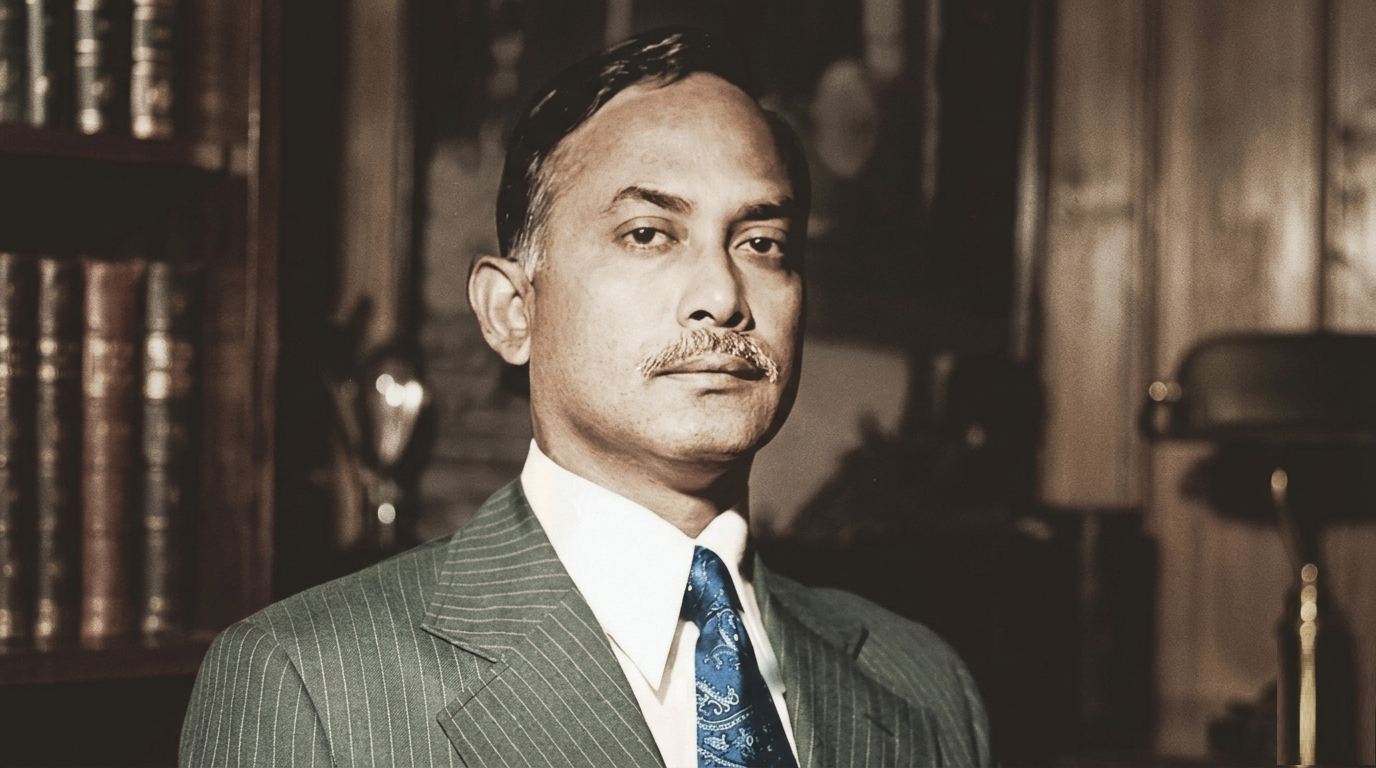
Integrity is a widely used term in politics, but proving it in practice is far more difficult. Power brings not only prestige but also temptation. Remaining detached from personal enrichment, favoritism, and luxury while occupying the highest office of the state is a challenge that many leaders fail to overcome. Yet, a review of Ziaur Rahman’s life suggests that he chose precisely that difficult path.
Following Bangladesh’s independence, the nation faced immense political instability, economic uncertainty, administrative weakness, and social frustration. At such a critical juncture, when Ziaur Rahman assumed responsibility for leading the country, he appeared to understand that restoring public confidence required more than policy reforms; it demanded moral leadership. A nation becomes stronger when its citizens believe that those governing it are working for the country rather than for personal gain.
Any discussion of Ziaur Rahman’s integrity inevitably begins with his personal lifestyle. Even after becoming President, he maintained a reputation for modesty and restraint. Despite holding the highest office in the country, he was not known for accumulating personal wealth or embracing a lavish lifestyle. Political opponents frequently criticized his policies and decisions, but allegations of personal corruption never emerged as a defining issue in national politics. That reality alone remains significant in the context of South Asian politics.
Across the world, it is common to witness dramatic changes in the lifestyles of politicians after they assume power. Wealth expands, influence grows, and family members often gain privileged access to state resources. Historians, researchers, and contemporary observers have frequently noted that Ziaur Rahman showed little interest in personal wealth accumulation. To him, the state represented a responsibility, not an opportunity for private enrichment.
The late Maulana Abdul Hamid Khan Bhashani, revered as one of Bangladesh’s most outspoken political leaders, reportedly made favorable remarks about Ziaur Rahman on several occasions. Bhashani was known for his uncompromising stance against injustice and his willingness to criticize any leader when necessary. Recognition from such a figure carried considerable weight. Political ideologies may differ, but personal integrity often transcends partisan divisions, and Ziaur Rahman exemplified that reality.
At the heart of Ziaur Rahman’s political philosophy was a strong sense of responsibility. He believed that the greatest strength of a government was the trust of its people, and that trust could only be sustained through honest leadership. This conviction was reflected in his emphasis on administrative discipline and accountability. He understood that corruption within public institutions could undermine even the most ambitious development efforts.
During his tenure, efforts were made to improve the efficiency and accountability of government officials and strengthen field-level administration. He regularly toured districts across the country, meeting local officials and engaging directly with citizens. These visits were not merely political programs; many observers viewed them as attempts to ensure administrative responsiveness and maintain a direct connection between the state and its people.
A leader committed to integrity seeks to understand reality rather than remain confined within the walls of authority. In this sense, Ziaur Rahman’s extensive engagement with local communities reflected a broader commitment to public service. Integrity, after all, extends beyond financial honesty; it also encompasses dedication to one’s responsibilities.
Another important aspect of Ziaur Rahman’s leadership was his approach to public resources. He regarded state funds as the property of the people and believed they should be used for public welfare. This perspective was reflected in his emphasis on agriculture, rural development, irrigation projects, productivity enhancement, and employment generation.
Programs such as canal excavation initiatives, agricultural development schemes, and efforts to increase rural productivity were driven by a vision of national self-reliance. He believed that development should not be measured solely by the construction of large buildings or urban infrastructure but by tangible improvements in the lives of ordinary citizens, particularly those living in rural areas. This outlook reflected a broader ethical commitment to equitable development.
Individuals who worked closely with him often described him as disciplined, punctual, and prudent. Contemporary accounts suggest that he exercised restraint in the use of public resources and discouraged unnecessary government expenditure. Such traits reinforced his reputation as a leader who viewed public office as a trust rather than a privilege.
The ultimate test of integrity in politics lies in the exercise of power. Authority provides opportunities unavailable to ordinary citizens, and resisting the misuse of those opportunities is a defining characteristic of ethical leadership. Supporters of Ziaur Rahman argue that he never treated power as a means of personal enrichment; instead, he viewed it as a tool for national reconstruction.
Through the establishment of the Bangladesh Nationalist Party (BNP), he introduced a new political stream in Bangladesh. Building a political organization while simultaneously governing the nation was an immense undertaking. Yet, despite the challenges, he managed to preserve a public image centered on personal honesty and commitment to national service.
Discussions about family-based politics and favoritism have long been part of Bangladesh’s political landscape. However, Ziaur Rahman is often remembered as a leader who placed greater emphasis on institutions than on personal networks. He believed that a strong state required strong institutions, and that sustainable governance could not depend solely on individuals.
Another hallmark of responsible leadership is an awareness of one’s limitations. Ziaur Rahman repeatedly sought public engagement through initiatives such as referendums, local consultations, and efforts to expand political participation. He regarded public support as the foundation of political legitimacy and sought to maintain close contact with citizens.
Internationally, Ziaur Rahman earned recognition as a pragmatic and credible leader. He played a significant role in rebuilding Bangladesh’s image abroad, expanding diplomatic relations, attracting international cooperation, and opening new avenues for economic engagement. Many foreign observers praised his dedication, professionalism, and personal integrity.
One of the most notable aspects of his legacy is that he did not leave behind a vast economic empire. Even after his death, no substantial evidence emerged portraying him as a leader who used public office for personal financial gain. In a region where questions about wealth accumulation often accompany discussions of political power, this distinction remains particularly significant.
History rarely delivers its verdict immediately. Often, the true measure of a leader emerges years after political passions have faded. In the case of Ziaur Rahman, opinions remain divided regarding some of his political decisions and policies. Yet, positive assessments of his personal integrity continue to endure across generations.
For today’s young generation, one of the greatest challenges is the search for principled leadership. At a time when public discourse is increasingly dominated by concerns over corruption, self-interest, and institutional decline, Ziaur Rahman’s life offers an example worthy of reflection. He demonstrated that integrity is not merely a moral virtue; it is also a practical instrument of effective governance.
Integrity may not always bring immediate rewards, but it earns lasting respect. Ziaur Rahman’s political legacy reflects this truth. Not everyone agrees with all of his decisions, and not everyone views his political career through the same lens. Yet, when discussions turn to personal honesty in public life, his name continues to occupy a distinctive place in Bangladesh’s political history.
The true strength of a statesman lies not in palaces, motorcades, or the extent of political power. It lies in the confidence and trust of the people. The fact that discussions about Ziaur Rahman’s integrity continue decades after his death suggests that he succeeded in earning that trust.
Whenever integrity in politics is discussed in Bangladesh, the name of Ziaur Rahman is likely to be part of the conversation. His life stands as an example that ethical leadership is not a weakness but one of the greatest strengths a leader can possess.
Power may bring recognition, but integrity brings dignity. Power is temporary; integrity leaves a lasting legacy. History is filled with powerful individuals whose names have faded over time. Those who led with honesty, self-restraint, and moral conviction, however, continue to command respect long after they are gone.
Shaheed President Ziaur Rahman belongs to that category of leaders. He was not only a President, a freedom fighter, or a political organizer; he was also a figure whose personal integrity continues to be cited as a benchmark of political ethics in Bangladesh.
Read More:
Xiaomi 17T Pro Brings Bigger Battery and MediaTek’s New Dimensity 9500
His life offers an enduring lesson for present and future generations: the greatest strength in public leadership is not power, wealth, or influence—it is integrity. It is for that reason that Ziaur Rahman continues to occupy a distinctive and respected place in the history of
Author Senior Journalist, Columnist and President, Bangladesh Online Journalists Association (BOJA).