The eclipse behind the current blood moon searches is a deep partial lunar eclipse, not a solar eclipse. The event takes place on Aug. 27-28, 2026, as the Moon passes through Earth’s shadow, and the near-total coverage can make the Moon appear reddish even though a small portion remains outside the darkest shadow.
NASA’s 2026 eclipse timetable lists the event as a partial lunar eclipse on Aug. 28. NASA gives the greatest-eclipse time as 04:14:04 Terrestrial Time, or 04:13 Universal Time, and records an umbral magnitude of 0.9299. The timetable also separately lists the total solar eclipse of Aug. 12, making clear that the two events are different entries in the annual eclipse calendar.
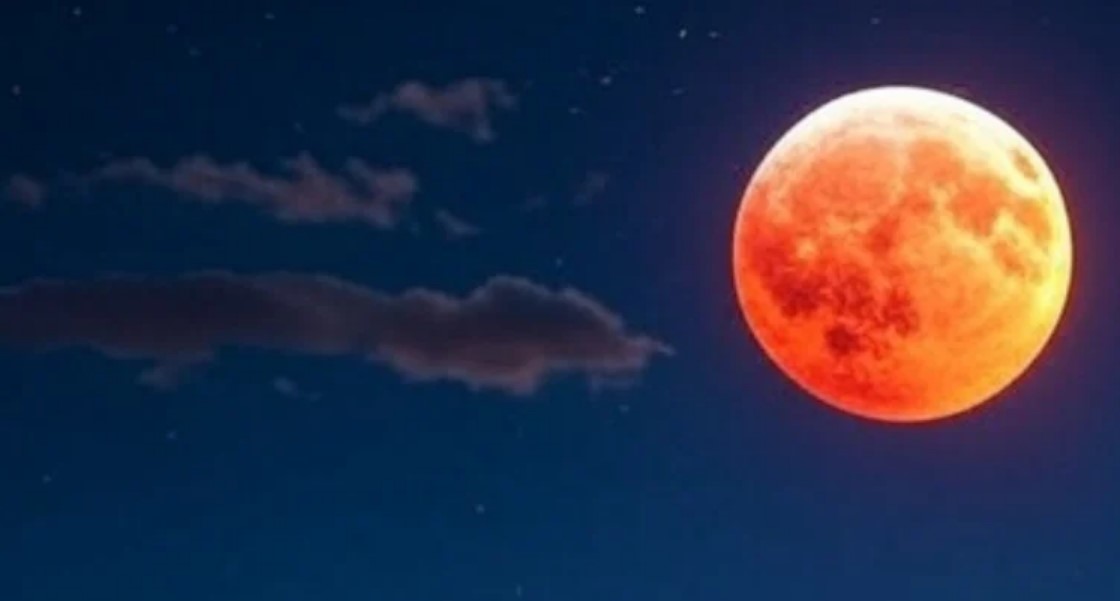
Space.com reported that more than 96% of the Moon will enter Earth’s umbral shadow during the August event. It said the eclipse will last 5 hours and 38 minutes when the penumbral and partial phases are counted. The Moon can look slightly reddish-orange near maximum coverage, but the report stressed that the event will not be a true total blood moon because the entire lunar surface will not enter totality.
Timeanddate.com similarly described the Aug. 27-28 event as an almost total eclipse and said the term Blood Moon is being used for this deep partial eclipse. In common usage, Blood Moon usually refers to the red appearance during a total lunar eclipse. The same reddish effect can occur during a deep partial eclipse when most of the Moon is inside Earth’s umbra.
The distinction matters because a lunar eclipse and a solar eclipse are viewed differently. A lunar eclipse happens when the Moon moves into Earth’s shadow and can be observed from the night side of Earth. A solar eclipse happens when the Moon passes between Earth and the Sun. NASA’s annual listing places the August lunar event after the August solar eclipse, but they are separate astronomical phenomena.
The Aug. 27-28 lunar eclipse is expected to be visible across parts of the Americas, Europe and Africa, according to timeanddate.com. Space.com also noted that lunar viewing does not require the special eye protection used for direct solar viewing. The accurate headline for the current event is therefore a deep partial lunar eclipse or near-total lunar eclipse, rather than a solar eclipse or a fully total blood moon.

Follow iNews Zoombangla On Google
Open the Google follow page and tap the checkmark option to receive more updates from iNews Zoombangla in your Google news feed.