Staff Correspondent: After nearly a year of controversy, sustained public protests, extensive media coverage, and administrative intervention, the only playground in Nikunja-2 has finally been freed from illegal occupation. During an eviction drive conducted last Monday, authorities not only removed disputed structures from inside the playground but also cleared illegal encroachments from roads, footpaths, and public spaces across different parts of Nikunja.
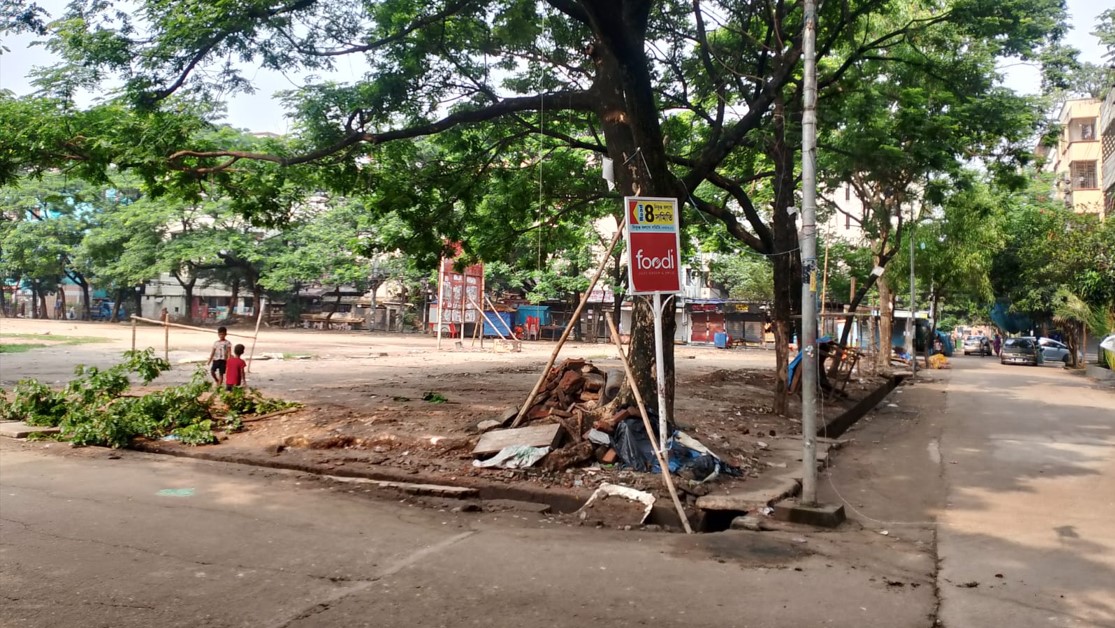
While residents have welcomed the development with relief, concerns remain over the possibility of renewed encroachment under the patronage of influential groups.
In the evenings, the playground has once again come alive with children running freely, teenagers playing cricket and football, and young people gathering for recreation. For many residents, the field has regained the vibrant atmosphere that once made it an integral part of community life.
According to local sources, nearly a year ago, a large section on the northern side of the playground was occupied and converted into a food court, where numerous shops and commercial establishments were set up. Residents alleged that a vested group ignored public interest and used a significant portion of the field for business activities, severely restricting recreational opportunities for children and youths while undermining the playground’s intended purpose.
In response, local residents launched a prolonged campaign against the occupation. Human chains, memorandums, social media activism, and continuous media reporting brought the issue into public focus and intensified pressure on the authorities.
Although previous attempts at eviction failed to produce meaningful results, the most recent operation conducted last Monday finally led to the removal of the controversial structures inside the playground. Simultaneously, illegal occupations on roads, sidewalks, and other public spaces in Nikunja were also dismantled.
“The Joy of Reclaiming the Playground Is Hard to Express”
Sajal Karim, a long-time resident of Nikunja, described the playground as much more than a recreational facility.
“This field is the heart of our community. It is where children grow up, young people develop friendships through sports, and residents interact socially. Watching it gradually lose its character over the past year was deeply painful. The joy of getting it back is truly difficult to put into words,” he said.
He added, “We do not want the character of this playground to be altered again under any pretext.”
“Children Need a World Beyond Mobile Screens”
Asif Shahriar, a young cricketer playing on the field, said the playground plays a critical role in the healthy development of children and adolescents.
“After a long time, we finally have enough space to play properly again. In today’s world, where young people are increasingly absorbed by mobile phones and digital platforms, playgrounds are more important than ever,” he said.
“Protecting this field is not just about preserving an open space; it is about
safeguarding an entire generation.”
“A Playground Must Remain a Playground”
Insan Ali, the current administrator of the Nikunja-2 Welfare Society, emphasized the importance of preserving public recreational spaces.
“There is no substitute for a playground in a residential neighborhood. At a time when urbanization is rapidly reducing open spaces, this field must remain what it was intended to be—a playground,” he said.
He urged all stakeholders to act responsibly to ensure its long-term protection.
“Encroachment Against Public Interest Will Not Be Tolerated”
Officer-in-Charge (OC) of Khilkhet Police Station, Sohrab Al Hossain, who played a significant role in the eviction process, reaffirmed the authorities’ commitment to protecting public spaces.
“Any form of encroachment or illegal activity that goes against public interest will not be tolerated. Necessary legal measures will be taken whenever required,” he said.
He further warned that any future attempts to illegally occupy the playground would be dealt with strictly in accordance with the law.
Allegations of Collecting NID Copies for Reinstatement
Meanwhile, a new controversy has emerged in the aftermath of the eviction drive.
Several local sources have alleged that certain individuals, reportedly operating under the banner of a political organization, have been collecting photocopies of National Identity Cards (NIDs) from some of the evicted hawkers and occupants.
According to residents, they have been told that once the situation “returns to normal,” they may be allowed to resume their activities through a future application or registration process.
No official authority has yet commented on the allegations. However, the claims have sparked widespread discussion within the community.
Several residents argued that if such efforts are indeed underway, they could undermine the very purpose of the recent eviction campaign.
“No Political Banner Will Be Allowed to Occupy the Playground Again”
Local resident Rana Ibrahim expressed strong opposition to any future encroachment.
“We want to make it absolutely clear that no political identity, organizational banner, or influential group will be allowed to occupy the playground or public footpaths again,” he said.
“The community struggled for nearly a year to reclaim this field. We will not accept any attempt to take it away from the people once more.”
Another resident added, “The rule of law should apply equally to everyone. The culture of occupying public property under political influence must come to an end.”
The Power of Community Unity
Residents believe that the unified stance of the people of Nikunja played a decisive role in reclaiming the playground.
According to them, the community has a strong history of collective action on public-interest issues.
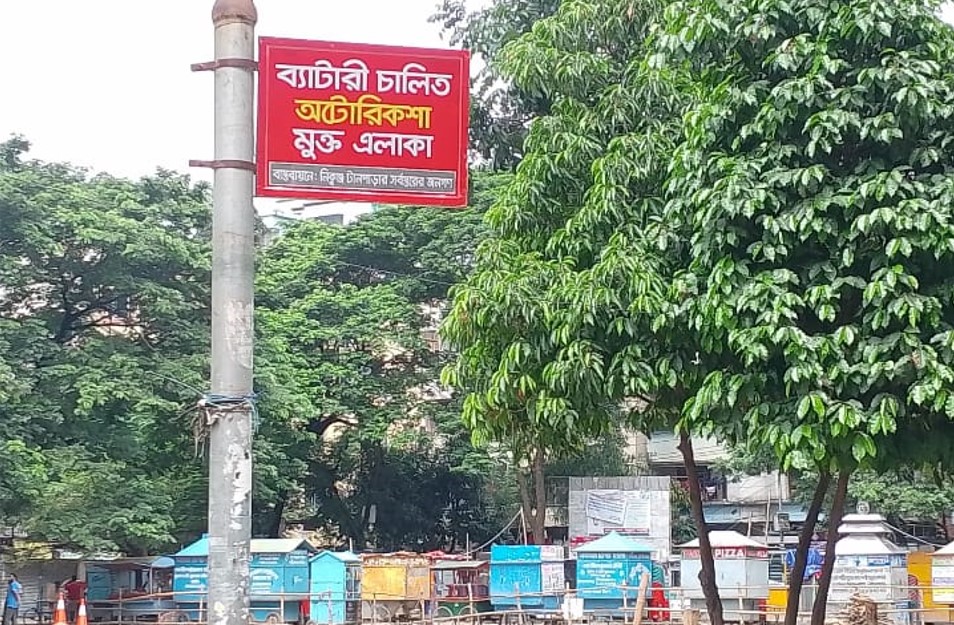
They point to last year’s movement against battery-powered auto-rickshaws, which resulted in the suspension of their operation in the area on April 30 following sustained public pressure and civic activism. Residents claim the initiative later gained recognition as a successful example of citizen-led action.
“Whenever Nikunja residents unite around a legitimate cause, positive change becomes possible,” several residents said. “We will remain equally vigilant and united in protecting this playground.”
The Need for Long-Term Protection
Urban planners have long warned that Dhaka is rapidly losing its open spaces and playgrounds to unchecked urbanization. As a result, preserving existing recreational spaces has become increasingly important.
Residents argue that eviction drives alone are not enough. They believe regular monitoring, a clear management framework, and active citizen participation are essential to ensure the long-term protection of public spaces.
Since last Monday’s operation, the playground has once again been filled with the sounds of children laughing, teenagers playing sports, and families enjoying a renewed sense of community.
For many residents, the field is more than just a piece of land—it represents social cohesion, human connection, and a vital environment for the healthy development of future generations.
Also Read:
Bobby Hajjaj Announces Plan to Add Music, Drama and Dance to Primary Education
Whether this achievement can be sustained remains the key question. For now, however, Nikunja residents hope that the playground and other reclaimed public spaces will never again fall victim to occupation by individuals, groups, or political interests, and will instead remain open, safe, and accessible community assets for generations to come.

Follow iNews Zoombangla On Google
Open the Google follow page and tap the checkmark option to receive more updates from iNews Zoombangla in your Google news feed.